In mechanical engineering, shaft design is paramount to the operational efficiency, load-bearing capacity, and energy transfer performance of rotating machinery. Among the prevalent shaft configurations, hollow shafts have garnered significant attention for their unique mechanical advantages—particularly when fabricated from high-performance materials like stainless steel. A critical engineering question persists: under optimized design parameters, can a hollow shaft outperform its solid counterpart in power transmission?
Core Definitions & Design Fundamentals
A shaft is a critical rotating mechanical component engineered to transmit torque and power between interconnected machine elements (e.g., motors, gearboxes, and actuators). Two primary configurations dominate industrial applications:
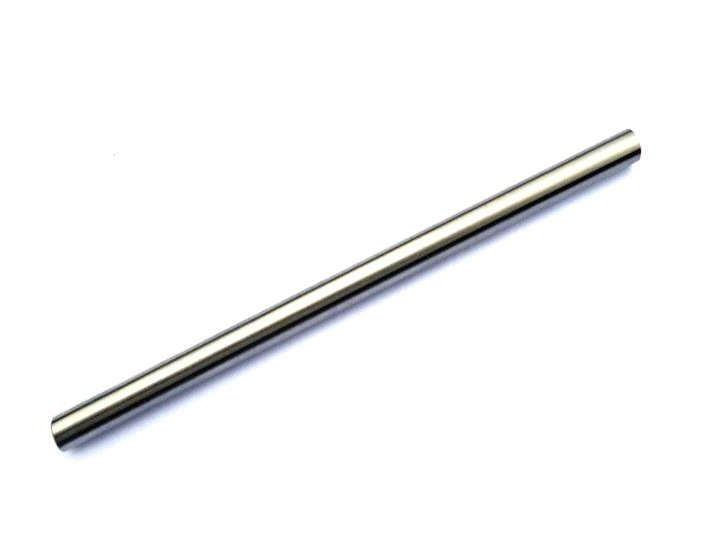
- Solid shafts: Homogeneous cylindrical structures with uniform cross-sections, valued for simplicity and inherent rigidity.
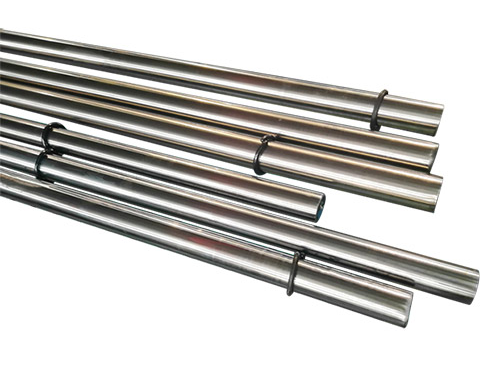
- Hollow shafts: Tubular components featuring a central lumen, designed to optimize material distribution and mechanical efficiency.
The power transmission capability of a shaft is inherently tied to its torsional stiffness, torque-bearing capacity, and material utilization—factors where
hollow shafts exhibit distinct technical advantages when engineered appropriately.
Key Mechanical Advantages of Hollow Shafts
1. Superior Strength-to-Weight Ratio (Specific Strength)
Hollow shafts achieve a far more efficient strength-to-weight ratio compared to solid shafts of equivalent outer diameter. By removing material from the low-stress central region (where torsional shear stress is minimal), the structural mass is concentrated at the outer perimeter—where stress resistance is most critical. This design enables hollow shafts to match or exceed the torque-bearing capacity of solid shafts while reducing overall system weight by 30–50% in optimized scenarios.
2. Enhanced Torsional Stiffness & Torque Capacity
Torsional stiffness (resistance to twisting) is proportional to the polar moment of inertia (J) of a shaft’s cross-section. For a hollow shaft with outer diameter (D) and inner diameter (d), the polar moment of inertia is defined as \( J = \frac{\pi}{32}(D^4 - d^4) \). When comparing a hollow shaft to a solid shaft of equal weight, the hollow configuration exhibits a larger polar moment of inertia due to its expanded outer diameter (enabled by material reduction in the core). This translates to higher torsional stiffness and torque transmission capacity—critical for high-power, high-speed applications.
3. Optimized Material Utilization & Cost Efficiency
Hollow shafts minimize material consumption without compromising structural performance, reducing raw material costs and lifecycle expenses. For large-diameter or high-volume applications (e.g., industrial gearboxes, wind turbine shafts), this material efficiency delivers substantial economic benefits while aligning with sustainable manufacturing principles.
4. Thermal & Dynamic Performance Advantages
The central lumen of hollow shafts facilitates heat dissipation—an essential feature for high-speed rotating systems where frictional heating can degrade performance. Additionally, the reduced mass lowers rotational inertia, enabling faster acceleration/deceleration, improved energy efficiency, and reduced wear on associated components (e.g., bearings and couplings).
Stainless Steel as a Premium Material for Hollow Shafts
Stainless steel is the material of choice for high-performance hollow shafts due to its synergistic properties:
- Corrosion Resistance: Alloying elements (chromium, nickel, molybdenum) provide robust resistance to atmospheric, chemical, and saline environments—critical for harsh industrial or aerospace applications.
- High Tensile Strength & Fatigue Resistance: Grades such as 316L, 17-4 PH, and 440C offer exceptional mechanical durability, enabling hollow shafts to withstand cyclic loading and high torque without deformation or failure.
- Dimensional Stability: Stainless steel maintains structural integrity across wide temperature ranges (-200°C to 600°C for select grades), ensuring consistent performance in extreme operating conditions.
- Machinability & Fabricability: Precision manufacturing processes (e.g., cold drawing, seamless rolling, CNC machining) produce hollow shafts with tight dimensional tolerances (±0.01mm) and surface finishes (Ra ≤ 0.8μm), optimizing compatibility with mechanical systems.
Power Transmission Performance: Hollow vs. Solid Shafts
The ability of a hollow shaft to transmit power hinges on the relationship between torque (T), angular velocity (ω), and torsional capacity—expressed as \( P = T \times \omega \). Key comparative insights:
- Equal Outer Diameter: A hollow shaft will have lower torsional capacity than a solid shaft (due to reduced cross-sectional area). However, its significantly lower weight (30–60% reduction) makes it ideal for weight-constrained applications where power density is prioritized.
- Equal Weight: A hollow shaft outperforms a solid shaft in torque transmission by 20–40% (depending on wall thickness). The expanded outer diameter of the hollow configuration increases the polar moment of inertia, enabling higher torque capacity and power output.
- Optimized Design: When engineered for specific power requirements (e.g., adjusting wall thickness to balance strength and weight), hollow shafts achieve a "power-to-weight ratio" that solid shafts cannot match—critical for high-performance machinery.
Industrial Applications of High-Power Hollow Shafts
Hollow shafts are integral to power-intensive systems across industries:
- Automotive: Drive shafts, axle shafts, and electric vehicle (EV) motor shafts leverage weight reduction to improve fuel efficiency (ICE vehicles) or extend range (EVs) while transmitting up to 500+ N·m of torque.
- Aerospace: Turbine shafts, landing gear actuators, and aircraft control systems rely on stainless steel hollow shafts to balance high power transmission (100+ kW) with weight minimization—every kilogram saved reduces fuel consumption by ~0.5% per flight hour.
- Industrial Machinery: Gearboxes, pumps, compressors, and wind turbine main shafts use hollow shafts to handle torsional loads up to 10,000+ N·m, with stainless steel variants ensuring longevity in chemical or humid environments.
- Marine: Propeller shafts and thruster systems utilize corrosion-resistant stainless steel hollow shafts to transmit high power (1,000+ kW) while withstanding saltwater exposure.
Critical Design Considerations for Optimal Power Transmission
To maximize the power transmission capability of hollow shafts, engineers must prioritize:
1. Material Selection: Choose stainless steel grades based on torque requirements (e.g., 17-4 PH for high strength, 316L for corrosion resistance in marine/chemical environments).
2. Dimensional Optimization: Balance outer diameter (D), inner diameter (d), and wall thickness (t = (D-d)/2) to maximize polar moment of inertia while meeting weight constraints. Typical wall thickness ratios (d/D) range from 0.4–0.8 for optimal strength-to-weight performance.
3. Manufacturing Precision: Employ seamless tube production or precision machining to ensure uniform wall thickness, concentricity, and surface finish—deviations can reduce torsional capacity by 10–15%.
4. Tolerance Control: Adhere to ISO 286 or DIN 476 standards for dimensional tolerances (e.g., h7 for outer diameter, H8 for inner diameter) to ensure compatibility with couplings and bearings.
5. Structural Integrity Testing: Conduct non-destructive testing (NDT) such as ultrasonic inspection or X-ray imaging to detect internal defects (e.g., porosity, cracks) that compromise torque transmission.











 +86 13771119215