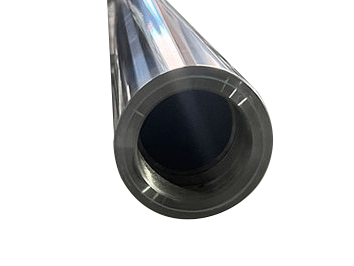
In hydraulic systems, the piston rod serves as a critical structural and functional component, responsible for converting hydraulic potential energy into linear mechanical work. As the interface between the hydraulic cylinder and external loads, it operates under cyclic stress, high pressure, and exposure to harsh operating environments (e.g., abrasive particles, corrosive media, temperature fluctuations). Over time, piston rods are susceptible to various forms of damage that can compromise system efficiency, seal integrity, and operational safety. A fundamental engineering question arises: under what conditions can a piston rod be repaired, and what technical considerations govern the feasibility of repair versus replacement? This analysis delves into damage mechanisms, repair methodologies, decision criteria, and industry best practices for piston rod maintenance.
1. Piston Rod Damage Mechanisms & Failure Modes
Piston rod damage typically stems from mechanical stress, environmental exposure, or system misalignment, with three primary failure modes dominating industrial scenarios:
1.1 Bending Deformation
Bending occurs due to eccentric loading, improper cylinder alignment, impact forces, or overloading beyond the rod’s yield strength. Damage is categorized as:
- Elastic deformation: Temporary bending recoverable through stress relief (rare in industrial applications).
- Plastic deformation: Permanent structural distortion (most common) that causes uneven seal wear, increased friction, and hydraulic leakage. Critical thresholds are defined by industry standards (e.g., ISO 14726), with a maximum allowable straightness deviation of ≤0.1 mm/m for precision hydraulic systems.
1.2 Surface Degradation
Surface damage directly impacts seal performance and corrosion resistance, including:
- Abrasive/adhesive wear: Caused by contaminant particles (e.g., dirt, metal shavings) or inadequate lubrication, leading to micro-grooves, pitting, or loss of surface finish (Ra ≤ 0.2 μm is required for optimal seal compatibility).
- Corrosion: Pitting corrosion, crevice corrosion, or general corrosion resulting from exposure to moisture, chemicals, or saline environments—particularly prevalent in uncoated or damaged chrome-plated surfaces.
- Chrome layer peeling: Delamination of the hard chrome plating (HCP) due to substrate contamination, improper plating process, or cyclic stress.
1.3 Material Fatigue & Cracking
High-cycle fatigue cracking occurs at stress concentration points (e.g., rod ends, thread roots, or surface defects) due to repeated loading. These micro-cracks can propagate under cyclic stress, leading to catastrophic rod failure if undetected. Non-destructive testing (NDT) is required to identify subsurface cracks invisible to visual inspection.
2. Feasibility of Piston Rod Repair
Piston rod repair is technically viable if the damage meets the following criteria:
- The core material (typically alloy steel 4140/4340, stainless steel 17-4 PH, or carbon steel) has not suffered irreversible structural damage (e.g., deep cracks, material loss exceeding 10% of cross-sectional area).
- Bending deformation is within the rod’s elastic-plastic recovery range (i.e., no permanent distortion of the core material).
- Surface damage (wear/corrosion) does not penetrate the base material beyond the thickness of the protective coating (e.g., hard chrome plating, ceramic coating).
- Repair costs are ≤ 60-70% of the cost of a new piston rod (industry benchmark for cost-effectiveness).
Repair is generally not feasible for:
- Rods with through-thickness cracks or fatigue cracks exceeding 5 mm in length (per ASME B30.1 standards).
- Severe plastic deformation (bend angle > 2° or straightness deviation > 0.5 mm/m).
- Base material degradation (e.g., corrosion pitting depth > 0.5 mm) or material loss compromising load-bearing capacity.
- Rods that have undergone multiple prior repairs (risk of cumulative material fatigue).
3. Specialized Repair Techniques
Repair methodologies are tailored to the type and severity of damage, requiring precision equipment and adherence to industrial standards (e.g., ASTM A350, ISO 286-2):
3.1 Straightening for Bending Deformation
- Precision Straightening: Utilizes hydraulic presses or mechanical straightening jigs with laser alignment systems to restore straightness to within ±0.05 mm/m. The process involves incremental stress application and real-time monitoring to avoid over-correction or material work-hardening.
- Stress Relief Heat Treatment: Post-straightening, the rod is heated to 550-650°C (for alloy steels) and held for 1-2 hours to relieve residual stresses, preventing re-deformation during service.
- Verification: Laser interferometry or dial indicator measurements confirm straightness compliance before proceeding to surface repair.
3.2 Surface Restoration for Wear/Corrosion
3.2.1 Hard Chrome Plating (HCP)
- Pre-treatment: The damaged surface is ground to remove corrosion, wear, and old plating (typically 0.02-0.1 mm material removal) to achieve a uniform substrate.
- Plating Process: Electrodeposition of chromium layers (0.02-0.15 mm thick) with a hardness of HRC 60-70, providing exceptional wear and corrosion resistance.
- Post-treatment: Grinding and polishing to achieve a surface roughness of Ra 0.05-0.2 μm, ensuring compatibility with hydraulic seals (e.g., polyurethane, nitrile rubber).
3.2.2 Induction Hardening
- Applied to restore surface hardness after wear or machining. The rod’s surface is heated to 850-950°C via high-frequency induction coils, followed by rapid quenching (water or oil) to achieve a hardened layer depth of 2-5 mm.
- Enhances surface hardness (HRC 55-65) and wear resistance while preserving the core’s toughness (critical for impact load tolerance).
3.2.3 Thermal Spray Coating
- Used for severe surface damage: Aerosol deposition of ceramic (Al₂O₃-TiO₂) or metallic (NiCr) coatings via high-velocity oxygen fuel (HVOF) spraying.
- Provides superior corrosion and wear resistance (hardness up to HRC 75) for extreme environments (e.g., marine, chemical processing).
3.3 Crack Repair (for Minor Defects)
- Grinding & Blending: Small surface cracks (< 2 mm length) are ground out and blended to a smooth radius (≥ 3 mm) to eliminate stress concentrations.
- Welding Repair: For subsurface cracks detected via NDT (ultrasonic or magnetic particle inspection), gas tungsten arc welding (GTAW) is used with matching filler material (e.g., ER70S-6 for carbon steel). Post-welding heat treatment and grinding ensure structural integrity and surface finish.
4. Repair vs. Replacement Decision Framework
The decision to repair or replace a piston rod is guided by a systematic evaluation of technical, economic, and operational factors:
| Evaluation Criterion | Repair | Replacement |
|----------------------------------|---------------------------------------------|----------------------------------------------|
| Damage Severity | Minor-moderate (surface wear, mild bending) | Severe (cracks, deep corrosion, major deformation) |
| Structural Integrity | Core material intact | Core material compromised |
| Cost-Effectiveness | Repair cost < 60-70% of replacement cost | Repair cost ≥ 70% of replacement cost |
| Lead Time | 3-7 days (faster for urgent applications) | 1-4 weeks (dependent on custom manufacturing) |
| Service Life Expectancy | 70-90% of a new rod (with proper maintenance) | 100% (meets original equipment specifications) |
| Industry Standards Compliance | Meets ISO 14726/ASTM A350 requirements | Meets OEM specifications and industry standards |
5. Quality Assurance & Post-Repair Validation
To ensure repair reliability, rigorous quality control measures are mandatory:
- Non-Destructive Testing (NDT): Ultrasonic testing (UT) for subsurface cracks, magnetic particle inspection (MPI) for surface cracks, and eddy current testing (ECT) for plating adhesion.
- Dimensional Verification: Coordinate measuring machine (CMM) inspections to confirm outer diameter tolerance (typically h7-h9 per ISO 286-2) and straightness.
- Surface Quality Testing: Surface roughness measurement (Ra value) and adhesion testing (tape test per ASTM D3359) for plated/coated surfaces.
- Load Testing: Static load testing to 125% of the rod’s rated capacity to validate structural integrity.
6. Preventive Maintenance Strategies
To minimize piston rod damage and extend service life:
- Lubrication Management: Use compatible hydraulic fluids (e.g., ISO VG 46) with anti-wear additives, and maintain fluid cleanliness per ISO 4406 Class 16/13.
- Seal Maintenance: Replace worn seals (rod wiper seals, piston seals) at 6-month intervals to prevent contaminant ingress.
- Environmental Protection: Install rod boots or protective covers in abrasive/corrosive environments; apply corrosion inhibitors for outdoor applications.
- Alignment Checks: Conduct quarterly cylinder alignment inspections (laser alignment) to prevent eccentric loading and bending.
- Routine Inspections: Visual inspections for surface damage, combined with NDT (MPI/UT) annually for high-cycle applications.








 +86 13771119215