In the era of Industry 4.0, where smart manufacturing, automation, and high-precision processing define competitive advantage, precision linear shafts have emerged as critical enabling components for linear motion systems. These engineered cylindrical components deliver exceptional motion guidance, positional accuracy, and structural reliability—addressing the core requirements of modern manufacturing processes ranging from CNC machining to automated assembly lines. This article systematically elaborates on the technical characteristics, key performance advantages, industry-specific applications, and technical selection criteria of precision linear shafts, providing a professional reference for manufacturing engineers and process optimizers.
1. Core Technical Definitions & Specifications
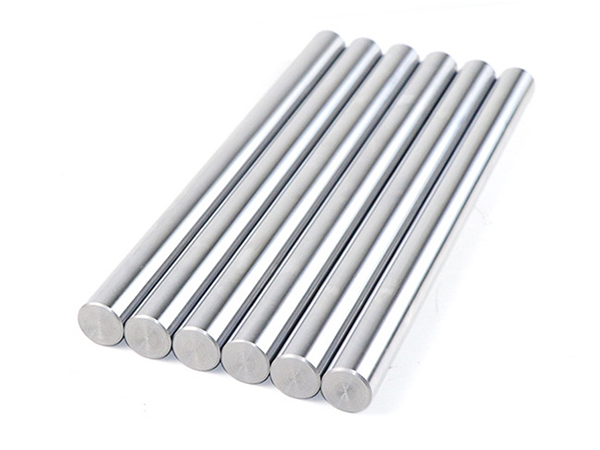
Precision linear shafts are high-precision cylindrical components designed to facilitate smooth, repeatable linear motion in mechanical systems. They operate in conjunction with linear bearings (e.g., ball bearings, roller bearings, plain bearings) to guide and support dynamic loads, with performance governed by strict industrial standards:
1.1 Key Technical Parameters
- Dimensional Tolerance: Complies with ISO 286-2, typically IT5–IT7 grade (outer diameter tolerance ±0.005–±0.015 mm for shafts 10–50 mm OD).
- Linearity Deviation: ≤0.01 mm/m (maximum deviation from a straight line over 1 meter length).
- Radial Runout: ≤0.003 mm (ensures uniform bearing contact and load distribution).
- Surface Finish: Ra ≤0.2 μm (after precision grinding and polishing, minimizing friction with bearings).
- Material Options:
- Carbon Steel (CK45/4140): Quenched and tempered (QT 600-800), tensile strength 600–1000 MPa, ideal for high-load applications.
- Stainless Steel (304/316L): Corrosion-resistant, suitable for humid/chemical environments (e.g., food processing, medical device manufacturing).
- Aluminum Alloy (7075-T6): Lightweight (density 2.8 g/cm³), high strength-to-weight ratio, used in portable automation equipment.
- Surface Treatments: Hard chrome plating (HRC 60–70, ASTM B651), nitriding (case hardness HV 600–800), or black oxide coating (for corrosion resistance and lubricity).
1.2 Structural Configurations
| Configuration Type | Technical Characteristics | Typical Applications |
|--------------------------------|------------------------------------------------------------------------------------------------|---------------------------------------------------|
| Solid Precision Linear Shafts | Monolithic construction, high rigidity (EI ≥10⁶ N·mm²), suitable for heavy-load transmission. | CNC machining centers, industrial robots. |
| Hollow Precision Linear Shafts | Hollow core (d/D ratio 0.4–0.6), lightweight, integrated fluid/electrical routing capability. | Aerospace actuators, portable automation systems. |
| Threaded Precision Linear Shafts | Integral lead screws (trapezoidal/acme threads), combining linear motion and drive functionality. | Linear actuators, positioning stages. |
| Pre-hardened Precision Shafts | Core hardness HRC 30–40, ready for on-site machining, reducing lead time. | Custom automation fixtures, prototype development. |
2. Key Performance Advantages in Manufacturing
2.1 Ultra-Precision Motion Guidance
Precision linear shafts deliver exceptional positional accuracy and repeatability, critical for manufacturing processes requiring tight tolerances:
- Positional Accuracy: ±0.005 mm per meter of travel, enabling compliance with ISO 9001 quality requirements for high-precision components (e.g., aerospace parts, microelectronics).
- Repeatability: ≤0.002 mm, ensuring consistent performance across high-cycle production runs (10⁸+ cycles) in automated assembly lines.
- Linearity Control: Advanced grinding techniques (e.g., centerless grinding, cylindrical grinding) achieve linearity deviations ≤0.01 mm/m, minimizing motion errors in CNC machining and 3D printing.
2.2 Enhanced Dynamic Performance & Durability
- Vibration Damping: The rigid structure and smooth surface finish reduce resonant vibrations (natural frequency ≥500 Hz), improving cutting tool stability in CNC milling/turning and reducing surface roughness of machined parts (Ra ≤0.8 μm).
- Wear Resistance: High-hardness surface treatments (hard chrome plating, nitriding) resist abrasive wear from bearing contact, extending service life to 20,000+ operating hours—3–5x longer than standard linear shafts.
- Load-Bearing Capacity: Static load capacity up to 50 kN (for 50 mm OD shafts) and dynamic load capacity up to 25 kN, supporting heavy-duty applications such as metal forming and material handling.
2.3 Friction Optimization & Energy Efficiency
- Low Frictional Coefficient: The ultra-smooth surface (Ra ≤0.2 μm) combined with compatible linear bearings (e.g., ball bearings with PTFE cages) achieves a friction coefficient μ ≤0.005, reducing energy consumption by 15–25% compared to conventional shafts.
- Reduced Lubrication Requirements: The surface finish and plating technologies minimize lubricant degradation, extending lubrication intervals to 1,000+ operating hours and reducing maintenance costs.
2.4 Versatility & Design Flexibility
- Broad Sizing Range: Outer diameter 3–100 mm, length 100–6000 mm, with custom lengths available to meet specific equipment requirements.
- Material & Coating Customization: Tailored to environmental conditions (e.g., 316L stainless steel for marine manufacturing, ceramic coatings for high-temperature applications up to 300°C).
- Integration Compatibility: Compatible with diverse linear bearing types (ball, roller, magnetic) and mounting configurations (flange, support blocks), enabling seamless integration into existing manufacturing systems.
2.5 Total Cost of Ownership (TCO) Optimization
- Reduced Downtime: High reliability and durability minimize unplanned maintenance, cutting production downtime by 20–30% compared to non-precision shafts.
- Lower Replacement Costs: Extended service life and resistance to premature failure reduce the frequency of component replacement, lowering annual maintenance budgets by 15–20%.
- Improved Process Yield: Precision motion control reduces product defects caused by motion errors, increasing process yield from 95% to 99%+ in critical manufacturing steps (e.g., microelectronic assembly).
3. Industry-Specific Applications & Technical Requirements
3.1 CNC Machining & Metalworking
- CNC Milling/Turning Centers: Precision linear shafts guide cutting tool carriages and worktables, ensuring machining accuracy of ±0.005 mm and surface finish Ra ≤0.4 μm for aerospace components and mold inserts.
- 3D Printing/Additive Manufacturing: Used in linear motion systems for print head positioning, delivering layer thickness precision of 0.01 mm and part dimensional accuracy of ±0.02 mm.
- Metal Forming Equipment: Hydraulic press linear guides rely on precision shafts to maintain parallelism between press plates (≤0.01 mm deviation), ensuring uniform material deformation.
3.2 Industrial Automation & Robotics
- Robotic Arms & End Effectors: Precision linear shafts enable high-speed, repeatable motion (≤5 m/s) in robotic assembly lines, with repeat positioning accuracy ≤0.002 mm for electronics manufacturing (e.g., PCB assembly).
- Linear Actuators: Used in automated material transfer systems and pick-and-place robots, combining high load capacity (10 kN) with compact design to optimize workspace utilization.
- Conveyor Systems: Precision-guided conveyors for pharmaceutical and food packaging achieve product positioning accuracy ±0.5 mm, ensuring consistent packaging quality.
3.3 Material Handling & Logistics
- Automated Guided Vehicles (AGVs): Linear shafts in AGV steering and lifting systems provide stable motion control, enabling navigation accuracy ±10 mm and load capacity up to 500 kg.
- Vertical Lift Modules (VLMs): Precision linear shafts guide lift platforms, ensuring vertical positioning accuracy ±0.1 mm and smooth operation at speeds up to 0.5 m/s.
- Palletizing Systems: Robotic palletizers use precision linear shafts to handle heavy loads (up to 100 kg) with repeatable placement accuracy ±2 mm, improving throughput by 20%.
3.4 High-Precision Electronics Manufacturing
- Semiconductor Equipment: Precision linear shafts in wafer handling systems achieve positional accuracy ±0.001 mm, critical for wafer dicing and packaging processes.
- Display Panel Manufacturing: LCD/OLED production lines rely on linear shafts for substrate positioning, ensuring pixel alignment accuracy ±0.003 mm and reducing scrap rates.
4. Technical Selection Criteria for Precision Linear Shafts
To maximize performance and cost-effectiveness, manufacturing engineers should prioritize the following selection parameters:
4.1 Load & Motion Requirements
- Load Type: Static (e.g., material storage) vs. dynamic (e.g., high-speed automation) loads; calculate equivalent dynamic load (P) using ISO 281 to select shaft diameter.
- Speed & Acceleration: For high-speed applications (≥3 m/s), select shafts with high surface finish (Ra ≤0.1 μm) and low-friction bearings to minimize heat generation.
- Stroke Length: Ensure shaft length accommodates full motion range with sufficient support (e.g., 2–3 support bearings for strokes >1 meter to prevent deflection).
4.2 Environmental Conditions
- Temperature Range: Standard shafts operate at -20°C to 80°C; high-temperature variants (with ceramic coatings) handle up to 300°C for industrial oven applications.
- Corrosion Exposure: 304/316L stainless steel or hard chrome plating for humid/chemical environments; black oxide coating for indoor, dry applications.
- Contamination: Sealed bearings and shaft boots for dusty environments (e.g., metalworking shops) to prevent abrasive particle ingress.
4.3 Compatibility & Integration
- Bearing Interface: Match shaft tolerance (e.g., h5) with bearing inner ring tolerance (e.g., G6) for optimal fit (ISO 286-2).
- Mounting Configuration: Select flanged supports, linear rails, or pillow blocks based on equipment design and load distribution.
- Customization: Specify threaded ends, keyways, or coating thickness for specialized applications (e.g., medical devices requiring biocompatible materials).
4.4 Quality & Standards Compliance
- Material Certification: Ensure compliance with DIN EN 10083 (carbon steel), ASTM A240 (stainless steel), or ASTM B209 (aluminum alloy).
- Dimensional Verification: Request CMM (Coordinate Measuring Machine) reports for critical applications to confirm tolerance compliance.
- Fatigue Testing: Select shafts with fatigue strength ≥300 MPa (for 10⁸ cycles) to ensure reliability in high-cycle manufacturing processes.











 +86 13771119215