Abstract Stainless steel shafts are high-performance power transmission and load-bearing components widely used in harsh working environments, characterized by excellent corrosion resistance, superior mechanical properties, and good hygienic performance. This paper systematically expounds the core material properties of stainless steel shafts, classifies common stainless steel grades and their applicability, elaborates on key manufacturing processes from material selection to finish machining, outlines typical application scenarios across multiple industrial sectors, and provides a practical selection guide based on working conditions. The content serves as a technical reference for engineers, manufacturers, and procurement personnel involved in the design, production, and application of mechanical transmission components.
1. Introduction
Shafts are core components in mechanical systems, responsible for transmitting torque, supporting rotating parts, and ensuring the precise operation of equipment. Traditional carbon steel shafts offer high strength but are prone to corrosion, wear, and rust in humid, corrosive, or hygienically demanding environments, leading to shortened service life and increased maintenance costs. Stainless steel shafts, fabricated from alloy steels containing chromium, nickel, and other elements, overcome these limitations by forming a dense, self-healing oxide film on the surface. With the advancement of metallurgical technology and precision machining processes, stainless steel shafts have become the preferred choice in industries such as chemical processing, food and beverage, marine engineering, and medical equipment, where reliability and durability under extreme conditions are critical.
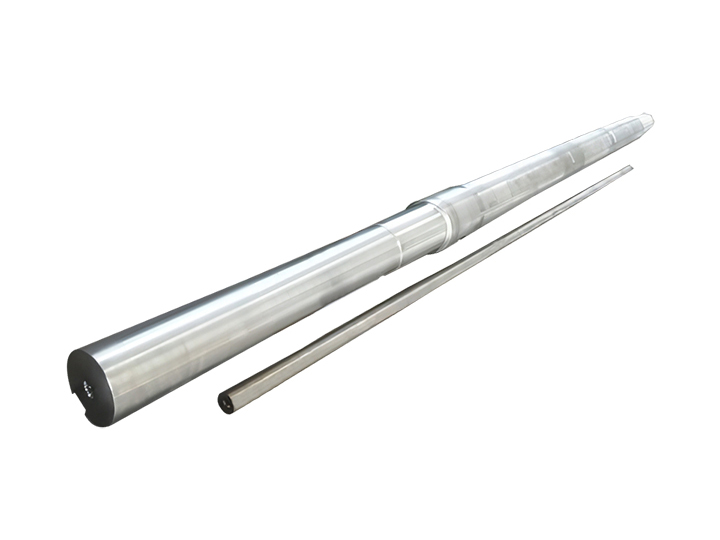
The outstanding performance of stainless steel shafts stems from the synergistic effect of alloying elements and microstructural characteristics, with the following key properties:
2.1 Excellent Corrosion Resistance
The primary alloying element chromium (Cr, content ≥10.5%) reacts with oxygen in the air to form a thin, dense, and adherent chromium oxide film (Cr₂O₃) on the shaft surface. This passive film blocks the penetration of corrosive media (e.g., water, acids, salts) and self-repairs quickly if damaged, effectively preventing rust and corrosion. The addition of nickel (Ni) enhances the stability of the passive film, improving resistance to pitting and crevice corrosion. For example, 316 stainless steel, containing 2–3% molybdenum (Mo), exhibits superior corrosion resistance in chloride-rich environments compared to 304 stainless steel.
2.2 High Strength and Toughness
Stainless steel shafts combine high tensile strength with good ductility and toughness, adapting to dynamic and static load conditions. The mechanical properties vary with stainless steel grades and heat treatment processes:
- Austenitic stainless steel (e.g., 304, 316): Offers moderate strength (tensile strength ≥515 MPa) and excellent toughness, suitable for low-to-medium load applications requiring corrosion resistance.
- Martensitic stainless steel (e.g., 410, 440C): Achieves high strength (tensile strength ≥1000 MPa) and hardness (HRC ≥50) after quenching and tempering, ideal for high-load, wear-resistant scenarios.
- Duplex stainless steel (e.g., 2205): Balances high strength (tensile strength ≥620 MPa) and corrosion resistance, suitable for heavy-load, corrosive environments such as offshore oil platforms.
2.3 Superior Wear Resistance
The wear resistance of stainless steel shafts can be enhanced through heat treatment and surface modification. Martensitic stainless steel shafts, after quenching and tempering, form a hard martensitic microstructure, significantly improving wear resistance. Additional surface treatments (e.g., hard chrome plating, nitriding, laser cladding) further increase surface hardness, extending service life in abrasive environments.
2.4 Excellent Hygienic Performance
Stainless steel shafts have a smooth, non-porous surface that is easy to clean and sterilize, meeting the strict hygiene standards of the food, beverage, and pharmaceutical industries. The passive film is non-toxic and chemically inert, preventing contamination of products and ensuring compliance with regulations such as FDA and EU food safety standards.
2.5 Good Low-Temperature Performance
Austenitic stainless steel shafts maintain excellent toughness at low temperatures (down to -270°C), without brittle fracture, making them suitable for cryogenic applications such as liquefied natural gas (LNG) equipment and refrigeration systems.
3. Common Stainless Steel Grades for Shafts and Their Selection
The selection of stainless steel grades is critical to the performance of shafts, and must be matched to specific working conditions. The following are the most widely used grades and their characteristics:
| Grade Type | Typical Grades | Key Characteristics | Applicable Scenarios |
|------------|---------------|--------------------|----------------------|
| Austenitic | 304, 304L | Good corrosion resistance, high toughness, non-magnetic | Food processing equipment, chemical pumps, general industrial machinery |
| Austenitic | 316, 316L | Superior chloride corrosion resistance, good weldability | Marine equipment, coastal engineering, pharmaceutical machinery |
| Martensitic | 410, 420 | High strength and hardness after heat treatment, moderate corrosion resistance | Valves, gears, high-load transmission shafts |
| Martensitic | 440C | Ultra-high hardness (HRC 58–62), excellent wear resistance | Precision bearings, cutting tools, high-speed rotating shafts |
| Duplex | 2205, 2507 | Balanced strength and corrosion resistance, good fatigue performance | Offshore oil platforms, chemical reactors, desalination plants |
4. Key Manufacturing Processes of Stainless Steel Shafts
The manufacturing process of stainless steel shafts directly affects dimensional accuracy, mechanical properties, and surface quality. The core process flow is as follows:
4.1 Material Selection and Cutting
- Material selection: Determine the stainless steel grade based on application requirements; for critical components, use vacuum-melted stainless steel ingots to reduce inclusions and improve purity.
- Cutting: Cut the stainless steel bar or forging blank to the required length using band saws or CNC cutting machines, ensuring minimal material waste and uniform blank size.
4.2 Forging and Normalizing
- Forging: Perform hot forging on the blank to refine the grain structure, eliminate internal defects (e.g., porosity, segregation), and improve mechanical properties. For high-strength shafts, precision forging is adopted to ensure uniform grain distribution and dimensional accuracy.
- Normalizing: Heat the forged blank to 900–1100°C, hold for a specified time, and cool in air to homogenize the microstructure and reduce internal stress, preparing for subsequent machining.
4.3 Precision Machining
1. Rough machining: Use CNC lathes to remove excess material, forming the basic shape of the shaft (e.g., cylindrical surface, step, keyway) with a machining allowance of 0.5–1 mm left for finish machining.
2. Heat treatment:
- For austenitic stainless steel shafts: Perform solution annealing (1010–1150°C) followed by water quenching to dissolve carbides and maintain a single austenitic microstructure, ensuring corrosion resistance.
- For martensitic stainless steel shafts: Conduct quenching (heating to 800–900°C, oil quenching) and tempering (150–300°C) to form a hard martensitic structure, improving strength and hardness.
3. Finish machining:
- CNC turning: Achieve precise dimensional tolerance (typically IT6–IT7) and surface roughness (Ra 1.6–3.2 μm) for cylindrical surfaces and steps.
- Grinding: Use cylindrical grinders to process the shaft’s working surfaces, ensuring high precision (roundness ≤0.001 mm, straightness ≤0.005 mm/m) and low surface roughness (Ra 0.2–0.8 μm), critical for bearing fit and rotation stability.
- Keyway and thread machining: Use CNC milling machines and thread grinders to machine keyways, splines, and threads, ensuring accurate positioning and torque transmission.
4.4 Surface Treatment
Surface treatment is used to enhance corrosion resistance and wear resistance, with common processes including:
- Passivation: Immerse the shaft in nitric acid or citric acid solution to thicken the chromium oxide film, improving corrosion resistance without changing surface dimensions.
- Electropolishing: Remove the surface oxide layer and micro-burrs through electrochemical reaction, achieving a mirror-like surface (Ra ≤0.05 μm) that meets hygienic requirements for food and medical applications.
- Nitriding: Heat the shaft to 450–550°C in a nitrogen-rich atmosphere to form a hard nitrided layer (0.1–0.5 mm thick) on the surface, improving wear resistance and fatigue strength.
- Hard chrome plating: Deposit a 0.05–0.2 mm thick chrome layer on the shaft surface, with hardness up to HRC 60, suitable for high-wear scenarios such as hydraulic cylinder piston rods.
4.5 Quality Inspection and Finishing
- Dimensional inspection: Use coordinate measuring machines (CMM), micrometers, and dial indicators to verify diameter tolerance, roundness, straightness, and thread parameters, ensuring compliance with design specifications.
- Mechanical property testing: Conduct tensile tests, hardness tests, and impact tests on sample shafts to confirm strength, hardness, and toughness meet requirements.
- Corrosion resistance testing: Perform salt spray tests (neutral salt spray for 200–1000 hours) to evaluate the corrosion resistance of the shaft surface.
- Cleaning and packaging: Clean the shaft with ultrasonic equipment to remove machining residues, then package it with anti-rust oil and protective film to prevent corrosion during storage and transportation.
5. Typical Applications of Stainless Steel Shafts
Stainless steel shafts are widely used in various industrial sectors due to their versatile performance, with typical applications as follows:
5.1 Food and Beverage Industry
Stainless steel shafts (304, 316 grades) are used in mixers, conveyors, filling machines, and pumps. Their smooth, easy-to-clean surfaces prevent bacterial growth, ensuring product hygiene and compliance with food safety regulations.
5.2 Chemical and Pharmaceutical Industry
In chemical reactors, centrifugal pumps, and pharmaceutical granulators, stainless steel shafts (316L, 2205 grades) resist corrosion from acids, alkalis, and organic solvents, ensuring long-term stable operation in harsh chemical environments.
5.3 Marine and Offshore Engineering
Marine propeller shafts, valve stems, and offshore platform transmission shafts adopt 316, duplex stainless steel grades to withstand salt spray corrosion and high loads, reducing maintenance frequency in marine environments.
5.4 Industrial Automation and Robotics
Precision stainless steel shafts (440C, 304 grades) are used in robotic arms, servo motors, and linear actuators. Their high precision, wear resistance, and corrosion resistance ensure accurate positioning and reliable operation of automated equipment.
5.5 Medical Equipment
Stainless steel shafts (316L grade) are used in surgical instruments, diagnostic equipment, and medical pumps. Their biocompatibility, non-toxicity, and sterilization resistance meet the strict requirements of the medical industry.
6. Selection and Maintenance Guidelines for Stainless Steel Shafts
6.1 Selection Guidelines
1. Corrosion environment assessment: Choose 304 grade for mild corrosion environments (e.g., indoor air, fresh water); 316 or duplex grades for severe corrosion environments (e.g., seawater, chloride solutions).
2. Load and speed requirements: Select martensitic grades (e.g., 440C) for high-load, high-wear applications; austenitic grades for low-to-medium load, high-toughness scenarios.
3. Hygiene requirements: Use 304 or 316 grades with electropolished surfaces for food, beverage, and pharmaceutical applications to ensure easy cleaning and sterilization.
4. Temperature conditions: Adopt austenitic grades for cryogenic applications; martensitic grades for high-temperature applications (up to 500°C) with proper heat treatment.
6.2 Maintenance Guidelines
1. Regular cleaning: Clean the shaft surface with neutral detergents to remove dust, oil, and corrosive residues; avoid using abrasive cleaners that damage the passive film.
2. Lubrication management: Apply compatible lubricants (e.g., food-grade lubricants for food industry equipment) to reduce friction between the shaft and bearings, preventing wear and corrosion.
3. Inspection and repair: Regularly check for surface scratches, corrosion spots, or deformation; repair minor defects through polishing or passivation; replace severely damaged shafts promptly to avoid equipment failure.
4. Storage protection: Store stainless steel shafts in a dry, ventilated environment; avoid contact with carbon steel to prevent galvanic corrosion; apply anti-rust oil for long-term storage."











 +86 13771119215