Abstract Aluminum cylinder barrels have emerged as a high-performance alternative to traditional steel cylinder barrels, driven by the demand for lightweight, energy-efficient, and corrosion-resistant components in modern industrial systems. This paper systematically analyzes the core advantages of aluminum cylinder barrels, including high specific strength, excellent corrosion resistance, and superior thermal conductivity. It elaborates on key manufacturing processes such as extrusion, precision machining, and surface treatment, outlines typical application scenarios across industrial automation, automotive, aerospace, and medical equipment sectors, and provides a comprehensive selection guideline based on working conditions, performance requirements, and compatibility standards. The content serves as a technical reference for engineers and procurement personnel engaged in the design, selection, and application of cylinder components.
1. Introduction
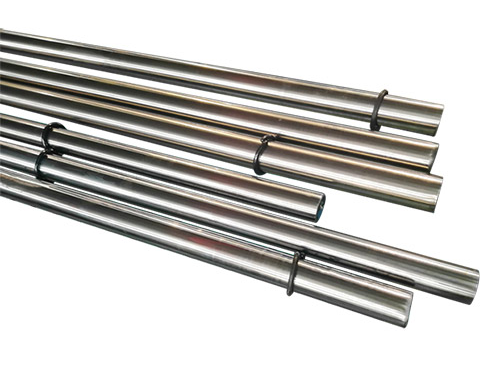
Cylinder barrels are the core structural components of hydraulic and pneumatic cylinders, providing a sealed chamber for piston movement and bearing system pressure. Traditional cylinder barrels are predominantly manufactured from carbon steel or alloy steel, which offer high strength but suffer from drawbacks such as heavy weight, poor corrosion resistance, and high energy consumption during equipment operation. In contrast, aluminum cylinder barrels, made from high-performance aluminum alloys, combine lightweight characteristics with satisfactory mechanical properties, perfectly addressing the technical needs of modern industries for equipment miniaturization, energy conservation, and environmental adaptability. With advancements in aluminum alloy smelting and surface treatment technologies, the application scope of aluminum cylinder barrels has expanded rapidly, becoming a preferred choice in lightweight hydraulic/pneumatic systems, new energy vehicles, and aerospace equipment.
2. Core Advantages of Aluminum Cylinder Barrels
The unique properties of aluminum alloys endow
aluminum cylinder barrels with unparalleled advantages over steel counterparts in specific application scenarios, as detailed below:
2.1 High Specific Strength and Lightweight Performance
Aluminum has a density of approximately 2.7 g/cm³, only one-third that of steel. High-strength aluminum alloys (e.g., 6061-T6, 7075-T6) exhibit a specific strength (strength-to-weight ratio) comparable to or even higher than that of low-carbon steel. The use of aluminum cylinder barrels can reduce the overall weight of hydraulic/pneumatic cylinders by 40%–60%, which directly translates to lower energy consumption for mobile equipment (e.g., agricultural machinery, aerial work platforms) and improved payload capacity for transportable systems. For stationary equipment such as automated production line actuators, lightweight cylinder barrels reduce the load on mounting brackets and extend the service life of supporting structures.
2.2 Excellent Corrosion Resistance
Aluminum forms a dense, self-healing oxide film (Al₂O₃) on its surface when exposed to air, which effectively prevents further oxidation and corrosion. Unlike steel cylinder barrels that require frequent anti-rust treatments, aluminum cylinder barrels can operate stably in humid, corrosive, or outdoor environments without additional coating in mild conditions. For harsh corrosive environments (e.g., coastal areas with high salt spray, chemical plants), surface treatment processes such as anodizing can further enhance their corrosion resistance, making them suitable for long-term use in aggressive media.
2.3 Superior Thermal Conductivity
The thermal conductivity of aluminum is about 4 times that of steel, enabling efficient heat dissipation from the cylinder barrel. In hydraulic systems, hydraulic fluid generates heat due to pressure loss and friction during operation; aluminum cylinder barrels can quickly transfer this heat to the surrounding environment, preventing excessive temperature rise of the hydraulic fluid. This characteristic is critical for high-frequency operation scenarios (e.g., stamping machine actuators, robotic arm cylinders), as it maintains the viscosity and lubricity of the hydraulic fluid, reduces seal wear, and improves the overall stability of the system.
2.4 Excellent Machinability and Formability
Aluminum alloys have lower hardness and better ductility than steel, allowing for easier precision machining processes such as deep hole boring, honing, and threading. This not only reduces manufacturing costs and shortens production cycles but also enables the fabrication of complex-shaped cylinder barrels (e.g., integrated flanges, stepped inner bores) to meet customized design requirements. Additionally, aluminum alloys can be processed via extrusion, forging, and other near-net-shape forming technologies, minimizing material waste and improving production efficiency.
2.5 Low Friction Coefficient
The surface of aluminum cylinder barrels, after precision honing and surface treatment, exhibits a low friction coefficient. When paired with compatible sealing materials (e.g., polyurethane, polytetrafluoroethylene), it reduces the frictional resistance between the piston seal and the cylinder wall, enabling smoother piston movement and higher control precision. This advantage makes aluminum cylinder barrels ideal for applications requiring low-speed, stable motion, such as medical equipment actuators and precision measurement devices.
3. Key Manufacturing Processes of Aluminum Cylinder Barrels
The performance of aluminum cylinder barrels is closely related to manufacturing processes, which typically include four core stages: material selection, forming, precision machining, and surface treatment.
3.1 Material Selection
The choice of aluminum alloy grade directly determines the mechanical properties and application scope of the cylinder barrel. Common grades and their characteristics are as follows:
- 6061-T6 Aluminum Alloy: The most widely used grade for aluminum cylinder barrels, featuring balanced strength, corrosion resistance, and machinability. It is suitable for medium-load hydraulic/pneumatic cylinders in industrial automation, automotive, and general machinery sectors.
- 7075-T6 Aluminum Alloy: A high-strength aluminum alloy with tensile strength comparable to low-carbon steel, ideal for heavy-load cylinder barrels. However, its corrosion resistance is slightly lower than 6061-T6, requiring additional surface treatment for harsh environments.
- 5083-H321 Aluminum Alloy: A marine-grade aluminum alloy with excellent corrosion resistance and weldability, suitable for cylinder barrels used in marine equipment, coastal engineering, and chemical plants.
3.2 Forming Process
1. Extrusion Forming: The primary forming method for aluminum cylinder barrels. Aluminum alloy billets are heated to a plastic state and extruded through a die to form seamless tube blanks with uniform wall thickness. This process ensures high structural integrity and dimensional consistency, suitable for mass production of standard cylinder barrels.
2. Forging Forming: Used for high-strength, thick-walled cylinder barrels. The aluminum alloy billet is subjected to high-pressure forging to refine the grain structure and improve mechanical properties. Forged cylinder barrels exhibit superior fatigue resistance and are suitable for heavy-load, high-pressure applications.
3. Welding Forming: Employed for large-diameter or special-shaped cylinder barrels. Welded cylinder barrels are fabricated by rolling aluminum alloy plates into cylindrical shapes and welding the seams using TIG (Tungsten Inert Gas) or MIG (Metal Inert Gas) welding. Strict welding quality control is required to prevent leakage and structural weakness.
3.3 Precision Machining
1. Deep Hole Boring: The tube blank is processed via deep hole boring to achieve the required inner diameter and wall thickness tolerance. CNC deep hole boring machines ensure high machining accuracy, with inner diameter tolerance controlled within ±0.01 mm for precision applications.
2. Honing: The key process to improve the surface quality of the cylinder bore. Honing uses abrasive stones to remove machining marks, reducing the surface roughness to Ra 0.2–0.4 μm. This creates a cross-hatched surface texture that retains lubricating oil, reducing friction and extending seal life.
3. End Machining: Machining the ends of the cylinder barrel to form mounting flanges, threaded ports, or positioning surfaces, ensuring compatibility with cylinder end covers and hydraulic system connections.
3.4 Surface Treatment
Surface treatment is essential to enhance the wear resistance and corrosion resistance of aluminum cylinder barrels. Common processes include:
- Anodizing: The aluminum cylinder barrel is immersed in an electrolytic solution and subjected to anodic oxidation to form a dense oxide film on the surface. The thickness of the film can be controlled between 5–20 μm, significantly improving corrosion resistance.
- Hard Anodizing: A specialized anodizing process that produces a hard oxide film (thickness 20–100 μm) with high wear resistance. Hard anodized cylinder barrels can be used in high-friction, high-wear scenarios without additional coating.
- Ceramic Coating: A thermal spray process that deposits a ceramic layer (e.g., Al₂O₃-TiO₂) on the cylinder bore surface. This coating offers extreme wear resistance and corrosion resistance, suitable for high-pressure, high-temperature hydraulic systems.
4. Typical Application Scenarios of Aluminum Cylinder Barrels
Aluminum cylinder barrels are widely used in various industrial sectors due to their lightweight and corrosion-resistant properties, with typical applications as follows:
4.1 Industrial Automation Equipment
In automated production lines, aluminum cylinder barrels are used in lightweight pneumatic cylinders and medium-load hydraulic cylinders for workpiece clamping, material handling, and assembly operations. Their lightweight design reduces the inertia of moving parts, enabling faster response speeds and higher positioning accuracy. For example, in electronic component assembly lines, aluminum cylinder barrels are integrated into pick-and-place robots to achieve high-speed, stable motion.
4.2 Automotive and New Energy Vehicles
Aluminum cylinder barrels are increasingly adopted in automotive hydraulic systems, including brake cylinders, clutch cylinders, and active suspension actuators. In electric vehicles (EVs), lightweight aluminum cylinder barrels help reduce vehicle curb weight, extend driving range, and improve energy efficiency. Additionally, their corrosion resistance ensures long-term reliability in the harsh under-vehicle environment.
4.3 Aerospace and Aviation Equipment
The aerospace industry has strict requirements for lightweight components, making aluminum cylinder barrels an ideal choice for aircraft hydraulic systems, satellite attitude control actuators, and unmanned aerial vehicle (UAV) landing gear cylinders. High-strength aluminum alloys (e.g., 7075-T6) are used to manufacture cylinder barrels that withstand high pressure and extreme temperature fluctuations, while their lightweight design reduces aircraft fuel consumption.
4.4 Medical Equipment
Precision aluminum cylinder barrels are used in medical devices such as surgical robots, patient lifts, and diagnostic equipment. Their low friction coefficient enables smooth, low-noise motion, critical for surgical procedures requiring high precision. Additionally, aluminum’s non-toxicity and corrosion resistance meet the strict hygiene standards of medical applications.
4.5 Marine and Coastal Engineering
Marine-grade aluminum alloy (e.g., 5083-H321) cylinder barrels are used in ship hydraulic systems, offshore platform actuators, and coastal monitoring equipment. Their excellent corrosion resistance allows them to operate stably in high-salt, high-humidity environments, eliminating the need for frequent maintenance and replacement.
5. Comprehensive Selection Guidelines for Aluminum Cylinder Barrels
Selecting the right aluminum cylinder barrel requires consideration of working conditions, performance requirements, and compatibility with system components. The following guidelines should be followed:
5.1 Determine Load and Pressure Requirements
- For low-to-medium load, low-pressure applications (≤16 MPa), such as pneumatic cylinders and light hydraulic actuators, 6061-T6 aluminum alloy is recommended for its balanced cost and performance.
- For heavy-load, high-pressure applications (16–31.5 MPa), such as aerospace hydraulic cylinders and heavy-duty industrial actuators, 7075-T6 aluminum alloy is preferred for its high strength. Note that additional surface treatment is required to improve corrosion resistance.
- For corrosive environments, 5083-H321 marine-grade aluminum alloy is the optimal choice, as it offers superior corrosion resistance without relying on surface coatings.
5.2 Match Surface Treatment to Working Environment
- Mild indoor environments: Standard anodizing (5–10 μm film thickness) is sufficient to prevent corrosion.
- High-wear scenarios: Hard anodizing or ceramic coating is required to enhance surface hardness and wear resistance.
- Harsh corrosive environments (e.g., coastal areas, chemical plants): Thick anodizing (15–20 μm) or ceramic coating is recommended to ensure long-term corrosion protection.
5.3 Ensure Compatibility with Sealing Components
The surface texture and material of aluminum cylinder barrels must be compatible with sealing materials to avoid seal wear and leakage:
- For urethane (PU) seals, a honed surface with Ra 0.2–0.4 μm is ideal, as it reduces friction and extends seal life.
- For polytetrafluoroethylene (PTFE) seals, a slightly rougher surface (Ra 0.4–0.8 μm) helps retain lubricating oil and prevent seal slippage.
- Avoid using rubber seals incompatible with aluminum alloys, as some rubber compounds may react with aluminum and cause seal swelling or degradation.
5.4 Consider Machining and Installation Requirements
- For customized applications requiring complex shapes (e.g., integrated flanges, stepped bores), select aluminum alloys with excellent machinability (e.g., 6061-T6) and confirm that the manufacturer can provide precision machining services.
- Ensure that the cylinder barrel’s mounting dimensions (e.g., flange diameter, thread specifications) match the end covers and hydraulic system connections to avoid installation issues.
5.5 Evaluate Cost-Effectiveness
Aluminum cylinder barrels have a higher initial cost than steel cylinder barrels, but their lightweight and low-maintenance characteristics reduce long-term operational costs. Conduct a life-cycle cost analysis to balance initial investment and long-term benefits, especially for mobile equipment and large-scale industrial systems.
6. Conclusion
Aluminum cylinder barrels represent a technological advancement in cylinder component manufacturing, offering a unique combination of lightweight, corrosion resistance, and high specific strength. Their application scope continues to expand with the development of aluminum alloy materials and surface treatment technologies, playing a critical role in industrial automation, automotive, aerospace, and medical sectors. By following the selection guidelines based on load, pressure, environment, and compatibility requirements, engineers can fully leverage the advantages of aluminum cylinder barrels to optimize system performance and reduce operational costs. As the demand for lightweight and energy-efficient industrial equipment grows, aluminum cylinder barrels will undoubtedly become a mainstream choice in the global cylinder component market.











 +86 13771119215