Abstract The hydraulic cylinder barrel serves as the core load-bearing and sealing component of hydraulic cylinders, directly determining the pressure resistance, operation stability, and service life of the entire actuator. This paper systematically dissects the core structural components of hydraulic cylinder barrels, elaborates on key design considerations including material selection, strength calculation, precision control, and sealing compatibility, and establishes a standardized selection principle based on working conditions, performance requirements, and installation constraints. The content provides a comprehensive technical reference for engineers engaged in hydraulic system design, cylinder manufacturing, and equipment maintenance, facilitating the optimal matching of cylinder barrel performance with practical application demands.
1. Introduction
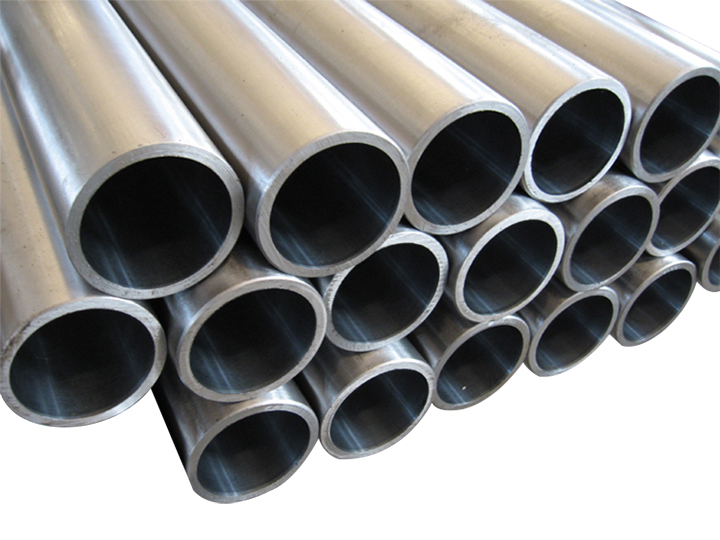
As the main body of
hydraulic cylinders, the cylinder barrel provides a rigid sealed cavity for the reciprocating motion of the piston assembly, bears the internal hydraulic pressure, and ensures the stable transmission of mechanical force. With the development of industrial automation toward high pressure, high precision, and lightweight, the design and selection of hydraulic cylinder barrels have evolved from simple structural manufacturing to a systematic engineering involving material science, mechanical design, and fluid dynamics. Irrational cylinder barrel design will lead to issues such as pressure leakage, piston rod crawling, and structural deformation, directly affecting the operational efficiency of hydraulic systems in construction machinery, industrial automation lines, and aerospace equipment. This paper focuses on the core structure, design essentials, and selection principles of hydraulic cylinder barrels to address the technical pain points in practical applications.
2. Core Structural Components of Hydraulic Cylinder Barrels
The hydraulic cylinder barrel is not a single component but an integrated assembly with multiple auxiliary structures. Its core components and functional characteristics are as follows:
2.1 Barrel Casing
The barrel casing is the primary structural part of the cylinder barrel, responsible for bearing internal hydraulic pressure and guiding the piston movement. Key performance indicators include:
- Inner diameter tolerance: Controlled within H8–H9 grade for standard cylinders and H6–H7 grade for precision cylinders, ensuring the fit clearance between the piston and the barrel wall meets design requirements.
- Surface roughness: The inner wall roughness is typically Ra 0.2–0.4 μm after honing, which forms a cross-hatched texture to retain lubricating oil, reduce friction between the seal and the wall, and prevent seal wear.
- Wall thickness uniformity: Deviation is controlled within ±5% to avoid localized stress concentration caused by uneven thickness, which may lead to barrel deformation under high pressure.
2.2 End Cover Assembly
The end cover assembly includes the front cover (rod cover) and rear cover (head cover), which seal the two ends of the barrel casing and provide support for the piston rod guide and bearing components. The connection methods between end covers and the barrel casing are classified into three types:
1. Flange connection: Features high connection strength and convenient disassembly, suitable for large-diameter, high-pressure hydraulic cylinders in metallurgical and mining equipment.
2. Threaded connection: Compact in structure and lightweight, applicable to medium and small-sized cylinders in automated production lines, but requires anti-loosening measures such as lock nuts.
3. Welded connection: Offers excellent sealing performance and structural rigidity, ideal for cylinders in harsh environments (e.g., high temperature, high vibration), but is not easy to disassemble for maintenance.
2.3 Guide and Anti-rotation Components
- Guide bush: Installed in the front cover, it guides the reciprocating motion of the piston rod, prevents the piston from tilting, and reduces the wear between the piston rod and the end cover. Common materials include cast iron, bronze, and engineering plastics, with engineering plastics preferred for low-noise, high-precision applications.
- Anti-rotation mechanism: For cylinders requiring precise linear motion without rotation (e.g., robotic arm actuators), anti-rotation structures such as key grooves, splines, or guide rods are designed to limit the rotational displacement of the piston rod.
2.4 Sealing and Dust-proof System
The sealing system is critical to the performance of the cylinder barrel, consisting of dynamic seals (between piston and barrel wall, piston rod and front cover) and static seals (between end covers and barrel casing):
- Dynamic seals: Adopt U-shaped, Y-shaped, or combined seals, with materials selected according to working conditions (e.g., nitrile rubber for general environments, fluororubber for high-temperature, oil-resistant scenarios, and polyurethane for high-wear applications).
- Static seals: Use O-rings or gaskets to prevent hydraulic fluid leakage at the connection interfaces.
- Dust-proof rings: Installed on the outer side of the front cover to prevent dust, debris, and moisture from entering the cylinder barrel, protecting internal seals and guiding components from wear.
2.5 Cushioning Components
Cushioning components are installed at both ends of the cylinder barrel to reduce the impact when the piston moves to the end of the stroke. The working principle is to throttle the hydraulic fluid discharge through throttle valves or cushioning sleeves, decelerating the piston gradually. Common cushioning structures include adjustable throttle cushioning and fixed throttle cushioning, with adjustable types suitable for scenarios requiring variable motion speeds.
3. Key Design Essentials of Hydraulic Cylinder Barrels
The design of hydraulic cylinder barrels must balance structural strength, precision, sealing performance, and lightweight requirements, with the following key considerations:
3.1 Material Selection Principle
The material of the cylinder barrel directly determines its pressure resistance, corrosion resistance, and service life. Common materials and their application scenarios are as follows:
1. Carbon structural steel (e.g., 20, 45): Low cost and good machinability, suitable for low-to-medium pressure (≤16 MPa) hydraulic cylinders in general industrial equipment. 45 steel is preferred for its higher strength and is often quenched and tempered to improve hardness and toughness.
2. Alloy steel (e.g., 40Cr, 27SiMn): High tensile strength and fatigue resistance, applicable to high-pressure (16–31.5 MPa) cylinders in construction machinery and metallurgical equipment. Heat treatment processes such as quenching and tempering are required to enhance mechanical properties.
3. Stainless steel (e.g., 304, 316L): Excellent corrosion resistance, suitable for cylinders in chemical, marine, and food processing industries, where exposure to corrosive media or high humidity is common.
4. Aluminum alloy (e.g., 6061-T6, 7075-T6): Lightweight with high specific strength, ideal for lightweight cylinders in aerospace, automotive, and medical equipment, but limited to low-to-medium pressure applications due to lower hardness compared to steel.
3.2 Structural Strength Calculation
Structural strength calculation is the core of cylinder barrel design to prevent burst deformation under rated pressure. Key calculation items include:
- Wall thickness calculation: Based on the thin-walled cylinder formula \(t=\frac{p\cdot d}{2\cdot [\sigma]}\) (for thin-walled cylinders, \(d/t\ge 10\)) or thick-walled cylinder formula (Lame's formula) for thick-walled cylinders (\(d/t<10\)), where \(t\) is the wall thickness, \(p\) is the rated pressure, \(d\) is the inner diameter of the barrel, and \([\sigma]\) is the allowable stress of the material.
- Fatigue strength check: For cylinders with frequent reciprocating motion, fatigue strength check is required to avoid fatigue cracking caused by cyclic stress, referring to industry standards such as ISO 6020/2.
- End cover connection strength check: Verify the tensile and shear strength of flange bolts or threaded connections to ensure they can withstand the axial force generated by hydraulic pressure.
3.3 Precision Control of the Inner Wall
The precision of the cylinder barrel inner wall directly affects the sealing performance and motion stability of the piston:
- Honing process: The key process to improve inner wall precision. Honing uses abrasive stones to perform low-speed, high-pressure grinding on the inner wall, correcting the roundness and cylindricity errors caused by boring, and forming a uniform cross-hatched texture.
- Dimensional tolerance control: The inner diameter tolerance should be matched with the piston seal type. For example, clearance seals require looser tolerances, while contact seals require tighter tolerances to ensure sealing performance without excessive friction.
3.4 Sealing System Compatibility Design
The compatibility between the cylinder barrel and the sealing system is crucial to prevent seal failure and oil leakage:
- Material compatibility: Avoid chemical reactions between the barrel material and the seal material. For example, aluminum alloy barrels should not use nitrile rubber seals for long-term use, as it may cause seal swelling.
- Surface texture compatibility: The cross-hatched texture of the honed inner wall should match the seal type. For polyurethane seals, a smoother surface (Ra 0.2–0.3 μm) is preferred to reduce wear, while for rubber seals, a slightly rougher surface (Ra 0.3–0.4 μm) helps retain lubricating oil.
3.5 Lightweight Design Optimization
Under the premise of meeting strength requirements, lightweight design can reduce the overall weight of the cylinder and improve the energy efficiency of the equipment:
- Thin-walled structure design: Use finite element analysis (FEA) to optimize the wall thickness distribution, reducing thickness in low-stress areas while ensuring strength in high-stress areas.
- High specific strength material adoption: Replace traditional carbon steel with aluminum alloy or high-strength alloy steel to reduce weight without sacrificing performance.
- Integrated structural design: Integrate the barrel casing with mounting flanges or connection ports to reduce the number of components and overall weight.
4. Standardized Selection Principles of Hydraulic Cylinder Barrels
The selection of hydraulic cylinder barrels should be based on actual working conditions and performance requirements, following the below standardized principles:
4.1 Match Pressure Rating and Working Medium
- Low-pressure scenarios (≤10 MPa): Select carbon steel (20) or aluminum alloy cylinder barrels, with nitrile rubber seals, suitable for pneumatic-hydraulic hybrid systems and light industrial equipment.
- Medium-pressure scenarios (10–25 MPa): Choose 45 steel (quenched and tempered) or 40Cr alloy steel barrels, with polyurethane or combined seals, applicable to automated production lines and agricultural machinery.
- High-pressure scenarios (>25 MPa): Adopt 27SiMn or high-strength alloy steel barrels, with fluororubber seals, suitable for construction machinery, metallurgical equipment, and marine hydraulic systems.
- Corrosive medium scenarios: Select 316L stainless steel barrels with corrosion-resistant seals, applicable to chemical processing and marine engineering.
4.2 Adapt to Working Temperature and Environment
- Normal temperature environment (–10°C to 60°C): General carbon steel or aluminum alloy barrels with nitrile rubber seals can meet the requirements.
- High-temperature environment (>60°C): Use alloy steel barrels with fluororubber seals, and add heat dissipation structures if necessary to prevent hydraulic fluid from overheating.
- Low-temperature environment (<–10°C): Select low-temperature resistant steel barrels with silicone rubber seals to avoid seal hardening and cracking.
- Dusty or abrasive environments: Equip with reinforced dust-proof rings and hard-anodized (for aluminum alloy) or chrome-plated (for steel) barrel inner walls to enhance wear resistance.
4.3 Meet Installation Space and Motion Requirements
- Limited installation space: Choose cylinder barrels with threaded end covers or integrated structures to reduce the overall size.
- Precision linear motion requirements: Select barrels with high inner wall precision (H6 tolerance, Ra 0.2 μm) and anti-rotation mechanisms to ensure motion accuracy.
- Long-stroke motion requirements: Adopt seamless steel pipe barrels with good straightness to prevent piston tilting during long-stroke movement; for ultra-long strokes, consider telescopic cylinder barrel structures.
4.4 Consider Maintenance Convenience
- Frequent maintenance scenarios: Select cylinder barrels with flange connections for easy disassembly and replacement of seals and guide components.
- Harsh environment with low maintenance frequency: Choose welded end cover barrels with high sealing performance to reduce maintenance times.
4.5 Evaluate Cost-Effectiveness
- Mass-produced general equipment: Prioritize cost-effective carbon steel barrels to reduce manufacturing costs.
- High-end precision equipment or special environment applications: Select high-performance materials (e.g., stainless steel, high-strength alloy steel) even with higher costs, to ensure long-term reliable operation and reduce maintenance costs.
5. Functional Verification and Quality Control
To ensure the performance of the designed and selected cylinder barrels meet requirements, the following functional verification and quality control measures must be implemented:
1. Pressure test: Conduct a hydraulic pressure test at 1.5 times the rated pressure for 5–10 minutes to check for barrel deformation, leakage, or burst.
2. Sealing performance test: Operate the cylinder reciprocally at rated pressure to detect internal and external leakage, with leakage rates meeting ISO 6020/2 standards.
3. Fatigue durability test: Perform 100,000+ reciprocating cycles at rated pressure to check for fatigue cracks or seal wear.
4. Dimensional precision inspection: Use coordinate measuring machines (CMM) to inspect inner diameter tolerance, roundness, and cylindricity, ensuring compliance with design specifications.











 +86 13771119215