1. Introduction
In the era of high-end equipment manufacturing, the demand for precision components is increasingly stringent. Hydraulic cylinders, pneumatic cylinders, guide sleeves, and other core components in equipment have extremely high requirements for the dimensional accuracy, surface quality, and mechanical properties of their tube-shaped parts. Traditional seamless steel tubes, after simple turning or grinding, can no longer meet the precision requirements of high-end equipment due to defects such as uneven inner diameter, poor roundness, rough surface, and internal residual stress, which often lead to problems such as oil leakage, high friction, short service life, and low equipment efficiency.
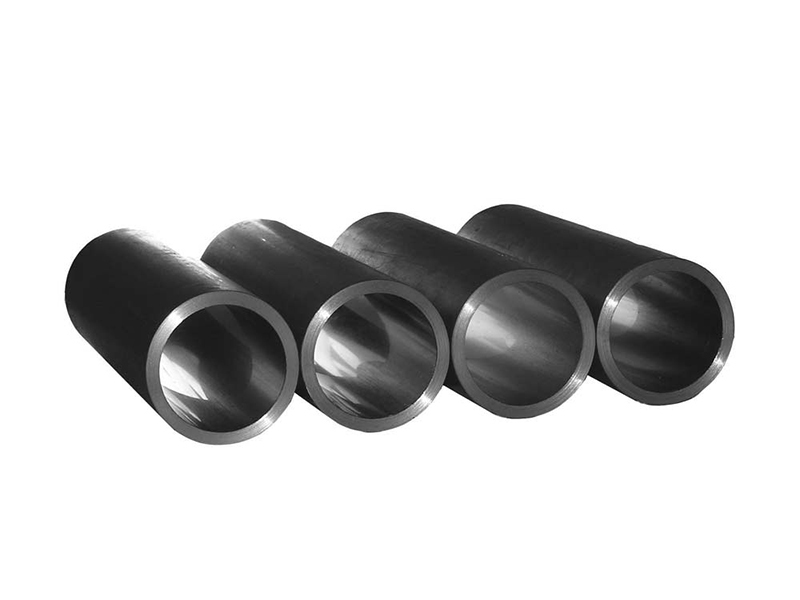
High-precision honed tubes, as an upgraded product of traditional seamless tubes, adopt precision honing technology to process the inner and outer surfaces of the tube, fundamentally solving the defects of traditional tubes. The honing process is a precision finishing method that uses honing tools to perform low-speed, high-pressure grinding and polishing on the tube surface, which can not only improve the dimensional accuracy and surface finish of the tube, but also eliminate internal residual stress, improve the surface hardness and wear resistance of the tube. With the continuous development of honing technology and equipment, high-precision honed tubes have gradually become the core components of high-end hydraulic, pneumatic, and mechanical equipment, and their application scope has been continuously expanded.
At present, the industry still faces problems such as inconsistent technical standards, improper selection of honing processes, and insufficient quality control, which affect the performance exertion and application effect of high-precision honed tubes. Therefore, it is necessary to systematically sort out the core technology of high-precision honed tubes, clarify their technical indicators and application characteristics, and provide a professional application guide for relevant practitioners. This paper takes high-precision honed tubes as the research object, starts from the core technology, elaborates on the honing process, equipment, and quality control, then analyzes the industry application and selection criteria, verifies the application effect through cases, and looks forward to the development trends, aiming to provide a comprehensive reference for the industry.
2. Core Technical System of High-Precision Honed Tubes
The core technical system of high-precision honed tubes is composed of technical indicators, honing process principles, key equipment and tooling, and quality control technology. Each link is closely linked, and the rationality and standardization of the technology directly determine the precision and performance of the honed tubes.
2.1 Definition and Core Technical Indicators
High-precision honed tubes refer to seamless steel tubes (or other metal tubes) that have been processed by precision honing technology, with strict control of dimensional accuracy, shape accuracy, surface quality, and mechanical properties, and meet the requirements of high-end equipment for precision components. The core technical indicators are the key to measuring the quality of high-precision honed tubes, which are clearly defined in national and industrial standards (such as GB/T 8713-2018 《Seamless Steel Tubes for Hydraulic Cylinders》 and ISO 4394-1:2018).
- Dimensional Accuracy:
- Inner diameter tolerance: Usually IT7~IT9, and can reach IT5~IT6 for ultra-high precision requirements. The inner diameter deviation is controlled within ±0.005mm~±0.020mm, ensuring uniform inner diameter of the tube.
- Wall thickness tolerance: Controlled within ±0.01mm~±0.03mm, ensuring uniform wall thickness and avoiding uneven stress during operation.
- Shape Accuracy:
- Roundness: ≤0.002mm~≤0.008mm, ensuring that the cross-section of the tube is a standard circle, avoiding eccentricity and uneven wear.
- Straightness: ≤0.001mm/m~≤0.005mm/m, ensuring that the tube has good straightness, reducing friction and wear between the piston and the tube wall in hydraulic cylinders.
- Cylindricity: ≤0.003mm~≤0.010mm, comprehensively controlling the shape deviation of the tube, ensuring the overall precision of the tube.
- Surface Quality:
- Surface roughness: The inner surface roughness Ra≤0.2μm~Ra≤1.6μm, and the outer surface roughness Ra≤0.4μm~Ra≤3.2μm. The smooth surface can reduce friction resistance, improve sealing performance, and prevent oil leakage.
- Surface defects: No scratches, cracks, pores, slag inclusions, or oxide layers on the inner and outer surfaces, ensuring the surface integrity and corrosion resistance of the tube.
- Mechanical Properties:
- Hardness: After honing, the surface hardness of the tube can be increased by 10%~20% compared with the base material, usually HRC28~HRC45, improving wear resistance and service life.
- Tensile strength: ≥450MPa~≥650MPa, yield strength: ≥250MPa~≥400MPa, ensuring the bearing capacity and structural stability of the tube under high pressure.
- Residual stress: The honing process can eliminate the internal residual stress of the tube, reducing the deformation of the tube during use.
2.2 Core Honing Process Principles
Honing is a precision finishing process that combines grinding, polishing, and lapping. It uses a honing tool (honing head) with abrasive stones to perform low-speed, high-pressure relative motion between the tool and the tube workpiece, removing a small amount of material from the surface of the tube, thereby improving the dimensional accuracy, shape accuracy, and surface quality of the tube. The core principles of the honing process are as follows:
- Material Removal Mechanism: The honing process removes material through three ways: abrasive cutting, abrasive scratching, and abrasive polishing. The abrasive stones on the honing head are in contact with the tube surface under high pressure. The sharp abrasive particles cut the surface material to form chips; the relatively soft abrasive particles scratch the surface to form a smooth surface; the fine abrasive particles polish the surface to further improve the surface finish. The material removal amount of each honing process is small (usually 0.01mm~0.10mm), ensuring the precision of the tube.
- Relative Motion Principle: The honing process has two types of relative motion: the rotation of the honing head and the reciprocating movement of the tube (or honing head). The rotation of the honing head ensures uniform material removal around the inner surface of the tube, and the reciprocating movement ensures uniform material removal along the length of the tube. The combination of the two motions forms a cross-grain pattern on the tube surface, which can improve the surface wear resistance and lubrication performance.
- Pressure Control Principle: The honing pressure is a key parameter affecting the honing effect. The pressure is usually controlled at 0.5MPa~2.5MPa. Too low pressure will lead to insufficient material removal and failure to meet the precision requirements; too high pressure will lead to excessive material removal, surface burns, and reduced precision. The honing pressure is adjusted according to the material of the tube, the abrasive stone type, and the precision requirements.
The honing process is usually divided into three stages: rough honing, semi-finish honing, and finish honing. Rough honing removes most of the surplus material, improves the shape accuracy of the tube, and prepares for semi-finish honing; semi-finish honing further improves the dimensional accuracy and surface quality, and reduces the surface roughness; finish honing removes a small amount of material, ensures the final dimensional accuracy, shape accuracy, and surface finish, and eliminates internal residual stress.
2.3 Key Equipment and Tooling for Honing
The quality of high-precision honed tubes is closely related to the performance of honing equipment and tooling. The key equipment and tooling include honing machines, honing heads, abrasive stones, and auxiliary tooling, which must meet the precision requirements of honing processing.
- Honing Machines: The core equipment for honing processing, which is divided into vertical honing machines and horizontal honing machines according to the structure:
- Vertical honing machines: Suitable for processing short and thick honed tubes, with high positioning accuracy and stable processing performance, the rotation accuracy of the honing head is ≤0.001mm, and the reciprocating movement accuracy is ≤0.002mm/m.
- Horizontal honing machines: Suitable for processing long and thin honed tubes (length up to 10m), with stable feeding performance and uniform processing pressure, which can ensure the straightness and dimensional accuracy of long tubes. The advanced horizontal honing machines are equipped with CNC control systems, which can realize automatic control of processing parameters (rotation speed, reciprocating speed, pressure), improving processing efficiency and precision.
- Honing Heads: The core tool for honing processing, which is composed of a mandrel, abrasive stone holders, and abrasive stones. The honing head must have high rigidity and precision, and the radial expansion amount of the abrasive stones can be adjusted precisely (adjustment accuracy ≤0.001mm). According to the shape of the abrasive stones, the honing heads are divided into cylindrical honing heads, conical honing heads, and special-shaped honing heads, which are suitable for processing different types of honed tubes.
- Abrasive Stones: The key component for material removal, which is made of abrasive particles and bonding agents. The selection of abrasive stones is determined by the material of the tube and the precision requirements:
- Abrasive particles: Common abrasive particles include corundum (Al₂O₃), silicon carbide (SiC), and diamond. Corundum is suitable for processing carbon steel and alloy steel; silicon carbide is suitable for processing cast iron and non-ferrous metals; diamond is suitable for processing high-hardness materials (such as stainless steel, tool steel) and ultra-high precision honing.
- Bonding agents: Common bonding agents include vitrified bonding agents, resin bonding agents, and metal bonding agents. Vitrified bonding agents have high hardness and wear resistance, suitable for rough honing and semi-finish honing; resin bonding agents have good toughness and self-sharpening, suitable for finish honing; metal bonding agents have high strength and stability, suitable for diamond abrasive stones.
- Auxiliary Tooling: Including positioning fixtures, clamping tools, and cooling lubricants. The positioning fixtures and clamping tools ensure the positioning accuracy of the tube during processing, avoiding deformation and eccentricity; the cooling lubricants play the roles of cooling, lubrication, and chip removal, reducing friction between the abrasive stones and the tube surface, preventing surface burns, and improving the surface quality of the tube. The cooling lubricants are usually emulsion, cutting oil, or special honing oil.
2.4 Quality Control Technology
The quality control of high-precision honed tubes runs through the entire production process, including pre-processing quality control, honing process quality control, and post-processing quality control, ensuring that each technical indicator meets the design requirements.
- Pre-Processing Quality Control: The pre-processing of honed tubes mainly includes blank selection and preliminary processing (cutting, turning, grinding). The blank (seamless steel tube) must meet the requirements of material composition and mechanical properties, with no internal defects (such as cracks, pores). The preliminary processing must ensure the basic dimensional accuracy and straightness of the tube, providing a good foundation for honing processing.
- Honing Process Quality Control: Real-time monitoring of processing parameters (rotation speed, reciprocating speed, honing pressure, abrasive stone wear) to ensure stable processing; regularly inspect the dimensional accuracy, shape accuracy, and surface quality of the tube during processing, and adjust the processing parameters in time when deviations are found; control the wear of the abrasive stones, and replace the abrasive stones in time when the wear exceeds the limit.
- Post-Processing Quality Control: After honing, the tube is subjected to cleaning, drying, and anti-corrosion treatment to remove the cooling lubricant and chips on the surface; perform comprehensive quality inspection, including dimensional accuracy inspection (using micrometers, dial gauges, and coordinate measuring machines), shape accuracy inspection (using roundness meters, straightness meters), surface quality inspection (using surface roughness meters and microscopes), and mechanical properties inspection (using hardness testers and tensile testing machines); sort the qualified products and unqualified products, and repair or scrap the unqualified products.
3. Industry Application of High-Precision Honed Tubes
High-precision honed tubes, with their excellent precision and performance, are widely used in various high-end equipment fields. Different industries have different requirements for the specifications, materials, and precision of honed tubes. The following is a detailed analysis of the application characteristics and requirements of high-precision honed tubes in key industries.
3.1 Hydraulic System Application
Hydraulic systems are the main application field of high-precision honed tubes, which are mainly used to manufacture hydraulic cylinders, hydraulic sleeves, and hydraulic pipelines. Hydraulic systems require high pressure resistance, good sealing performance, and low friction, which put forward strict requirements on the precision and surface quality of honed tubes.
Application characteristics: The honed tubes used in hydraulic cylinders are usually made of 20# steel, 45# steel, or alloy steel (12Cr1MoV), with inner diameter tolerance IT7~IT8, roundness ≤0.005mm, straightness ≤0.003mm/m, and surface roughness Ra≤0.8μm. The smooth inner surface can reduce the friction between the piston and the cylinder wall, improve the efficiency of the hydraulic system, and prevent oil leakage; the high dimensional accuracy and shape accuracy can ensure the stable operation of the hydraulic cylinder under high pressure (up to 31.5MPa), and extend the service life of the hydraulic system.
Typical applications: Engineering machinery (excavators, loaders, cranes), industrial hydraulic equipment (hydraulic presses, injection molding machines), and hydraulic systems of ships and aircraft.
3.2 Pneumatic System Application
Pneumatic systems are another important application field of high-precision honed tubes, which are mainly used to manufacture pneumatic cylinders, pneumatic sleeves, and air pipelines. Pneumatic systems require good air tightness, low friction, and fast response speed, which require the honed tubes to have high surface quality and dimensional accuracy.
Application characteristics: The honed tubes used in pneumatic cylinders are usually made of carbon steel or aluminum alloy, with inner diameter tolerance IT8~IT9, roundness ≤0.008mm, straightness ≤0.005mm/m, and surface roughness Ra≤1.6μm. The smooth surface can reduce the friction between the piston and the cylinder wall, improve the response speed of the pneumatic cylinder, and ensure good air tightness; the light weight of aluminum alloy honed tubes can reduce the overall weight of the pneumatic system, which is suitable for lightweight equipment.
Typical applications: Automated production lines, robotic arms, pneumatic tools, and aerospace pneumatic systems.
3.3 Engineering Machinery Application
Engineering machinery (such as excavators, loaders, cranes, bulldozers) works in harsh environments (high load, high vibration, dust), which require the honed tubes to have high strength, wear resistance, and corrosion resistance. High-precision honed tubes are mainly used in the hydraulic cylinders and guide sleeves of engineering machinery.
Application characteristics: The honed tubes used in engineering machinery are usually made of high-strength alloy steel (45# steel, 27SiMn), with inner diameter tolerance IT7~IT8, roundness ≤0.006mm, straightness ≤0.004mm/m, surface roughness Ra≤0.8μm, and surface hardness HRC30~HRC40. The high strength and wear resistance can ensure the honed tubes withstand high load and high vibration; the corrosion resistance (after anti-corrosion treatment) can prevent the tube from being corroded by dust and moisture, extending the service life of the engineering machinery.
3.4 Aerospace Application
Aerospace equipment (such as aircraft, rockets, satellites) has extremely high requirements for the precision, reliability, and lightweight of components. High-precision honed tubes are mainly used in the hydraulic systems, pneumatic systems, and fuel pipelines of aerospace equipment.
Application characteristics: The honed tubes used in aerospace equipment are usually made of high-precision alloy steel, titanium alloy, or aluminum alloy, with inner diameter tolerance IT5~IT6, roundness ≤0.002mm, straightness ≤0.001mm/m, and surface roughness Ra≤0.2μm. The ultra-high precision can ensure the stable operation of the aerospace equipment under extreme conditions (high temperature, high pressure, high altitude); the lightweight material (titanium alloy, aluminum alloy) can reduce the overall weight of the equipment, improving the fuel efficiency and flight performance.
3.5 Automotive Manufacturing Application
In automotive manufacturing, high-precision honed tubes are mainly used in the hydraulic braking system, power steering system, and engine components. Automobile components require high reliability, long service life, and low cost, which require the honed tubes to have good performance and reasonable price.
Application characteristics: The honed tubes used in automotive manufacturing are usually made of carbon steel or low-alloy steel, with inner diameter tolerance IT8~IT9, roundness ≤0.007mm, straightness ≤0.005mm/m, and surface roughness Ra≤1.6μm. The high reliability can ensure the safe operation of the automobile; the low cost can meet the mass production needs of the automobile industry.
Typical applications: Automobile hydraulic brake cylinders, power steering cylinders, and engine cylinder liners.
4. Industry Application Guide: Selection and Installation Requirements
The rational selection and correct installation of high-precision honed tubes are the key to ensuring their performance and application effect. This section provides a professional application guide for relevant practitioners, including selection criteria, installation requirements, and daily maintenance methods.
4.1 Selection Criteria
- According to Working Conditions:
- High-pressure scenarios (hydraulic cylinders with pressure ≥20MPa): Select high-strength alloy steel honed tubes (such as 45# steel, 27SiMn), with inner diameter tolerance IT7, surface roughness Ra≤0.8μm, and surface hardness HRC30~HRC40.
- Corrosive scenarios (marine, chemical equipment): Select stainless steel honed tubes (304, 316L) or carbon steel honed tubes with anti-corrosion treatment (galvanizing, painting), ensuring good corrosion resistance.
- Lightweight scenarios (aerospace, automotive): Select aluminum alloy or titanium alloy honed tubes, reducing the overall weight of the equipment.
- Ultra-high precision scenarios (aerospace, precision machinery): Select honed tubes with inner diameter tolerance IT5~IT6, roundness ≤0.002mm, and surface roughness Ra≤0.2μm.
- According to Material Performance: Select the material of the honed tube according to the mechanical properties (strength, hardness, toughness) and corrosion resistance required by the application scenario. Carbon steel honed tubes are suitable for ordinary scenarios with low cost; alloy steel honed tubes are suitable for high-pressure, high-strength scenarios; stainless steel honed tubes are suitable for corrosive scenarios; non-ferrous metal honed tubes are suitable for lightweight scenarios.
- According to Technical Indicators: According to the design requirements of the equipment, select the honed tube with appropriate dimensional tolerance, shape accuracy, and surface roughness. Avoid over-selecting high-precision honed tubes (increasing cost) or under-selecting (failing to meet performance requirements).
4.2 Installation Requirements
- Cleaning Before Installation: Before installation, clean the inner and outer surfaces of the honed tube to remove oil, dust, and other impurities, avoiding the impact of impurities on the sealing performance and friction resistance.
- Positioning and Clamping: During installation, ensure the positioning accuracy of the honed tube, avoid eccentricity and deformation. The clamping force should be appropriate, not too large (to avoid deformation) or too small (to avoid loosening during operation).
- Sealing Installation: The connection between the honed tube and other components (such as flanges, connectors) should be sealed tightly, using appropriate sealing materials (O-rings, gaskets) to prevent oil leakage or air leakage. The sealing surface should be smooth and free of defects.
- Avoid Collision and Scratch: During installation, avoid collision and scratch on the surface of the honed tube, which will damage the surface quality and reduce the wear resistance and corrosion resistance of the tube.
4.3 Daily Maintenance Methods
- Regular Cleaning: Regularly clean the inner and outer surfaces of the honed tube to remove dirt, oil, and chips, ensuring the smoothness of the surface and the normal operation of the equipment.
- Lubrication Maintenance: For honed tubes used in hydraulic and pneumatic systems, regularly replace the lubricating oil or coolant to ensure good lubrication effect, reduce friction and wear, and extend the service life of the tube.
- Regular Inspection: Regularly inspect the dimensional accuracy, shape accuracy, and surface quality of the honed tube, and check for cracks, corrosion, and other defects. If defects are found, repair or replace the tube in time.
- Anti-Corrosion Maintenance: For honed tubes used in corrosive environments, regularly check the anti-corrosion layer, and repair or re-coat the anti-corrosion layer if it is damaged, preventing corrosion of the tube.
5. Practical Application Cases and Effect Analysis
To further verify the application effect and technical advantages of high-precision honed tubes, this section selects typical application cases in hydraulic systems, engineering machinery, and aerospace fields, and analyzes the performance improvement and economic benefits brought by high-precision honed tubes.
5.1 Case 1: Hydraulic Cylinder Honed Tube Application
A hydraulic press manufacturer originally used traditional seamless steel tubes for the hydraulic cylinders of its 1000-ton hydraulic press, with problems such as uneven inner diameter, rough surface, and oil leakage. The inner diameter tolerance of the traditional tubes is IT10, surface roughness Ra≥3.2μm, and the service life of the hydraulic cylinder is only 1.5 years. To improve the performance and service life of the hydraulic press, the manufacturer replaced the traditional seamless steel tubes with high-precision honed tubes (material: 45# steel, inner diameter tolerance IT7, roundness ≤0.005mm, straightness ≤0.003mm/m, surface roughness Ra≤0.8μm).
After the replacement, the hydraulic cylinder has no oil leakage, the friction resistance is reduced by 30%, the working efficiency of the hydraulic press is increased by 20%, and the service life of the hydraulic cylinder is extended to 5 years. The annual maintenance cost of the hydraulic press is reduced by 40%, and the annual economic benefit is about 800,000 yuan, achieving significant economic benefits and performance improvement.
5.2 Case 2: Engineering Machinery Hydraulic System Application
An engineering machinery manufacturer produces excavators, and the hydraulic cylinders of the original excavators use ordinary honed tubes, with problems such as short service life, high wear, and frequent maintenance. The service life of the hydraulic cylinder is only 2 years, and the annual maintenance cost per excavator is about 15,000 yuan. The manufacturer replaced the ordinary honed tubes with high-precision alloy steel honed tubes (material: 27SiMn, inner diameter tolerance IT7, surface roughness Ra≤0.8μm, surface hardness HRC35).
After the replacement, the service life of the hydraulic cylinder is extended to 6 years, the wear rate is reduced by 60%, and the annual maintenance cost per excavator is reduced to 5,000 yuan. Based on the annual production of 500 excavators, the annual maintenance cost is reduced by 5 million yuan, and the reliability of the excavators is significantly improved, reducing customer complaints by 70%.
5.3 Case 3: Aerospace Pneumatic System Application
An aerospace manufacturer produces civil aircraft, and the pneumatic system of the aircraft requires ultra-high precision honed tubes to ensure stable operation under high altitude and high pressure conditions. The manufacturer selected high-precision titanium alloy honed tubes (material: TC4 titanium alloy, inner diameter tolerance IT5, roundness ≤0.002mm, straightness ≤0.001mm/m, surface roughness Ra≤0.2μm) for the pneumatic system.
After the application, the pneumatic system of the aircraft operates stably, with no air leakage, the response speed is increased by 15%, and the weight of the pneumatic system is reduced by 25% compared with the original steel honed tubes. The safety and reliability of the aircraft are significantly improved, and the fuel efficiency is increased by 8%, achieving good technical and economic benefits.
6. Common Technical Problems and Solutions
In the production and application process of high-precision honed tubes, some technical problems are often encountered, which affect the precision, performance, and service life of the tubes. This section analyzes the common technical problems and proposes corresponding solutions.
6.1 Common Technical Problems
- Dimensional Deviation Exceeding the Standard: The inner diameter, roundness, or straightness of the honed tube exceeds the design requirements, which is mainly caused by improper honing process parameters (rotation speed, reciprocating speed, pressure), wear of the honing head, or deformation of the tube during processing.
- Surface Quality Defects: The surface of the honed tube has scratches, burns, or uneven roughness, which is mainly caused by impure abrasive stones, insufficient cooling lubrication, or excessive honing pressure.
- Insufficient Bonding Strength (for composite honed tubes): For composite honed tubes (such as steel-aluminum composite), the bonding between the inner and outer layers is not tight, which is mainly caused by improper composite process or insufficient cleaning of the bonding surface.
- Corrosion of the Tube Surface: The surface of the honed tube is corroded, which is mainly caused by improper material selection, insufficient anti-corrosion treatment, or harsh working environment (high humidity, corrosive medium).
6.2 Solutions
- Solving Dimensional Deviation: Optimize the honing process parameters, adjust the rotation speed, reciprocating speed, and honing pressure according to the material and precision requirements; regularly inspect and replace the honing head to ensure the precision of the honing head; use appropriate clamping tools to avoid deformation of the tube during processing; perform post-processing correction (such as straightening) for tubes with slight dimensional deviation.
- Solving Surface Quality Defects: Select high-purity abrasive stones and replace them regularly; ensure sufficient supply of cooling lubricants and replace them in time; adjust the honing pressure to avoid excessive pressure leading to surface burns; clean the honing head and the tube surface regularly to avoid scratches caused by chips.
- Solving Insufficient Bonding Strength: Strengthen the cleaning of the bonding surface of the composite tube, remove oil, oxide layers, and other impurities; optimize the composite process parameters (temperature, pressure, holding time) to ensure tight bonding between the inner and outer layers; perform bonding strength testing after composite processing, and repair or scrap unqualified products.
- Solving Surface Corrosion: Select appropriate materials according to the working environment (such as stainless steel for corrosive scenarios); perform anti-corrosion treatment (galvanizing, painting, ceramic coating) on the surface of the honed tube; regularly maintain the tube, clean the surface, and repair the anti-corrosion layer in time if it is damaged.
7. Future Development Trends of High-Precision Honed Tubes
With the continuous development of high-end equipment manufacturing, new materials, and intelligent technology, high-precision honed tubes will develop towards ultra-high precision, high performance, lightweight, and intelligence, further expanding their application scope and improving their market competitiveness.
- Ultra-High Precision Development: With the demand for ultra-high precision equipment in aerospace, precision machinery, and other fields, the precision of honed tubes will be further improved, and the inner diameter tolerance will reach IT4~IT5, the roundness ≤0.001mm, and the surface roughness Ra≤0.1μm. The development of ultra-precision honing technology and equipment (such as CNC ultra-precision honing machines) will provide technical support for ultra-high precision honed tubes.
- High Performance and Multifunctional Development: Develop honed tubes with comprehensive performance (high strength, high wear resistance, high corrosion resistance) by using new materials (such as composite materials, high-temperature alloy materials) and advanced processing technologies. Develop functional honed tubes (such as anti-friction, anti-corrosion, and heat-conducting honed tubes) to meet the personalized needs of different industries.
- Lightweight Development: With the demand for lightweight equipment in aerospace, automotive, and other fields, more lightweight materials (such as titanium alloy, aluminum alloy, carbon fiber composite materials) will be used to manufacture honed tubes, reducing the overall weight of the equipment while ensuring performance.
- Intelligent Manufacturing Development: Integrate intelligent technologies (such as IoT, AI, and big data) into the production process of honed tubes, realize real-time monitoring and intelligent adjustment of processing parameters, improve production efficiency and quality stability; develop intelligent detection equipment to realize automatic detection of the precision and surface quality of honed tubes, reducing manual intervention.
- Application Expansion in New Fields: With the development of new energy, medical equipment, and other emerging fields, expand the application of high-precision honed tubes in new fields. For example, develop high-precision honed tubes for new energy vehicle battery cooling systems, medical equipment (such as surgical instruments), and nuclear power equipment, expanding the application scope of honed tubes.
8. Conclusion
High-precision honed tubes, as core precision components, rely on advanced honing technology to achieve strict control of dimensional accuracy, shape accuracy, and surface quality, and have excellent mechanical properties and application performance. They play an important role in hydraulic systems, pneumatic systems, engineering machinery, aerospace, automotive manufacturing, and other fields, and are important supports for the upgrading and development of high-end equipment manufacturing industry.
This paper systematically elaborates on the core technical system of high-precision honed tubes, including technical indicators, honing process principles, key equipment and tooling, and quality control technology, deeply analyzes the application characteristics of honed tubes in different industries, provides a professional application guide (selection, installation, maintenance), verifies the application effect through practical cases, discusses common technica









 Home
News
Industry News
High-Precision Honed Tubes: Core Technology Analysis And Industry Application Guide
Home
News
Industry News
High-Precision Honed Tubes: Core Technology Analysis And Industry Application Guide 
 +86 13771119215