1. Introduction
In the fields of modern engineering machinery, heavy equipment, industrial automation, and aerospace, hydraulic drive systems are widely used due to their advantages of large output force, high control precision, stable operation, and strong overload capacity. As a key component of hydraulic cylinders, hydraulic piston rods are in direct contact with hydraulic oil and the external environment, bearing high-pressure loads, alternating tensile and compressive stresses, and frictional wear during long-term operation. Unlike pneumatic piston rods, hydraulic piston rods need to withstand higher working pressure (usually 10~31.5MPa, even higher in special fields), which requires higher strength, rigidity, and wear resistance. The failure of hydraulic piston rods, such as surface wear, corrosion pitting, bending deformation, or fatigue fracture, will directly lead to hydraulic cylinder leakage, reduced system pressure, unstable operation, and even catastrophic failure of the entire hydraulic system, resulting in huge economic losses and production delays.
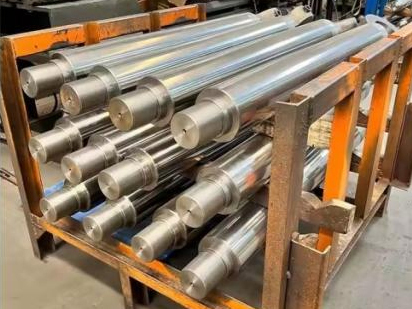
At present, in the practical application of
hydraulic piston rods, there are still prominent problems such as improper selection (mismatch between rod performance and working conditions), non-standard maintenance, and insufficient understanding of failure mechanisms. For example, the selection of materials that do not meet high-pressure requirements leads to rod fracture; the lack of targeted maintenance leads to accelerated wear and corrosion; the neglect of precision control leads to poor guiding performance and increased energy consumption. Therefore, it is particularly important to establish a scientific selection guide and a comprehensive maintenance strategy for hydraulic piston rods.
This paper takes hydraulic piston rods as the research object, combines the working characteristics of hydraulic systems, systematically sorts out the selection principles and key steps, clarifies the maintenance points and fault handling methods, and verifies the application effect through practical cases. The research results can help relevant practitioners master the core knowledge of hydraulic piston rod selection and maintenance, avoid common mistakes, extend the service life of piston rods, reduce maintenance costs, and promote the stable and efficient operation of hydraulic systems.
2. Structural Characteristics and Working Requirements of Hydraulic Piston Rods
Hydraulic piston rods have unique structural characteristics and working requirements, which are closely related to the working principle of hydraulic cylinders and the application scenarios of hydraulic systems. Understanding these characteristics and requirements is the basis for scientific selection and standardized maintenance.
2.1 Structural Characteristics
The basic structure of a hydraulic piston rod mainly includes a rod body, connecting part, and surface treatment layer. The rod body is the main body of force transmission and motion guidance, usually processed into a cylindrical structure with high dimensional accuracy; the connecting part is used to connect the piston and external load, and common forms include thread connection, pin connection, and flange connection, which require firm connection and good load-bearing capacity; the surface treatment layer is used to improve wear resistance, corrosion resistance, and surface smoothness, and common treatment methods include chrome plating, nitriding, and nano-coating.
Compared with pneumatic piston rods, hydraulic piston rods have the following structural characteristics: ① Larger diameter and higher rigidity, to withstand high hydraulic pressure and large loads; ② Thicker surface treatment layer, to resist the erosion of hydraulic oil and external impurities; ③ Higher dimensional accuracy and surface finish, to ensure good cooperation with the rod seal and guide sleeve, and prevent hydraulic oil leakage; ④ More complex connecting structures, to adapt to the heavy-load transmission requirements of hydraulic systems.
2.2 Working Requirements
The working environment of hydraulic piston rods is harsh, and they need to meet the following core working requirements:
- High Strength and Rigidity: Hydraulic piston rods bear high axial pressure and radial load during operation, requiring sufficient tensile strength, compressive strength, and bending rigidity to avoid deformation or fracture under high load. The tensile strength of general hydraulic piston rods is not less than 980MPa, and the bending rigidity needs to meet the requirement that the straightness deviation is ≤0.002mm/m.
- Excellent Wear Resistance: There is high-frequency relative motion between the hydraulic piston rod and the guide sleeve, rod seal, and hydraulic oil. The surface of the rod body is prone to frictional wear, which requires good wear resistance to reduce friction loss and extend the service life of both the piston rod and the seal.
- Strong Corrosion Resistance: Hydraulic piston rods are in contact with hydraulic oil (which may contain impurities, water, or additives) and the external environment (such as dust, moisture, and corrosive media). They need to have strong corrosion resistance to avoid corrosion pitting, rust, or surface damage, which may lead to hydraulic oil leakage.
- High Dimensional Accuracy and Surface Finish: The outer diameter tolerance of hydraulic piston rods is usually IT6~IT7, the surface roughness Ra≤0.4μm, and the coaxiality and straightness are strictly controlled. High dimensional accuracy ensures good cooperation with the seal and guide sleeve, while high surface finish reduces friction and improves sealing performance.
- Good Fatigue Resistance: During the reciprocating motion of the hydraulic cylinder, the piston rod bears alternating tensile and compressive stresses, which are prone to fatigue damage after long-term operation. It needs to have good fatigue resistance to avoid fatigue cracks or fracture.
3. Selection Guide for Hydraulic Piston Rods
The selection of hydraulic piston rods is a systematic project that needs to comprehensively consider the working conditions of the hydraulic system, load requirements, environmental factors, precision requirements, and economic factors. The scientific selection can ensure that the piston rod meets the operational requirements, extends the service life, and reduces maintenance costs. The specific selection guide includes the following key steps and principles:
3.1 Step 1: Analyze Working Conditions and Load Requirements
The first step in selecting a hydraulic piston rod is to clarify the working conditions of the hydraulic system and the load requirements of the piston rod, which is the basis for subsequent material selection and structural design.
- Working Pressure: Determine the maximum working pressure of the hydraulic system, which directly affects the strength and diameter selection of the piston rod. For high-pressure hydraulic systems (working pressure ≥21MPa), piston rods with high-strength materials and large diameters should be selected; for medium and low-pressure systems (working pressure <21MPa), cost-effective materials and appropriate diameters can be selected.
- Load Type and Magnitude: Clarify the load type (static load, dynamic load, or impact load) and load magnitude. For static load scenarios (such as hydraulic lifts), the piston rod mainly bears compressive load, requiring high compressive strength; for dynamic load and impact load scenarios (such as engineering machinery hydraulic arms), the piston rod bears alternating stress and impact, requiring good fatigue resistance and toughness.
- Working Temperature: Determine the working temperature range of the hydraulic system. For high-temperature environments (working temperature >80℃), materials with good high-temperature resistance and heat stability should be selected, and the surface treatment layer should be able to withstand high temperatures without peeling; for low-temperature environments (working temperature <-20℃), materials with good low-temperature toughness should be selected to avoid brittle fracture.
- Environmental Conditions: Analyze the external environment where the piston rod is located. For corrosive environments (such as marine, chemical, or humid environments), corrosion-resistant materials and surface treatment methods should be selected; for dusty environments, piston rods with good dust-proof performance and wear resistance should be selected, and protective covers can be installed if necessary.
3.2 Step 2: Select Appropriate Materials
The material of the hydraulic piston rod directly determines its strength, wear resistance, corrosion resistance, and fatigue resistance. Common materials for hydraulic piston rods include alloy steel, stainless steel, and titanium alloy. The selection of materials should be based on working conditions and load requirements:
- Alloy Steel: It is the most commonly used material for hydraulic piston rods, with the advantages of high strength, good fatigue resistance, and cost-effectiveness. ① 40Cr Alloy Steel: Suitable for medium and low-pressure hydraulic systems (working pressure ≤21MPa) and general load scenarios (such as ordinary hydraulic cylinders). After quenching and tempering treatment, its hardness can reach HRC28~32, and after chrome plating (thickness 0.05~0.1mm), its wear resistance and corrosion resistance are significantly improved. ② 20CrMnTi Alloy Steel: Suitable for high-pressure, impact load scenarios (such as engineering machinery hydraulic arms). After carburizing and quenching treatment, the surface hardness can reach HRC58~62, with excellent wear resistance and fatigue resistance. ③ 12CrNi3A Alloy Steel: Suitable for high-precision, heavy-load, high-pressure hydraulic systems (such as aerospace hydraulic components). It has high strength, good toughness, and excellent fatigue resistance, but the cost is relatively high.
- Stainless Steel: Suitable for corrosive environments (such as marine, chemical, and medical hydraulic systems). ① 316L Stainless Steel: Has excellent corrosion resistance, resistant to salt spray, strong acid, strong alkali, and other corrosive media. It is suitable for hydraulic piston rods in harsh corrosive environments, but its strength is lower than that of alloy steel, so it is not suitable for heavy-load scenarios. ② 17-4PH Stainless Steel: A precipitation-hardening stainless steel with high strength (tensile strength ≥1030MPa) and good corrosion resistance. It is suitable for high-precision, high-corrosion, and heavy-load hydraulic piston rods (such as precision hydraulic equipment).
- Titanium Alloy: Suitable for high-end, lightweight, high-corrosion hydraulic systems (such as aerospace, marine high-end equipment). TC4 Titanium Alloy is the most commonly used, with high strength, lightweight (density 4.51g/cm³), and excellent corrosion resistance. It can withstand high pressure and harsh environments, but the cost is extremely high, and the machinability is poor.
3.3 Step 3: Determine Structural Type and Specifications
According to the installation method, load transmission mode, and space requirements of the hydraulic cylinder, the structural type and specifications of the piston rod are determined.
- Structural Type: Common structural types of hydraulic piston rods include solid piston rods and hollow piston rods. ① Solid Piston Rods: The most commonly used type, with simple structure, high rigidity, and strong load-bearing capacity. Suitable for most hydraulic systems, especially heavy-load scenarios. ② Hollow Piston Rods: Lightweight, suitable for lightweight hydraulic equipment (such as aerospace hydraulic systems) and scenarios requiring weight reduction. The hollow structure can also be used for oil passage or signal transmission, but its rigidity and load-bearing capacity are lower than those of solid piston rods.
- Diameter Selection: The diameter of the piston rod is determined according to the working pressure and load magnitude. The calculation formula is: d ≥ √(4F/π[σ]), where d is the diameter of the piston rod (m), F is the maximum load (N), and [σ] is the allowable stress of the material (Pa). The allowable stress of alloy steel is usually 120~150MPa, and the allowable stress of stainless steel is usually 80~100MPa. In practical selection, the diameter should be increased by 10%~20% on the basis of the calculated value to ensure safety.
- Length Selection: The length of the piston rod is determined according to the stroke of the hydraulic cylinder and the installation space. The length should be matched with the stroke of the cylinder, and the ratio of length to diameter (L/d) should be controlled within 10~20 to avoid excessive bending deformation during operation. If the length is too long, a guide sleeve or support device should be added to improve rigidity.
- Connecting Type: Select the appropriate connecting type according to the load transmission mode and installation requirements. Thread connection is simple and easy to disassemble, suitable for most scenarios; pin connection has good centering performance, suitable for dynamic load scenarios; flange connection has strong load-bearing capacity, suitable for heavy-load, high-pressure scenarios.
3.4 Step 4: Control Precision and Surface Treatment
The precision and surface treatment of hydraulic piston rods directly affect the sealing performance and operational stability of the hydraulic cylinder.
- Precision Control: The outer diameter tolerance of the piston rod should be controlled within IT6~IT7, the straightness deviation ≤0.002mm/m, the coaxiality ≤0.01mm/m, and the surface roughness Ra≤0.4μm. For high-precision hydraulic systems (such as precision machining equipment), the surface roughness should be controlled within Ra≤0.1μm, and the outer diameter tolerance within IT5.
- Surface Treatment: Common surface treatment methods for hydraulic piston rods include: ① Chrome Plating: The most commonly used method, which can improve wear resistance and corrosion resistance. The chrome plating layer should be uniform, with a thickness of 0.05~0.1mm, and no peeling, cracks, or pitting. ② Nitriding: Improves the surface hardness and wear resistance, suitable for high-temperature, high-load scenarios. The nitriding layer thickness is 0.1~0.2mm, and the surface hardness can reach HRC60~65. ③ Nano-Coating: A new surface treatment technology, which has excellent wear resistance, corrosion resistance, and lubricity, suitable for harsh working environments, but the cost is relatively high.
3.5 Step 5: Consider Economic Factors and Matching with Supporting Components
On the premise of meeting the performance requirements, the selection of hydraulic piston rods should also consider economic factors, and select cost-effective products. At the same time, the piston rod should be matched with supporting components (such as seals, guide sleeves, and hydraulic oil) to ensure the overall performance of the hydraulic system.
- Economic Factors: For general hydraulic systems, cost-effective materials (such as 40Cr alloy steel) should be selected; for high-end, special scenarios, high-performance materials (such as titanium alloy, 17-4PH stainless steel) can be selected according to needs. Avoid over-selection, which will increase costs.
- Matching with Supporting Components: The piston rod should be matched with the rod seal (such as O-ring, V-ring) to ensure good sealing performance; the diameter of the piston rod should be matched with the guide sleeve to ensure smooth movement; the material and surface treatment of the piston rod should be matched with the hydraulic oil to avoid chemical reactions and reduce wear.
4. Comprehensive Maintenance Strategy for Hydraulic Piston Rods
Scientific and standardized maintenance is an important guarantee for extending the service life of hydraulic piston rods, reducing failure rates, and ensuring the stable operation of hydraulic systems. The comprehensive maintenance strategy includes daily inspection, regular maintenance, fault diagnosis, and preventive measures, forming a full-cycle maintenance system.
4.1 Daily Inspection: Preventive Maintenance
Daily inspection is carried out before the hydraulic system starts and during operation, focusing on detecting potential faults and handling them in time. The key inspection points are as follows:
- Surface Inspection: Check the surface of the piston rod for scratches, wear, corrosion, pitting, or indentations. Use a surface roughness meter to detect the surface roughness if necessary. If scratches or corrosion are found, handle them in time to avoid damaging the seal and causing hydraulic oil leakage.
- Seal Leakage Inspection: Check the rod seal for hydraulic oil leakage. If leakage is found, it may be caused by wear of the piston rod surface or aging of the seal. The cause should be identified and the seal or piston rod should be replaced in time.
- Straightness and Coaxiality Inspection: Observe whether the piston rod is bent or eccentric during reciprocating motion. If the piston rod is bent, it will cause uneven wear of the seal and guide sleeve, and even lead to jamming. Use a straightness meter to detect the straightness deviation, which should not exceed the standard requirement.
- Connection Part Inspection: Check the connection between the piston rod and the piston, and between the piston rod and the external load for looseness. If looseness is found, tighten it in time to avoid force imbalance and piston rod damage.
- Hydraulic Oil Inspection: Check the cleanliness, viscosity, and color of the hydraulic oil. If the hydraulic oil is contaminated, deteriorated, or mixed with water, replace it in time to avoid corrosion and wear of the piston rod.
4.2 Regular Maintenance: Periodic Protection
Regular maintenance is carried out according to the service time and working conditions of the hydraulic piston rod, aiming to improve the performance of the piston rod and extend its service life. The key maintenance measures are as follows:
- Regular Cleaning: Clean the surface of the piston rod every 1~2 weeks. Use a clean cloth dipped in neutral detergent to wipe the surface, removing dust, oil stains, and other impurities. Do not use hard objects (such as steel wire balls) to wipe, to avoid scratching the surface treatment layer.
- Regular Lubrication: Lubricate the surface of the piston rod and the contact part with the seal every 2~4 weeks. Use lubricating oil that matches the hydraulic oil (such as anti-wear hydraulic oil) to reduce friction and wear. The lubrication amount should be appropriate, not too much or too little, to avoid polluting the hydraulic oil.
- Regular Polishing: For piston rods with slight surface wear or scratches, polish the surface every 3~6 months. Use fine-grained abrasive paste to polish the surface, restoring its smoothness. For severe wear, replace the piston rod in time.
- Regular Inspection and Replacement of Seals: Replace the rod seal every 6~12 months (or according to the service life). The seal is a vulnerable part, and its wear will cause hydraulic oil leakage and damage to the piston rod surface. When replacing the seal, check the piston rod surface for wear and handle it if necessary.
- Surface Treatment Maintenance: For piston rods with chrome plating or nitriding surface treatment, check the surface treatment layer every 6~12 months. If peeling, cracks, or corrosion are found, reprocess the surface (such as re-chrome plating) to ensure the wear resistance and corrosion resistance of the piston rod.
- Hydraulic Oil Replacement: Replace the hydraulic oil every 6~12 months (or according to the service time of the hydraulic system). Clean the oil tank and oil filter when replacing the hydraulic oil to ensure the cleanliness of the hydraulic oil, which is conducive to the normal operation of the piston rod.
4.3 Fault Diagnosis and Handling: Timely Resolution
In the operation process of hydraulic piston rods, common faults include surface wear, corrosion, bending, fracture, and seal leakage. Timely diagnosis and handling of these faults can avoid further damage to the piston rod and hydraulic system. The specific fault diagnosis and solutions are as follows:
4.3.1 Surface Wear
Causes: High-frequency friction between the piston rod and the seal/guide sleeve; contamination of hydraulic oil (mixed with impurities); insufficient lubrication; improper surface treatment; mismatch between the piston rod and the seal.
Solutions: Clean the hydraulic oil and replace the oil filter; add lubricating oil regularly; polish the worn surface (for slight wear); reprocess the surface treatment layer (such as re-chrome plating); replace the piston rod (for severe wear); select the appropriate seal to match the piston rod.
4.3.2 Corrosion
Causes: Corrosive media in the external environment (such as salt spray, acid, alkali); water mixed in hydraulic oil; poor corrosion resistance of the piston rod material; damage to the surface treatment layer.
Solutions: Clean the corroded surface with neutral detergent; dry the surface and apply anti-corrosion lubricant; reprocess the surface treatment layer; replace the piston rod with corrosion-resistant materials (such as 316L stainless steel); prevent water from mixing into the hydraulic oil; install protective covers to isolate corrosive media.
4.3.3 Bending
Causes: Eccentric installation of the piston rod; impact load; overloading; insufficient rigidity of the piston rod; uneven stress during operation.
Solutions: Correct the bent piston rod (for slight bending, use a press to correct; for severe bending, replace it); adjust the installation position to ensure alignment; avoid impact load and overloading; select piston rods with higher rigidity; add guide sleeves or support devices to improve rigidity.
4.3.4 Fracture
Causes: Long-term alternating stress (fatigue fracture); overloading; impact load; material defects; improper heat treatment; insufficient diameter selection.
Solutions: Replace the fractured piston rod with qualified materials; check the material quality and heat treatment process to avoid material defects; avoid overloading and impact load; re-calculate the diameter of the piston rod and select the appropriate specification; optimize the working parameters to reduce alternating stress.
4.3.5 Seal Leakage
Causes: Wear or aging of the seal; scratches or wear of the piston rod surface; improper installation of the seal; mismatch between the seal and the piston rod; contamination of hydraulic oil.
Solutions: Replace the worn or aged seal; polish the piston rod surface (if there are scratches or wear); re-install the seal correctly; select the appropriate seal to match the piston rod; clean the hydraulic oil and replace the oil filter.
4.4 Preventive Measures: Reduce Faults from the Source
Preventive measures are the key to reducing the failure rate of hydraulic piston rods, which should be combined with the selection, installation, and operation of the piston rod:
- Scientific Selection: Strictly follow the selection guide to select piston rods that match the working conditions and load requirements, avoiding improper selection.
- Standard Installation: Ensure that the piston rod is aligned with the external load during installation, avoid eccentric installation; the installation base should have sufficient rigidity to avoid vibration during operation; correctly install the seal and guide sleeve to ensure good cooperation with the piston rod.
- Standard Operation: Avoid overloading and impact load during the operation of the hydraulic system; control the working pressure and speed within the design range; avoid frequent start-stop and emergency stop, reducing the impact on the piston rod.
- Environmental Protection: For hydraulic piston rods in harsh environments, install protective covers (such as dust covers, corrosion-resistant covers) to isolate the piston rod from the external environment; keep the working environment clean and dry, reducing the entry of dust and corrosive media.
- Regular Calibration: Regularly calibrate the hydraulic system and detection equipment to ensure that the working parameters (pressure, speed) and detection accuracy meet the requirements, avoiding abnormal operation caused by equipment deviation.
5. Practical Application Cases and Effect Analysis
To verify the scientificity and feasibility of the hydraulic piston rod selection guide and comprehensive maintenance strategy, this section selects typical application cases in engineering machinery and industrial hydraulic systems, and analyzes the performance improvement and economic benefits brought by rational selection and standardized maintenance.
5.1 Case 1: Hydraulic Piston Rod Application in Engineering Machinery Hydraulic Arms
A construction machinery manufacturer produces excavators, and the hydraulic piston rods of the excavator arms originally use 45# steel (unalloyed steel) with chrome plating. Due to the high-pressure (25MPa) and impact load working conditions of the excavator arms, the piston rods have problems such as short service life (only 6 months), frequent surface wear and corrosion, and seal leakage. The annual maintenance cost of each excavator is about 20,000 yuan, which seriously affects the operation efficiency.
The manufacturer optimized the selection and maintenance according to the guide proposed in this paper: ① Selection Optimization: Replaced 45# steel with 20CrMnTi alloy steel (carburized and quenched), which has higher strength and fatigue resistance; increased the diameter of the piston rod from 50mm to 60mm to improve load-bearing capacity; adopted nitriding surface treatment to enhance wear resistance and corrosion resistance. ② Maintenance Optimization: Formulated a standardized maintenance plan, including daily surface inspection, weekly lubrication, monthly cleaning, and quarterly surface treatment inspection; replaced the seal every 6 months; replaced the hydraulic oil every 8 months.
After the improvement, the service life of the hydraulic piston rods is extended to 36 months, the surface wear and corrosion problems are completely solved, the seal leakage rate is reduced to 0, the annual maintenance cost of each excavator is reduced to 3,000 yuan, and the operation efficiency of the excavator is increased by 25%, achieving significant economic benefits.
5.2 Case 2: Hydraulic Piston Rod Application in Industrial Hydraulic Presses
A manufacturing enterprise uses a 31.5MPa high-pressure hydraulic press, and the original hydraulic piston rods use 40Cr alloy steel with chrome plating. Due to the high pressure and static load working conditions, the piston rods have problems such as bending deformation and insufficient rigidity, leading to unstable operation of the hydraulic press and reduced processing accuracy. The maintenance cost is high, and the production efficiency is affected.
The enterprise optimized the selection and maintenance: ① Selection Optimization: Replaced 40Cr alloy steel with 12CrNi3A alloy steel, which has higher strength and rigidity; selected solid piston rods with a diameter of 80mm (increased from 70mm); adopted nano-coating surface treatment to improve wear resistance and lubricity. ② Maintenance Optimization: Added a guide sleeve to improve the rigidity of the piston rod; carried out daily straightness inspection; polished the surface every 3 months; replaced the hydraulic oil every 6 months and cleaned the oil tank.
After the improvement, the piston rod has no bending deformation, the operational stability of the hydraulic press is significantly improved, the processing accuracy is increased by 30%, the service life of the piston rod is extended to 48 months, and the annual maintenance cost is reduced by 70%, effectively ensuring the normal operation of production.
6. Future Development Trends of Hydraulic Piston Rods
With the continuous development of hydraulic technology, new material technology, and intelligent manufacturing, hydraulic piston rods will develop towards high precision, lightweight, corrosion resistance, intelligence, and integration, further improving their performance and adapting to the development needs of high-end hydraulic systems.
- Ultra-High Precision Development: With the demand for high-precision hydraulic systems in precision machining, aerospace, and other fields, the dimensional accuracy and surface quality of hydraulic piston rods will be further improved. The outer diameter tolerance will reach IT4~IT5, the surface roughness Ra≤0.01μm, and the straightness deviation ≤0.0005mm/m. Ultra-precision machining technologies such as laser polishing and atomic force machining will be widely used to improve the precision of piston rods.
- Lightweight Development: With the demand for lightweight equipment in aerospace, automotive, and robotic fields, more lightweight materials (such as titanium alloy, carbon fiber composites) will be used to manufacture hydraulic piston rods. The structural design will be optimized (such as hollow design, bionic structure) to further reduce weight while ensuring strength and rigidity.
- Corrosion Resistance Enhancement: Develop new corrosion-resistant materials and surface treatment technologies (such as composite nano-coating, plasma spraying) to adapt to more harsh corrosive environments. Improve the corrosion resistance of piston rods through material modification and surface treatment, extending their service life in marine, chemical, and other harsh environments.
- Intelligent Development: Integrate intelligent technologies (such as IoT, sensors, AI) into hydraulic piston rods, install sensors on the piston rod to realize real-time monitoring of wear degree, stress state, temperature, and other parameters. Through AI algorithms, predict the service life of the piston rod, realize automatic lubrication and fault early warning, and reduce manual maintenance.
- Integration and Integration: Integrate the piston rod with other components (such as sensors, seals, and buffer devices) to reduce the number of parts, improve the structural stability, and reduce the installation space. At the same time, integrate the selection and maintenance data into the intelligent management system of the hydraulic system to realize full-cycle intelligent management of the piston rod.
7. Conclusion
Hydraulic piston rods are the core components of hydraulic systems, and their rational selection and standardized maintenance are crucial to the stable operation, reliability, and service life of hydraulic systems. This paper systematically expounds the structural characteristics and working requirements of hydraulic piston rods, establishes a scientific selection guide, including working condition analysis, material selection, structural type determination, precision control, and economic factor consideration, which can help practitioners select hydraulic piston rods that meet the application requirements.
The comprehensive maintenance strategy proposed in this paper, including daily inspection, regular maintenance, fault diagnosis, and preventive measures, forms a full-cycle maintenance system, which can effectively solve common faults such as wear, corrosion, bending, and leakage of hydraulic piston rods, extend their service life, and reduce maintenance costs. Practical application cases verify that the selection guide and maintenance strategy have high scientificity and feasibility, which can significantly improve the operational efficiency and economic benefits of hydraulic systems.
In the context of global industrial intelligent upgrading and high-end equipment development, the demand for high-performance hydraulic piston rods will continue to grow. Relevant practitioners should deeply understand the selection principles and maintenance methods of hydraulic piston rods, combine the actual working conditions, realize rational selection and standardized maintenance, and promote the technological progress and development of hydraulic systems. In the future, with the continuous innovation of new materials, precision machining technologies, and intelligent technologies, hydraulic piston rods will move towards a more high-precision, lightweight, and intelligent direction, playing a more important role in the development of high-end equipment manufacturing industry.








 Home
News
Industry News
Selection Guide, And Comprehensive Maintenance Strategy For Hydraulic Piston Rods
Home
News
Industry News
Selection Guide, And Comprehensive Maintenance Strategy For Hydraulic Piston Rods 
 +86 13771119215