1. Introduction
In the context of global industrial upgrading and the pursuit of energy conservation and lightweight, the demand for high-performance, lightweight components in hydraulic and pneumatic systems is increasingly prominent. Cylinders, as the core pressure-bearing and motion-executing component of the system, directly affect the operational efficiency, service life, and overall performance of the equipment. Traditional steel cylinders have the advantages of high strength and rigidity but are limited by their heavy weight, poor corrosion resistance, and high energy consumption in transportation and operation, which cannot fully meet the development needs of lightweight, high-efficiency, and corrosion-resistant equipment.
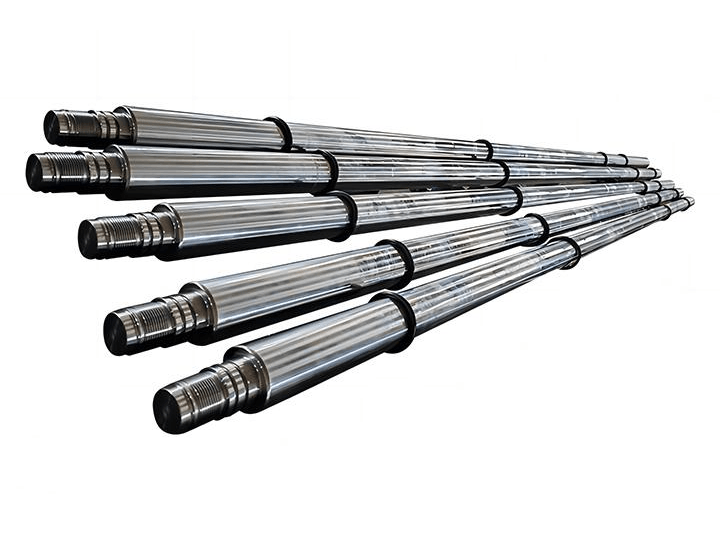
Aluminum cylinders, relying on the excellent physical and chemical properties of aluminum and its alloys, have broken through the limitations of traditional steel cylinders. They not only have a density of only 1/3 that of steel, realizing significant lightweight effects, but also have good corrosion resistance, thermal conductivity, and machinability, which can adapt to complex working environments such as humidity, mild corrosion, and high temperature. With the continuous advancement of aluminum alloy material technology and manufacturing processes, the strength and wear resistance of aluminum cylinders have been further improved, gradually expanding their application scope from light-load pneumatic systems to medium-load hydraulic systems.
At present, the industry still faces problems such as unclear understanding of the core advantages of aluminum cylinders, non-standard manufacturing processes, and improper selection, which affect the performance exertion and application effect of aluminum cylinders. Therefore, it is necessary to systematically sort out the core advantages of aluminum cylinders, clarify their application scenarios and manufacturing processes, and formulate a scientific selection guide. This paper takes aluminum cylinders as the research object, focuses on the core advantages, application scenarios, manufacturing processes, and selection methods, verifies the application value through practical cases, discusses common problems and solutions, and provides a comprehensive reference for the industry, which is of great significance for promoting the popularization and application of aluminum cylinders.
2. Core Advantages of Aluminum Cylinders
The widespread application of aluminum cylinders is closely related to their unique comprehensive advantages, which are mainly reflected in lightweight, corrosion resistance, thermal conductivity, machinability, and cost-effectiveness. These advantages make aluminum cylinders have obvious competitive edges compared with steel, stainless steel, and other materials in many application scenarios.
2.1 Lightweight Advantage (Core Advantage)
The density of aluminum and its alloys is about 2.7g/cm³, which is only 35% of that of carbon steel (7.85g/cm³) and 30% of that of stainless steel (8.0g/cm³). Under the same structural size and pressure-bearing requirements, the weight of aluminum cylinders is 60%~70% lighter than that of steel cylinders. This lightweight advantage brings significant benefits to the equipment:
- Reduced overall weight of equipment: For mobile equipment (such as aerospace vehicles, automobiles, and engineering machinery), lightweight aluminum cylinders can reduce the load of the equipment, improve energy efficiency, and reduce fuel consumption or energy consumption. For example, in automotive hydraulic systems, replacing steel cylinders with aluminum cylinders can reduce the weight of the hydraulic system by 30%~40%, thereby reducing vehicle fuel consumption by 5%~8%.
- Reduced installation and transportation costs: The lightweight of aluminum cylinders makes installation more convenient, reduces the labor intensity of installation personnel, and lowers transportation costs (especially for large-scale equipment and batch transportation).
- Improved operational flexibility: For equipment that requires frequent reciprocating motion (such as robotic arms, pneumatic actuators), lightweight aluminum cylinders can reduce inertial force, improve motion response speed and positioning accuracy, and reduce wear of related components.
2.2 Excellent Corrosion Resistance
Aluminum has good chemical stability. It can react with oxygen in the air to form a dense aluminum oxide (Al₂O₃) film on the surface, which can effectively prevent the internal aluminum from being further corroded by moisture, air, and mild corrosive media. Compared with steel cylinders (which are prone to rust and corrosion in moist environments), aluminum cylinders have obvious advantages in corrosion resistance, especially after special surface treatment (such as anodizing, electrophoresis), their corrosion resistance can be further improved, and they can adapt to harsh environments such as humidity, salt spray, and mild acid-base.
Application advantage: Aluminum cylinders can be used in outdoor equipment, marine equipment, and chemical light-load systems without additional anti-corrosion treatment (or only simple anti-corrosion treatment), reducing maintenance costs and extending service life. For example, in marine pneumatic systems, aluminum cylinders can resist seawater corrosion, while steel cylinders need frequent anti-corrosion treatment to avoid rust failure.
2.3 Good Thermal Conductivity
The thermal conductivity of aluminum is about 237W/(m·K), which is 3~4 times that of carbon steel (about 58W/(m·K)) and 10 times that of stainless steel (about 16W/(m·K)). This excellent thermal conductivity enables aluminum cylinders to quickly dissipate the heat generated during the operation of the hydraulic/pneumatic system (such as heat generated by friction and medium compression), avoiding excessive temperature rise of the cylinder and ensuring the stable operation of the system.
Application advantage: In high-speed, high-frequency operation scenarios (such as automated production line pneumatic cylinders, high-speed hydraulic actuators), aluminum cylinders can effectively reduce thermal deformation, improve the dimensional stability of the cylinder, and extend the service life of seals and other components.
2.4 Superior Machinability
Aluminum and its alloys have low hardness, good plasticity, and toughness, and are easy to process by turning, milling, drilling, honing, and other processes. Compared with steel cylinders, aluminum cylinders have lower processing resistance, higher processing efficiency, and better surface quality after processing (surface roughness can reach Ra≤0.8μm), which can reduce processing costs and improve production efficiency.
In addition, aluminum cylinders are easy to form, and can be manufactured into various shapes and specifications through extrusion, forging, casting, and other processes to adapt to different equipment installation requirements, which has strong design flexibility.
2.5 Cost-Effectiveness Advantage
Although the unit price of aluminum alloy is slightly higher than that of ordinary carbon steel, the comprehensive cost of aluminum cylinders is lower than that of steel cylinders in many application scenarios: First, the lightweight of aluminum cylinders reduces transportation and installation costs; second, the excellent corrosion resistance reduces maintenance costs (such as anti-corrosion treatment, replacement of corroded components); third, the superior machinability reduces processing costs and improves production efficiency. For large-scale production, the cost advantage of aluminum cylinders is more obvious.
2.6 Environmental Friendliness
Aluminum is a recyclable metal, and the recycling rate can reach more than 90%. The energy consumption of recycling aluminum is only 5% of that of smelting primary aluminum, which is in line with the global concept of energy conservation, emission reduction, and green development. Using aluminum cylinders can reduce resource waste and environmental pollution, and has good environmental benefits.
3. Application Scenarios of Aluminum Cylinders
Based on their core advantages, aluminum cylinders are widely used in aerospace, automotive manufacturing, industrial automation, marine equipment, medical equipment, and other fields. Different application scenarios have different requirements for the specifications, materials, and performance of aluminum cylinders. The following is a detailed analysis of typical application scenarios:
3.1 Aerospace Field
The aerospace field has extremely strict requirements for the lightweight, reliability, and corrosion resistance of components. Aluminum cylinders, as lightweight core components, are widely used in the hydraulic and pneumatic systems of aircraft, rockets, and satellites.
Application characteristics: The aluminum cylinders used in aerospace are usually made of high-strength aluminum alloys (such as 6061, 7075), with high dimensional accuracy (inner diameter tolerance IT7~IT8, straightness ≤0.003mm/m), light weight, and good corrosion resistance. They are mainly used in aircraft landing gear hydraulic cylinders, cabin door pneumatic actuators, and rocket attitude control hydraulic systems. The lightweight advantage of aluminum cylinders can reduce the overall weight of the aircraft, improve fuel efficiency and flight performance; the excellent corrosion resistance can adapt to the high-altitude, low-temperature, and high-humidity environment.
3.2 Automotive Manufacturing Field
With the development of automotive lightweight and electrification, aluminum cylinders have become an important component in automotive hydraulic and pneumatic systems, mainly used in brake systems, power steering systems, and air suspension systems.
Application characteristics: The aluminum cylinders used in automobiles are usually made of 6061 aluminum alloy, with moderate strength, good corrosion resistance, and lightweight. For example, automotive brake master cylinders and wheel cylinders made of aluminum alloy can reduce the weight of the brake system by 30%~40%, improve vehicle fuel economy; in electric vehicles, lightweight aluminum cylinders can reduce the load of the battery, extend the cruising range. In addition, aluminum cylinders have good thermal conductivity, which can quickly dissipate the heat generated by the brake system, avoiding brake failure caused by overheating.
3.3 Industrial Automation Field
In industrial automation production lines, robotic arms, and pneumatic equipment, aluminum cylinders are widely used due to their lightweight, fast response speed, and good machinability, mainly used as pneumatic cylinders, hydraulic cylinders for light-load actuators.
Application characteristics: The aluminum cylinders used in industrial automation are usually made of 6063 aluminum alloy, with low cost, good plasticity, and easy processing. They have the advantages of small size, light weight, and fast motion response, which can adapt to the high-frequency, high-precision motion requirements of automated production lines. For example, in robotic arms, aluminum cylinders can reduce the inertial force of motion, improve positioning accuracy and motion stability; in pneumatic conveying systems, aluminum cylinders can reduce the load of the conveying mechanism, improve conveying efficiency.
3.4 Marine Equipment Field
Marine equipment works in a harsh marine environment (high humidity, high salt spray, corrosive seawater), which requires components to have good corrosion resistance. Aluminum cylinders, with their excellent corrosion resistance, are widely used in marine pneumatic systems, ship auxiliary hydraulic systems, and other fields.
Application characteristics: The aluminum cylinders used in marine equipment are usually made of 5052 or 6061 aluminum alloy, and are subjected to anodizing or electrophoresis surface treatment to further improve corrosion resistance. They are mainly used in ship door pneumatic actuators, bilge pump hydraulic cylinders, and marine air conditioning systems. Compared with steel cylinders, aluminum cylinders do not need frequent anti-corrosion treatment, reducing maintenance costs and ensuring the stable operation of marine equipment.
3.5 Medical Equipment Field
Medical equipment requires components to be lightweight, corrosion-resistant, non-toxic, and easy to clean. Aluminum cylinders meet these requirements and are widely used in medical pneumatic tools, medical hydraulic actuators, and other equipment.
Application characteristics: The aluminum cylinders used in medical equipment are usually made of 6061 or 3003 aluminum alloy, with good corrosion resistance, non-toxicity, and easy cleaning. They are mainly used in medical ventilators, surgical robots, and medical lifting equipment. The lightweight advantage of aluminum cylinders makes medical equipment easier to move and operate; the corrosion resistance ensures that the cylinders can be disinfected frequently without rusting or corrosion.
3.6 Other Application Scenarios
In addition to the above fields, aluminum cylinders are also used in lightweight engineering machinery (such as small excavators, electric forklifts), agricultural machinery (such as agricultural pneumatic tools), and household appliances (such as air conditioners, refrigerators). In these fields, aluminum cylinders mainly play the role of lightweight, corrosion-resistant, and low-cost, meeting the diverse needs of different equipment.
4. Manufacturing Processes of Aluminum Cylinders
The performance and quality of aluminum cylinders are closely related to their manufacturing processes. The manufacturing process of aluminum cylinders mainly includes material selection, blank forming, precision machining, surface treatment, and quality inspection. Each process has strict technical requirements to ensure that the aluminum cylinders meet the design performance and application requirements.
4.1 Material Selection
The material selection of aluminum cylinders is the foundation of their performance. The selected aluminum alloy must have appropriate strength, corrosion resistance, machinability, and formability, and be selected according to the application scenario and performance requirements. Common aluminum alloy materials for aluminum cylinders are as follows:
- 6061 Aluminum Alloy: The most widely used material for aluminum cylinders, with good comprehensive mechanical properties (tensile strength ≥310MPa, yield strength ≥276MPa, hardness HRC90~HRC100), good corrosion resistance, machinability, and weldability. Suitable for automotive, industrial automation, and marine equipment aluminum cylinders (working pressure ≤16MPa).
- 6063 Aluminum Alloy: With good plasticity, formability, and machinability, the strength is slightly lower than 6061 aluminum alloy (tensile strength ≥205MPa, yield strength ≥170MPa), and the cost is low. Suitable for light-load pneumatic cylinders, low-pressure hydraulic cylinders, and decorative aluminum cylinders.
- 7075 Aluminum Alloy: High-strength aluminum alloy (tensile strength ≥570MPa, yield strength ≥503MPa), with good corrosion resistance and wear resistance. Suitable for high-pressure aluminum cylinders (working pressure ≥20MPa) in aerospace, high-end equipment fields, but the cost is higher and the machinability is slightly poor.
- 5052 Aluminum Alloy: Excellent corrosion resistance (especially seawater corrosion resistance), good plasticity, but low strength (tensile strength ≥230MPa, yield strength ≥190MPa). Suitable for marine equipment, corrosive environment aluminum cylinders.
4.2 Blank Forming
Blank forming is the first step in the manufacturing of aluminum cylinders, which determines the basic shape and dimensional accuracy of the cylinder. Common blank forming processes include extrusion, forging, and casting, among which extrusion is the most widely used process.
- Extrusion Forming: The most commonly used process for aluminum cylinder blanks. It uses an extruder to extrude the aluminum alloy ingot into a seamless aluminum tube (cylinder blank) under high temperature and high pressure. The advantages of extrusion forming are high production efficiency, good dimensional accuracy, uniform material structure, and good mechanical properties. The extrusion temperature is usually 400℃~500℃, and the extrusion speed is adjusted according to the material and specification of the blank. After extrusion, the blank needs to be annealed to eliminate internal residual stress and improve plasticity.
- Forging Forming: Suitable for high-strength, thick-walled aluminum cylinders. It uses a forging press to forge the aluminum alloy ingot into a cylinder blank, which can improve the density and strength of the material, and avoid internal defects such as pores and cracks. Forging forming has high production cost and low efficiency, and is mainly used in high-end, high-pressure aluminum cylinders.
- Casting Forming: Suitable for complex-shaped aluminum cylinders. It uses casting technology to pour the molten aluminum alloy into a mold to form a cylinder blank. The advantages are low cost, strong design flexibility, but the dimensional accuracy and mechanical properties are lower than extrusion and forging, and it is mainly used in low-precision, light-load aluminum cylinders.
4.3 Precision Machining
Precision machining is the key process to ensure the dimensional accuracy, shape accuracy, and surface quality of aluminum cylinders. The main precision machining processes include turning, honing, and grinding, which are carried out according to the precision requirements of the cylinder.
- Turning: The basic precision machining process, which is used to process the outer surface, inner surface, and end face of the aluminum cylinder blank, ensuring the basic dimensional accuracy (such as inner diameter, outer diameter, length) and shape accuracy (such as roundness, straightness). The turning process uses high-precision CNC lathes, with a machining accuracy of IT8~IT9, and a surface roughness of Ra≤1.6μm.
- Honing: The core precision machining process for the inner surface of aluminum cylinders, which is used to improve the dimensional accuracy, shape accuracy, and surface quality of the inner surface. The honing process uses a honing head with abrasive stones to perform low-speed, high-pressure relative motion between the tool and the cylinder, removing a small amount of material (0.01mm~0.10mm) to make the inner surface smooth and uniform. After honing, the inner diameter tolerance can reach IT7~IT8, roundness ≤0.005mm, straightness ≤0.003mm/m, and surface roughness Ra≤0.8μm.
- Grinding: Suitable for high-precision aluminum cylinders, which is used to process the outer surface and inner surface of the cylinder, further improving the dimensional accuracy and surface quality. The grinding process uses a grinding machine, with a machining accuracy of IT6~IT7, and a surface roughness of Ra≤0.2μm. It is mainly used in aerospace, high-end equipment aluminum cylinders with ultra-high precision requirements.
4.4 Surface Treatment
Surface treatment is an important process to improve the corrosion resistance, wear resistance, and appearance quality of aluminum cylinders. Common surface treatment processes include anodizing, electrophoresis, powder coating, and chemical conversion treatment, which are selected according to the application scenario and corrosion resistance requirements.
- Anodizing: The most widely used surface treatment process for aluminum cylinders. It uses electrolysis to form a dense, wear-resistant, and corrosion-resistant aluminum oxide film on the surface of the aluminum cylinder. The thickness of the anodized film is usually 5μm~20μm, which can significantly improve the corrosion resistance and wear resistance of the aluminum cylinder. Anodizing can also be colored to meet the appearance requirements of the equipment.
- Electrophoresis: A surface treatment process based on anodizing. It uses electrophoresis to deposit a layer of organic coating on the surface of the anodized aluminum cylinder, which has better corrosion resistance and decorative performance than anodizing. Suitable for aluminum cylinders in corrosive environments (such as marine equipment, outdoor equipment).
- Powder Coating: Spraying a layer of powder coating on the surface of the aluminum cylinder, and curing it at high temperature to form a uniform, wear-resistant, and corrosion-resistant coating. The advantages are good corrosion resistance, strong adhesion, and diverse colors, suitable for aluminum cylinders with high decorative requirements.
- Chemical Conversion Treatment: Forming a thin chemical conversion film on the surface of the aluminum cylinder through chemical reaction, which can improve the adhesion of the coating and enhance corrosion resistance. It is usually used as a pre-treatment process before anodizing or powder coating.
4.5 Quality Inspection
Quality inspection runs through the entire manufacturing process of aluminum cylinders to ensure that each technical indicator meets the design requirements. The main inspection items include:
- Dimensional Accuracy Inspection: Using micrometers, dial gauges, coordinate measuring machines, and other tools to inspect the inner diameter, outer diameter, length, wall thickness, and other dimensions of the aluminum cylinder, ensuring that the tolerance meets the design requirements (usually IT7~IT9).
- Shape Accuracy Inspection: Using roundness meters, straightness meters, and other tools to inspect the roundness, straightness, and cylindricity of the aluminum cylinder, ensuring that the roundness ≤0.005mm, straightness ≤0.003mm/m.
- Surface Quality Inspection: Using the naked eye, magnifying glass, and surface roughness meter to inspect the surface of the aluminum cylinder for scratches, cracks, pores, and other defects, and measure the surface roughness (Ra≤0.8μm for general precision, Ra≤0.2μm for high precision).
- Mechanical Properties Inspection: Using hardness testers, tensile testing machines, and other tools to inspect the hardness, tensile strength, yield strength, and other mechanical properties of the aluminum cylinder, ensuring that they meet the material performance requirements.
- Corrosion Resistance Inspection: Conducting salt spray tests, acid-base tests, and other corrosion resistance tests on the surface-treated aluminum cylinder to ensure that it can adapt to the working environment.
5. Selection Guide for Aluminum Cylinders
The rational selection of aluminum cylinders is the key to ensuring their performance, service life, and application effect. The selection must follow the principles of matching working conditions, balancing performance and cost, and ensuring compatibility with the system. The selection process should comprehensively consider factors such as working pressure, load type, environmental corrosion, dimensional requirements, and cost.
5.1 Selection Principles
- Adaptability to Working Conditions: According to the operating pressure, load type (static load, dynamic load, alternating load), and environmental corrosion of the aluminum cylinder, select the appropriate material, specification, and surface treatment process. For example, high-pressure scenarios require high-strength aluminum alloys; corrosive environments require aluminum alloys with good corrosion resistance and appropriate surface treatment.
- Balanced Performance and Cost: On the premise of meeting the performance requirements, select the aluminum cylinder with reasonable cost to avoid over-selection (increasing procurement cost) or under-selection (failing to meet service life requirements). For example, ordinary light-load pneumatic systems can select 6063 aluminum alloy, while high-pressure hydraulic systems need to select 7075 aluminum alloy.
- Compatibility with the System: The selected aluminum cylinder must be compatible with the hydraulic/pneumatic system (such as medium compatibility, connection mode compatibility). For example, the aluminum cylinder used in hydraulic systems must be compatible with hydraulic oil to avoid chemical reactions affecting performance.
- Reliability and Service Life: Select aluminum cylinders with stable quality, reliable performance, and long service life. Consider the manufacturer's strength, product quality certification, and after-sales service to ensure that the aluminum cylinder can operate stably for a long time.
5.2 Key Selection Factors
- Operating Pressure: The operating pressure of the hydraulic/pneumatic system is the core factor determining the material selection of aluminum cylinders. For low-pressure systems (≤10MPa), 6063 aluminum alloy can be selected; for medium-pressure systems (10MPa~16MPa), 6061 aluminum alloy can be selected; for high-pressure systems (≥16MPa), 7075 high-strength aluminum alloy can be selected. It should be noted that the pressure-bearing capacity of aluminum cylinders is lower than that of steel cylinders, and overpressure use should be avoided.
- Load Type: For static load scenarios, aluminum cylinders with general strength are sufficient; for dynamic load and alternating load scenarios, aluminum cylinders with high fatigue strength (such as 6061, 7075 aluminum alloy) must be selected to avoid fatigue damage. For high-frequency motion scenarios, aluminum cylinders with good surface quality and wear resistance (such as honed inner surface, anodized surface) should be selected.
- Environmental Corrosion: In dry and non-corrosive environments, ordinary anodized aluminum cylinders can be selected; in moist, salt spray, or mild corrosive environments, aluminum cylinders with electrophoresis or powder coating surface treatment can be selected; in strong corrosive environments (seawater, acid, alkali), 5052 aluminum alloy with special surface treatment can be selected.
- Dimensional Requirements: According to the installation space and system design requirements, select the aluminum cylinder with appropriate inner diameter, outer diameter, length, and wall thickness. For high-precision motion scenarios, select aluminum cylinders with high dimensional accuracy (IT7~IT8) and good shape accuracy (roundness ≤0.005mm, straightness ≤0.003mm/m).
- Cost Factor: Comprehensive consideration of procurement cost, installation cost, and maintenance cost. For large-scale production, select aluminum cylinders with high cost-effectiveness (such as 6061, 6063 aluminum alloy); for high-end, high-performance requirements, select high-strength aluminum cylinders (such as 7075 aluminum alloy) even if the cost is higher.
5.3 Selection Steps
1. Clarify the working conditions: Determine the operating pressure, load type, motion speed, and environmental corrosion of the aluminum cylinder according to the system design requirements.
2. Select the material: According to the operating pressure and environmental corrosion, select the appropriate aluminum alloy material (such as 6061, 6063, 7075, 5052).
3. Determine the specifications: According to the installation space and load requirements, determine the inner diameter, outer diameter, length, wall thickness, and other specifications of the aluminum cylinder, and ensure the dimensional accuracy and shape accuracy.
4. Select the surface treatment process: According to the environmental corrosion requirements, select the appropriate surface treatment process (anodizing, electrophoresis, powder coating).
5. Verify compatibility: Verify whether the selected aluminum cylinder is compatible with the hydraulic/pneumatic system (medium, connection mode, etc.), and ensure that it can operate stably.
6. Balance cost and performance: Compare the cost and performance of different aluminum cylinders, and select the product with the highest cost-effectiveness.
6. Practical Application Cases and Effect Analysis
To further verify the application effect and value of aluminum cylinders, this section selects typical application cases in automotive manufacturing, industrial automation, and marine equipment fields, and analyzes the performance improvement and economic benefits brought by aluminum cylinders.
6.1 Case 1: Automotive Brake Cylinder Application
An automotive manufacturer originally used steel brake master cylinders for its passenger cars, with problems such as heavy weight, high fuel consumption, and easy corrosion. The weight of the steel brake master cylinder is 1.2kg, and the annual maintenance cost per vehicle (due to corrosion) is about 200 yuan. To achieve lightweight and energy conservation, the manufacturer replaced the steel brake master cylinders with 6061 aluminum alloy brake master cylinders (weight 0.4kg), which are subjected to anodizing surface treatment.
After the replacement, the weight of the vehicle brake system is reduced by 0.8kg per vehicle, the annual fuel consumption per vehicle is reduced by 6%, and the corrosion problem is completely solved, with no maintenance cost due to corrosion. Based on the annual production of 500,000 vehicles, the annual fuel saving is about 15 million liters, and the annual maintenance cost is reduced by 100 million yuan, achieving significant economic and environmental benefits.
6.2 Case 2: Industrial Automation Pneumatic Cylinder Application
An automated production line manufacturer uses a large number of pneumatic cylinders for robotic arm motion, and the original steel pneumatic cylinders have problems such as heavy weight, slow motion response, and high wear. The service life of the steel pneumatic cylinders is only 1.5 years, and the annual replacement cost is about 800,000 yuan. The manufacturer replaced the steel pneumatic cylinders with 6063 aluminum alloy pneumatic cylinders (weight reduced by 60%), which are subjected to honing and anodizing treatment.
After the replacement, the motion response speed of the robotic arm is increased by 25%, the positioning accuracy is improved by 20%, and the service life of the pneumatic cylinders is extended to 4 years. The annual replacement cost is reduced to 200,000 yuan, and the production efficiency of the automated production line is increased by 15%, achieving good economic benefits.
6.3 Case 3: Marine Pneumatic Actuator Application
A marine equipment manufacturer produces ship door pneumatic actuators, and the original steel pneumatic cylinders are severely corroded in the marine environment, requiring replacement every 6 months, with high maintenance costs. The manufacturer replaced the steel pneumatic cylinders with 5052 aluminum alloy pneumatic cylinders, which are subjected to electrophoresis surface treatment.
After the replacement, the aluminum alloy pneumatic cylinders have no corrosion after 3 years of operation, the service life is extended by 5 times, and the annual maintenance cost is reduced by 90%. The stable operation of the ship door pneumatic actuators is ensured, and the safety and reliability of the ship are improved.









 Home
News
Industry News
Aluminum Cylinders: Core Advantages Analysis, Application Scenarios, Manufacturing Processes And Selection Guide
Home
News
Industry News
Aluminum Cylinders: Core Advantages Analysis, Application Scenarios, Manufacturing Processes And Selection Guide 
 +86 13771119215