1. Introduction
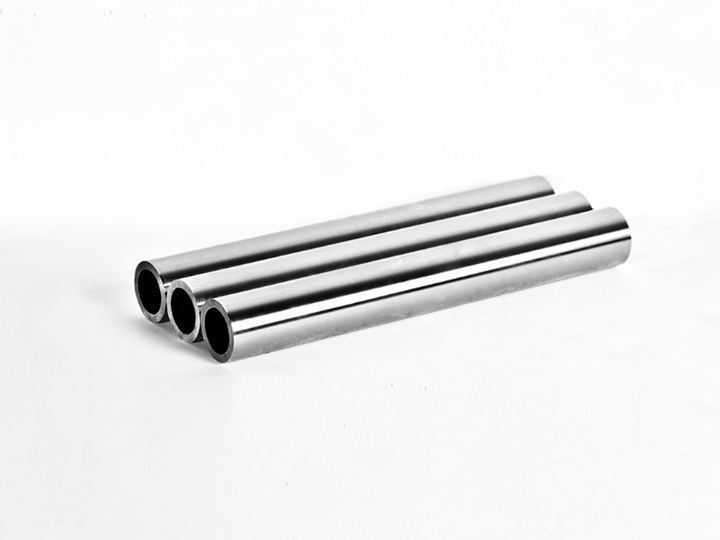
In the context of industrial modernization and intelligent upgrading, hydraulic systems are widely used in various fields due to their advantages of high power density, stable transmission, and precise control. As the ""core backbone"" of hydraulic cylinders, hydraulic piston rods connect the piston and the external executive mechanism, bearing the dual functions of transmitting hydraulic pressure and guiding reciprocating motion. The performance and quality of hydraulic piston rods directly affect the operational reliability of hydraulic systems—any defect or failure of piston rods (such as wear, corrosion, bending, or seal damage) will lead to hydraulic cylinder leakage, reduced transmission efficiency, and even equipment shutdown, resulting in huge economic losses.
With the continuous improvement of hydraulic system performance requirements, especially in high-pressure, high-speed, and harsh environment applications, the requirements for hydraulic piston rods are becoming more stringent. Traditional piston rod selection and maintenance methods can no longer meet the needs of modern industrial production, and problems such as improper material selection, non-standard surface treatment, and inadequate maintenance often occur in the industry, which seriously affect the service life of piston rods and the stability of hydraulic systems.
Therefore, it is necessary to systematically sort out the core functions of hydraulic piston rods, clarify the key factors affecting their performance, formulate a scientific selection guide, and establish a standardized full-cycle maintenance strategy. This paper takes hydraulic piston rods as the research object, focuses on core functions, selection methods, and maintenance strategies, verifies the application effect through practical cases, discusses common problems and solutions, and provides a comprehensive reference for the industry, which is of great significance for promoting the high-quality development of hydraulic system-related fields.
2. Core Functions of Hydraulic Piston Rods
Hydraulic piston rods are the key connecting components between the internal and external of hydraulic cylinders, integrating multiple functions such as force transmission, motion guidance, sealing cooperation, and load bearing. Their core functions are closely related to the working principle of hydraulic systems, and each function is indispensable to ensure the normal operation of the system. The specific analysis is as follows:
2.1 Force Transmission (Core Function)
The most core function of hydraulic piston rods is to transmit the hydraulic force generated by the hydraulic cylinder to the external executive mechanism, realizing the conversion of hydraulic energy into mechanical energy. In the hydraulic system, the hydraulic oil acts on the piston to generate thrust or pull force, and the piston rod transmits this force to the load, driving the executive mechanism to complete linear reciprocating motion (such as lifting, pushing, and pulling).
The force transmission performance of piston rods is determined by their material strength, structural design, and dimensional accuracy. For high-pressure hydraulic systems, the piston rod must have sufficient tensile strength, yield strength, and fatigue strength to withstand the huge hydraulic force and avoid fracture, deformation, or fatigue damage during long-term operation. For example, in engineering machinery hydraulic cylinders (working pressure ≥31.5MPa), the piston rod must be made of high-strength alloy steel to ensure stable force transmission.
2.2 Motion Guidance and Positioning
Hydraulic piston rods play a key role in guiding the reciprocating motion of the piston in the hydraulic cylinder, ensuring that the piston moves linearly along the central axis of the cylinder without eccentricity, tilting, or jamming. This function is crucial to maintain the dimensional stability of the hydraulic cylinder, reduce the wear of the piston, seal, and cylinder wall, and ensure the precise positioning of the executive mechanism.
To achieve effective motion guidance, the piston rod must have high straightness, roundness, and surface smoothness. The straightness deviation of the piston rod is generally required to be ≤0.005mm/m, and the roundness ≤0.003mm, to ensure that the piston moves smoothly in the cylinder. In addition, the matching accuracy between the piston rod and the guide sleeve also affects the guidance effect—excessive clearance will lead to piston eccentricity, while insufficient clearance will cause jamming.
2.3 Sealing Cooperation
The piston rod forms a dynamic seal with the seal ring (such as O-ring, lip seal) installed in the cylinder head, preventing hydraulic oil from leaking from the gap between the piston rod and the cylinder head, and ensuring the pressure stability of the hydraulic system. The sealing performance of the piston rod is directly related to the efficiency of the hydraulic system—any leakage will lead to reduced system pressure, increased energy consumption, and even failure of the executive mechanism.
The sealing cooperation performance of the piston rod depends on its surface quality and dimensional accuracy. The surface roughness of the piston rod is generally required to be Ra≤0.8μm, and the surface must be smooth, free of scratches, burrs, or corrosion pits, to ensure that the seal ring fits closely with the piston rod surface and forms an effective seal. In addition, the surface treatment of the piston rod (such as chrome plating, nitriding) can further improve the wear resistance and corrosion resistance of the surface, extending the service life of the seal ring.
2.4 Load Bearing and Impact Resistance
In practical applications, hydraulic piston rods not only transmit static hydraulic force but also bear dynamic loads and impact loads generated by the executive mechanism (such as the impact of engineering machinery during operation, the alternating load of high-frequency reciprocating motion). Therefore, the piston rod must have good impact resistance and fatigue strength to withstand repeated impact and alternating loads without damage.
The load-bearing capacity of the piston rod is determined by its material, cross-sectional size, and structural design. For heavy-load and high-impact scenarios, the piston rod is usually designed with a larger diameter and made of high-strength alloy steel, and the surface is subjected to strengthening treatment (such as quenching and tempering, nitriding) to improve its impact resistance and fatigue life.
2.5 Corrosion and Wear Resistance
Although corrosion and wear resistance are not independent core functions, they are important guarantees for the long-term stable operation of piston rods. Hydraulic piston rods often work in harsh environments such as humidity, dust, corrosive media (seawater, acid, alkali), and high-speed friction with seals and guide sleeves, which are prone to corrosion and wear. Therefore, the piston rod must have good corrosion and wear resistance to avoid surface damage and performance degradation.
3. Key Factors Affecting the Performance of Hydraulic Piston Rods
The performance of hydraulic piston rods is affected by many factors, including material properties, surface treatment, dimensional accuracy, structural design, and working conditions. Clarifying these key factors is the basis for scientific selection and standardized maintenance of piston rods. The specific analysis is as follows:
3.1 Material Properties
Material selection is the foundation of piston rod performance. The selected material must have sufficient strength, fatigue resistance, corrosion resistance, and wear resistance, and be selected according to the working pressure, load type, and environmental conditions of the hydraulic system. Common materials for hydraulic piston rods are as follows:
- Carbon Steel: The most commonly used material for low and medium-pressure hydraulic systems (working pressure ≤16MPa), such as 45# steel. It has good strength, toughness, and machinability, and the cost is low. After quenching and tempering treatment, the tensile strength can reach ≥600MPa, which can meet the needs of general industrial hydraulic systems. However, its corrosion resistance is poor, and surface treatment (such as chrome plating) is required to improve corrosion resistance.
- Alloy Steel: Suitable for high-pressure, high-load, and alternating load scenarios (working pressure 16MPa~31.5MPa), such as 40Cr, 27SiMn, 12Cr1MoV. 40Cr alloy steel has good comprehensive mechanical properties, tensile strength ≥980MPa, yield strength ≥785MPa, and good fatigue resistance and wear resistance, which is widely used in high-pressure hydraulic piston rods. 27SiMn steel has high strength and impact resistance, suitable for heavy-load and high-impact scenarios.
- Stainless Steel: Suitable for corrosive environments (such as marine, chemical, food processing), such as 304, 316L stainless steel. 316L stainless steel has excellent corrosion resistance to seawater, acid, and alkali, and does not require additional anti-corrosion treatment. Its tensile strength is ≥520MPa, which can meet the needs of medium-pressure corrosive environment hydraulic systems. However, its strength is lower than that of alloy steel, and it is not suitable for ultra-high pressure scenarios.
- Non-Ferrous Metals: Suitable for lightweight and high-corrosion scenarios (such as aerospace, medical equipment), such as TC4 titanium alloy, 6061 aluminum alloy. Titanium alloy has high specific strength, excellent corrosion resistance, and high-temperature resistance, but the cost is high; aluminum alloy is lightweight, but its strength and wear resistance are poor, and surface treatment is required.
3.2 Surface Treatment
Surface treatment is an important measure to improve the corrosion resistance, wear resistance, and surface quality of piston rods. Common surface treatment processes include chrome plating, nitriding, electrophoresis, and powder coating, which are selected according to the working environment and performance requirements:
- Chrome Plating: The most widely used surface treatment process for hydraulic piston rods. The chrome plating layer (thickness 0.05mm~0.10mm) has good wear resistance, corrosion resistance, and surface smoothness, which can reduce the friction between the piston rod and the seal, and extend the service life. It is suitable for most industrial hydraulic systems, but the chrome plating layer is prone to peeling if the process is improper.
- Nitriding: A surface strengthening process that forms a hard nitrided layer (thickness 0.10mm~0.20mm) on the surface of the piston rod, which can significantly improve the surface hardness, wear resistance, and fatigue strength. It is suitable for high-speed, high-frequency motion piston rods, but the corrosion resistance is slightly worse than chrome plating.
- Electrophoresis and Powder Coating: Mainly used for piston rods in corrosive environments, which can form a dense anti-corrosion coating on the surface, improving corrosion resistance. It is suitable for marine, chemical, and other harsh corrosive environments.
3.3 Dimensional Accuracy and Shape Accuracy
The dimensional accuracy and shape accuracy of piston rods directly affect their motion guidance, sealing cooperation, and force transmission performance. The key indicators include:
- Dimensional Accuracy: Including outer diameter tolerance, length tolerance, and wall thickness tolerance. The outer diameter tolerance of the piston rod is generally IT7~IT8, to ensure the matching accuracy with the guide sleeve and seal ring; the length tolerance is determined according to the stroke of the hydraulic cylinder.
- Shape Accuracy: Including straightness, roundness, and cylindricity. The straightness deviation is required to be ≤0.005mm/m, the roundness ≤0.003mm, and the cylindricity ≤0.005mm, to ensure that the piston moves smoothly in the cylinder and avoids eccentricity and jamming.
3.4 Structural Design
The structural design of the piston rod affects its force bearing capacity, fatigue life, and installation convenience. Common structural designs include solid piston rods, hollow piston rods, and stepped piston rods: solid piston rods are suitable for heavy-load scenarios; hollow piston rods are suitable for lightweight and high-speed scenarios, which can reduce weight and inertial force; stepped piston rods are suitable for multi-stroke hydraulic cylinders, which are convenient for installation and positioning.
3.5 Working Conditions
Working conditions such as operating pressure, motion speed, environmental corrosion, and load type are important factors affecting the performance and service life of piston rods. High operating pressure requires higher strength of the piston rod; high motion speed increases the friction between the piston rod and the seal, requiring better wear resistance; corrosive environments require better corrosion resistance of the piston rod; alternating loads and impact loads require better fatigue strength and impact resistance.
4. Selection Guide for Hydraulic Piston Rods
The rational selection of hydraulic piston rods is the key to ensuring the stable operation of hydraulic systems, reducing failure rates, and extending service life. The selection must follow the principles of adapting to working conditions, balancing performance and cost, and ensuring compatibility with hydraulic cylinders. The selection process should comprehensively consider factors such as working pressure, load type, environmental corrosion, dimensional requirements, and cost.
4.1 Selection Principles
- Adaptability to Working Conditions: According to the operating pressure, motion speed, load type (static load, dynamic load, alternating load), and environmental corrosion of the hydraulic system, select the appropriate material, surface treatment, and structural design. For example, high-pressure systems require high-strength alloy steel; corrosive environments require stainless steel or carbon steel with anti-corrosion surface treatment.
- Balanced Performance and Cost: On the premise of meeting the performance requirements, select the piston rod with reasonable cost to avoid over-selection (increasing procurement cost) or under-selection (failing to meet service life requirements). For example, ordinary low-pressure hydraulic systems can select 45# steel piston rods, while high-pressure systems need to select 40Cr alloy steel piston rods.
- Compatibility with Hydraulic Cylinders: The selected piston rod must be compatible with the hydraulic cylinder (such as outer diameter matching with the guide sleeve, length matching with the cylinder stroke, connection mode matching with the piston). Ensure that the piston rod can be smoothly installed and work with the hydraulic cylinder.
- Reliability and Service Life: Select piston rods with stable quality, reliable performance, and long service life. Consider the manufacturer's strength, product quality certification, and after-sales service to ensure that the piston rod can operate stably for a long time.
4.2 Key Selection Steps
1. Clarify Working Conditions: Determine the operating pressure, motion speed, load type, environmental corrosion, and cylinder stroke of the hydraulic system according to the equipment design requirements. This is the basis for piston rod selection.
2. Select Material: According to the operating pressure and environmental corrosion, select the appropriate material. For low-pressure (≤16MPa) and non-corrosive environments, select 45# carbon steel; for medium-pressure (16MPa~31.5MPa) and high-load environments, select 40Cr alloy steel; for corrosive environments, select 316L stainless steel; for lightweight scenarios, select titanium alloy or aluminum alloy.
3. Select Surface Treatment: According to the environmental corrosion and wear requirements, select the appropriate surface treatment process. For general industrial environments, select chrome plating; for high-speed motion scenarios, select nitriding; for corrosive environments, select electrophoresis or powder coating.
4. Determine Dimensional and Shape Accuracy: According to the hydraulic cylinder specifications, determine the outer diameter, length, and tolerance of the piston rod, and ensure that the straightness, roundness, and surface roughness meet the requirements (outer diameter tolerance IT7~IT8, straightness ≤0.005mm/m, surface roughness Ra≤0.8μm).
5. Select Structural Design: According to the load type and installation requirements, select solid, hollow, or stepped piston rods. Solid piston rods are suitable for heavy loads; hollow piston rods are suitable for lightweight and high-speed scenarios; stepped piston rods are suitable for multi-stroke cylinders.
6. Verify Compatibility: Verify whether the selected piston rod is compatible with the hydraulic cylinder, seal, and guide sleeve, and ensure that it can operate stably without jamming or leakage.
4.3 Selection Examples
- Example 1: Ordinary Industrial Hydraulic System (working pressure 10MPa, static load, dry environment). Selection: 45# carbon steel piston rod, chrome plating surface treatment, solid structure, outer diameter tolerance IT8, straightness ≤0.005mm/m, surface roughness Ra≤0.8μm.
- Example 2: High-Pressure Engineering Machinery Hydraulic System (working pressure 31.5MPa, alternating load, dusty environment). Selection: 40Cr alloy steel piston rod, nitriding surface treatment, solid structure, outer diameter tolerance IT7, straightness ≤0.003mm/m, surface roughness Ra≤0.4μm.
- Example 3: Marine Hydraulic System (working pressure 16MPa, corrosive seawater environment). Selection: 316L stainless steel piston rod, electrophoresis surface treatment, hollow structure, outer diameter tolerance IT7, straightness ≤0.005mm/m, surface roughness Ra≤0.8μm.
5. Comprehensive Maintenance Strategy for Hydraulic Piston Rods
Scientific and standardized maintenance is the key to extending the service life of hydraulic piston rods, reducing maintenance costs, and ensuring the stable operation of hydraulic systems. The maintenance of piston rods runs through the entire service cycle, including daily inspection, regular lubrication, corrosion prevention, fault diagnosis, and maintenance. Different maintenance measures are formulated according to the material, surface treatment, and working conditions of the piston rod.
5.1 Daily Inspection (Daily Operation)
Daily inspection is mainly to find potential problems in time, avoid minor faults developing into major failures. The inspection content includes:
- Surface Condition Inspection: Use the naked eye or a magnifying glass to check the surface of the piston rod for scratches, wear, corrosion, rust, or coating peeling. If there are slight scratches or rust, polish and derust in time; if the coating is peeled or the wear is serious, stop for maintenance.
- Motion State Inspection: Observe the reciprocating motion of the piston rod for jamming, shaking, or abnormal noise. If jamming occurs, check whether the piston rod is bent or the guide sleeve is worn; if there is abnormal noise, check whether the lubrication is insufficient or the connection part is loose.
- Seal Tightness Inspection: Check whether there is hydraulic oil leakage at the connection between the piston rod and the cylinder head. If there is leakage, check whether the seal is worn or damaged, and replace the seal in time.
- Dimensional Inspection: Regularly check the straightness and roundness of the piston rod with a straightness meter and a roundness meter. If the deviation exceeds the standard, correct or replace the piston rod.
5.2 Regular Lubrication (Weekly/Monthly)
Lubrication can reduce the friction between the piston rod and the seal, guide sleeve, and other components, reduce wear, and prevent corrosion. The lubrication frequency and lubricant type are determined according to the working conditions:
- Lubricant Selection: Use hydraulic oil (such as ISO VG 46) as the lubricant for ordinary hydraulic systems; use anti-corrosion lubricants (such as molybdenum disulfide lubricating grease) for corrosive environments; use high-temperature lubricants for high-temperature hydraulic systems.
- Lubrication Method: Apply the lubricant evenly on the surface of the piston rod with a brush or spray can, focusing on the contact area with the seal and guide sleeve. For high-speed motion piston rods, lubricate once a week; for low-speed motion piston rods, lubricate once a month.
- Precautions: Do not use excessive lubricant to avoid polluting the hydraulic oil; replace the lubricant in time if it is contaminated; ensure that the lubricant is compatible with the surface treatment layer of the piston rod.
5.3 Corrosion Prevention (Quarterly/Annual)
Corrosion is one of the main factors affecting the service life of piston rods, especially in moist, corrosive, and dusty environments. Corrosion prevention measures include:
- Surface Cleaning: Regularly clean the surface of the piston rod to remove dust, oil, and corrosive media. Use a clean cloth dipped in neutral cleaning agent to wipe the surface, and dry it with a dry cloth after cleaning to avoid residual moisture.
- Anti-Corrosion Treatment: For carbon steel piston rods with chrome plating, check the chrome plating layer regularly. If the chrome plating layer is peeled or damaged, re-plate chrome in time; for stainless steel piston rods, polish the surface regularly to maintain its smoothness and corrosion resistance; for piston rods in corrosive environments, apply anti-corrosion paint or coating to enhance corrosion resistance.
- Environmental Control: For equipment working in moist or corrosive environments, install protective covers or sealing sleeves to isolate the piston rod from the corrosive medium, reducing erosion.
5.4 Fault Diagnosis and Maintenance (On-Site)
When the piston rod fails, it should be stopped in time for inspection and maintenance to avoid further damage to the equipment. Common faults and corresponding maintenance measures are as follows:
- Surface Wear: If the wear is slight (wear depth <0.1mm), polish the surface with fine sandpaper (800#~1000#) to restore its smoothness, then apply lubricant; if the wear is serious (wear depth ≥0.1mm), perform surfacing repair or replace the piston rod.
- Corrosion and Rust: For slight rust, use a rust remover to remove rust, then polish and apply anti-corrosion lubricant; for severe corrosion or local corrosion pits, replace the piston rod to avoid affecting the structural strength.
- Bending Deformation: If the bending deformation is slight (bending degree <0.005mm/m), use a straightening machine to correct it, then check the straightness and roundness; if the bending deformation is serious, replace the piston rod.
- Seal Failure and Leakage: If the seal fails and the hydraulic oil leaks, replace the seal with the same model and specification; at the same time, check the surface of the piston rod for wear or scratches, and repair it if necessary.
- Fatigue Fracture: If the piston rod is fractured due to fatigue, replace it with a new piston rod of the same material and specification, and check the working conditions (such as load, pressure) to avoid repeated fractures.
5.5 Maintenance Precautions
- When maintaining the piston rod, the hydraulic system must be shut down, and the pressure must be relieved to avoid safety accidents caused by sudden movement of the piston rod.
- Do not use hard tools (such as screwdrivers, pliers) to scratch or knock the surface of the piston rod, to avoid damaging the surface treatment layer.
- The replaced piston rod must be consistent with the original specifications (material, outer diameter, length, surface treatment), to ensure compatibility with the hydraulic cylinder and seal.
- Establish a maintenance record, record the maintenance time, maintenance content, fault type, and replacement parts, so as to track the service status of the piston rod and formulate a reasonable maintenance plan.
6. Practical Application Cases and Effect Analysis
To further verify the importance of scientific selection and standardized maintenance for hydraulic piston rods, this section selects typical application cases in engineering machinery, marine equipment, and industrial automation fields, and analyzes the performance improvement and economic benefits brought by reasonable selection and maintenance.
6.1 Case 1: Engineering Machinery Hydraulic Piston Rod Application
An engineering machinery manufacturer produces excavators, and the piston rods of the original hydraulic cylinders use 20# carbon steel, with problems such as serious surface wear, corrosion, and short service life. The service life of the piston rod is only 8 months, and the annual maintenance cost per excavator is about 12,000 yuan. The main reason is that 20# carbon steel has low strength and poor corrosion resistance, which cannot adapt to the high pressure, high load, and dusty working environment of the excavator.
The manufacturer optimized the selection: replaced 20# carbon steel with 40Cr alloy steel, performed nitriding surface treatment, and formulated a standardized maintenance plan (daily inspection, weekly lubrication, quarterly anti-corrosion treatment). After the improvement, the service life of the piston rod is extended to 36 months, the annual maintenance cost per excavator is reduced to 3,000 yuan, and the failure rate of the hydraulic system is reduced by 80%. Based on the annual production of 1000 excavators, the annual maintenance cost is reduced by 9 million yuan, achieving significant economic benefits.
6.2 Case 2: Marine Hydraulic Piston Rod Application
A marine equipment manufacturer produces ship hydraulic cylinders, and the piston rods of the original hydraulic cylinders use 45# carbon steel with chrome plating. Due to the strong corrosive environment of seawater, the chrome plating layer peels off after 6 months of use, and the piston rod is severely corroded, leading to seal failure and oil leakage. The maintenance cost is high, and the normal operation of the ship is affected.
The manufacturer replaced the material with 316L stainless steel, performed electrophoresis surface treatment, and strengthened daily maintenance (cleaning the piston rod surface every day, applying anti-corrosion lubricant every week). After the improvement, the piston rod has no corrosion after 24 months of operation, the seal is intact, and the maintenance cost is reduced by 90%, ensuring the stable operation of the ship hydraulic system.
6.3 Case 3: Industrial Automation Hydraulic Piston Rod Application
An automated production line manufacturer uses hydraulic cylinders for robotic arm motion, and the original piston rods use 45# carbon steel with chrome plating. Due to high-speed reciprocating motion, the surface of the piston rod is severely worn, and the service life is only 12 months, which affects the production efficiency of the production line.
The manufacturer optimized the selection: replaced 45# carbon steel with 40Cr alloy steel, performed nitriding surface treatment, and adjusted the lubrication plan (lubricated once a week, used high-performance lubricating grease). After the improvement, the service life of the piston rod is extended to 48 months, the motion accuracy of the robotic arm is improved by 20%, and the production efficiency of the production line is increased by 15%, achieving good technical and economic benefits.
7. Common Selection Errors and Maintenance Problems
In the actual application process, due to the lack of understanding of hydraulic piston rod materials, performance, and maintenance methods, some common errors often occur, which affect the performance and service life of piston rods. This section analyzes these errors and proposes corresponding solutions.
7.1 Common Selection Errors
- Under-Selection of Materials: Selecting low-strength materials (such as 20# carbon steel) for high-pressure, high-load scenarios, leading to piston rod bending, deformation, or fracture. The solution is to clarify the operating pressure and load type of the system, and select materials with corresponding strength.
- Ignoring Environmental Corrosion: Selecting carbon steel piston rods without anti-corrosion surface treatment for corrosive environments, leading to rapid corrosion and failure. The solution is to select stainless steel or carbon steel with anti-corrosion surface treatment according to the environmental corrosion requirements.
- Improper Surface Treatment Selection: Selecting chrome plating for high-speed motion piston rods, leading to poor wear resistance and short service life. The solution is to select nitriding surface treatment for high-speed motion scenarios to improve wear resistance and fatigue strength.
- Neglecting Dimensional Accuracy: Selecting piston rods with low dimensional accuracy, leading to jamming, leakage, and poor motion guidance. The solution is to strictly follow the hydraulic cylinder specifications and select piston rods with appropriate dimensional and shape accuracy.
7.2 Common Maintenance Problems
- Insufficient Lubrication: Irregular lubrication or incorrect selection of lubricant leads to increased friction between the piston rod and the seal, resulting in surface wear and seal failure. The solution is to formulate a reasonable lubrication plan, select the correct lubricant, and strictly implement the lubrication frequency.
- Neglecting Corrosion Prevention: Not performing regular anti-corrosion treatment on the piston rod, leading to corrosion and rust. The solution is to strengthen daily cleaning and regular anti-corrosion treatment, and take environmental control measures.
- Improper Fault Handling: When the piston rod has slight wear or corrosion, it is not repaired in time, leading to further damage. The solution is to find potential faults through daily inspection and repair slight problems in time.
- Using Unqualified Replacement Parts: Replacing the piston rod with unqualified products (such as incorrect material, low dimensional accuracy) leads to poor compatibility and frequent failures. The solution is to select genuine and qualified piston rods that are consistent with the original specifications.
8. Future Development Trends of Hydraulic Piston Rods
With the continuous development of high-end equipment manufacturing, new materials, and intelligent technology, hydraulic piston rods will develop towards high performance, lightweight, corrosion resistance, and intelligence, further improving their performance and expanding their application scope.
- High Performance and Long Service Life: Develop new high-strength, high-toughness alloy materials and composite materials (such as carbon fiber composite materials) to improve the strength, wear resistance, and fatigue life of piston rods; optimize the surface treatment process (such as nano-coating, plasma spraying) to extend the service life to more than 5 years.
- Lightweight Development: With the demand for lightweight equipment in aerospace, automotive, and robotic fields, more lightweight materials (such as titanium alloy, carbon fiber composite materials) will be used to manufacture piston rods, reducing the overall weight of the equipment while ensuring performance.
- Corrosion Resistance Enhancement: Develop new corrosion-resistant materials and surface treatment technologies to adapt to more harsh corrosive environments (such as strong acid, strong alkali, high-salt environments); improve the corrosion resistance of piston rods through material modification and composite coating technology.
- Intelligent Monitoring and Maintenance: Integrate intelligent technologies (such as IoT, sensors, AI) into the piston rod, realize real-time monitoring of the surface condition, wear degree, and stress state of the piston rod; predict the service life through AI algorithms, and realize automatic lubrication and fault early warning, reducing manual maintenance.
- Integration with Intelligent Hydraulic Systems: Combine piston rods with intelligent hydraulic systems, realize precise control of motion speed and position, improve the operational efficiency and accuracy of the system; develop integrated piston rod components, reduce the number of parts, and improve structural stability.







 Home
News
Industry News
Hydraulic Piston Rods: Core Function Analysis, Selection Guide And Comprehensive Maintenance Strategy
Home
News
Industry News
Hydraulic Piston Rods: Core Function Analysis, Selection Guide And Comprehensive Maintenance Strategy 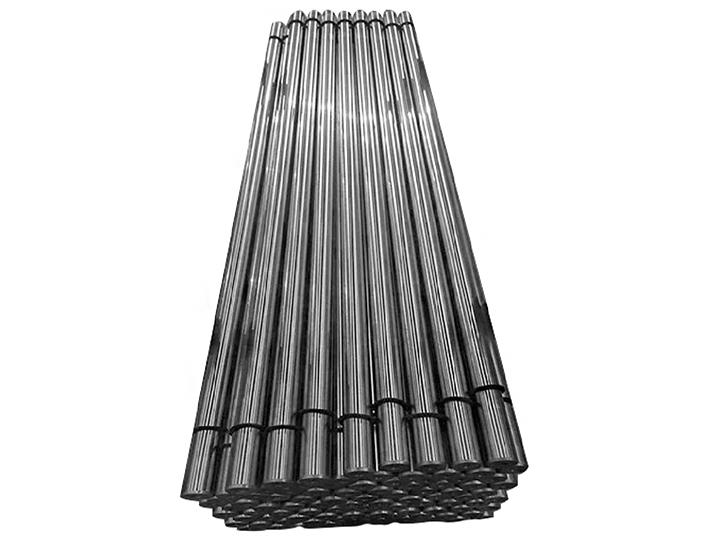

 +86 13771119215