1. Introduction
In the context of industrial automation and intelligent manufacturing, the demand for efficient, stable, and reliable executive components is increasing day by day. Cylinders, as typical fluid-driven executive components, are widely used in various fields such as industrial automation production lines, mechanical processing equipment, automotive manufacturing, aerospace, and medical equipment. Unlike electric actuators, cylinders have the advantages of simple structure, fast response speed, large output force, strong environmental adaptability, and low cost, which can meet the drive requirements of different working conditions, especially in harsh environments such as high temperature, high pressure, and high dust.
The working principle of
cylinders is based on the basic law of fluid mechanics, converting the pressure energy of compressed gas or hydraulic oil into mechanical energy to realize linear or rotary motion. With the continuous development of pneumatic and hydraulic technology, the structure and type of cylinders have been continuously optimized, and new types of cylinders (such as servo cylinders, rodless cylinders) have been continuously emerging, further expanding their application scope. However, in the actual application process, there are still problems such as unclear understanding of working principles, improper type selection, non-standard installation, and inadequate maintenance, which lead to reduced cylinder service life, unstable operation, and even system failure, affecting production efficiency and increasing maintenance costs.
Therefore, it is necessary to systematically sort out the working principles of cylinders, clarify the structural characteristics and type differences of cylinders, and formulate a comprehensive application guide. This paper takes cylinders as the research object, focuses on working principles, structure, types, and application scenarios, verifies the application effect through practical cases, discusses common faults and solutions, and provides a comprehensive reference for the industry, which is of great significance for promoting the rational application of cylinders and the upgrading of pneumatic and hydraulic system technology.
2. Core Working Principles of Cylinders
The core working principle of
cylinders is to rely on the pressure difference between the two ends of the piston to drive the piston to move linearly (or rotate), thereby outputting mechanical energy. According to the working medium, cylinders can be divided into pneumatic cylinders (using compressed gas as the working medium) and hydraulic cylinders (using hydraulic oil as the working medium). Although the working media are different, their core working principles are consistent, and both follow the Pascal's law and the law of conservation of energy.
2.1 Basic Working Principle
Pascal's law points out that in a closed fluid (gas or liquid), the pressure exerted on any point is transmitted equally to all points of the fluid and the inner wall of the container. For cylinders, when the working medium (compressed gas or hydraulic oil) enters one end of the cylinder barrel, it generates pressure on the piston, and the pressure difference between the two ends of the piston forms a driving force, which pushes the piston to move along the cylinder barrel. The direction of the piston movement is determined by the direction of the pressure difference: when the pressure of the working medium at the rod end is greater than that at the rodless end, the piston moves toward the rodless end; when the pressure at the rodless end is greater than that at the rod end, the piston moves toward the rod end.
The driving force F output by the cylinder can be calculated by the following formula: F = P × A, where P is the pressure of the working medium (unit: Pa), and A is the effective area of the piston (unit: m²). For single-acting cylinders, the driving force is only provided by the working medium on one side of the piston, and the reset is realized by springs or external forces; for double-acting cylinders, the working medium alternately enters the two ends of the cylinder barrel, providing driving force for the forward and backward movement of the piston.
2.2 Difference Between Pneumatic and Hydraulic Cylinder Working Principles
Although pneumatic cylinders and hydraulic cylinders follow the same basic working principle, there are obvious differences in working characteristics due to the different physical properties of the working medium (gas is compressible, liquid is incompressible):
- Pneumatic Cylinders: The working medium is compressed gas (usually air), which has compressibility. When the gas enters the cylinder, it will expand and do work, and the movement speed of the piston is relatively fast (usually 50~500mm/s). However, due to the compressibility of gas, the positioning accuracy of pneumatic cylinders is relatively low, and the output force is affected by the gas pressure and piston area. Pneumatic cylinders are suitable for scenarios requiring fast response and low positioning accuracy.
- Hydraulic Cylinders: The working medium is hydraulic oil, which is incompressible. The movement speed of the piston is relatively slow (usually 10~500mm/s), but the positioning accuracy is high, and the output force is large (can reach hundreds of kN). Hydraulic cylinders are suitable for scenarios requiring large load-bearing capacity and high positioning accuracy, such as engineering machinery and heavy equipment.
3. Structural Composition of Cylinders
Cylinders are composed of multiple components with different functions, and each component cooperates closely to ensure the normal operation of the cylinder. The basic structure of a standard cylinder includes cylinder barrel, piston, piston rod, end cover, seal, and other components. For special types of cylinders, additional components such as guide sleeves, buffers, and sensors are added according to the application requirements. The specific structural composition and functional characteristics are as follows:
3.1 Cylinder Barrel
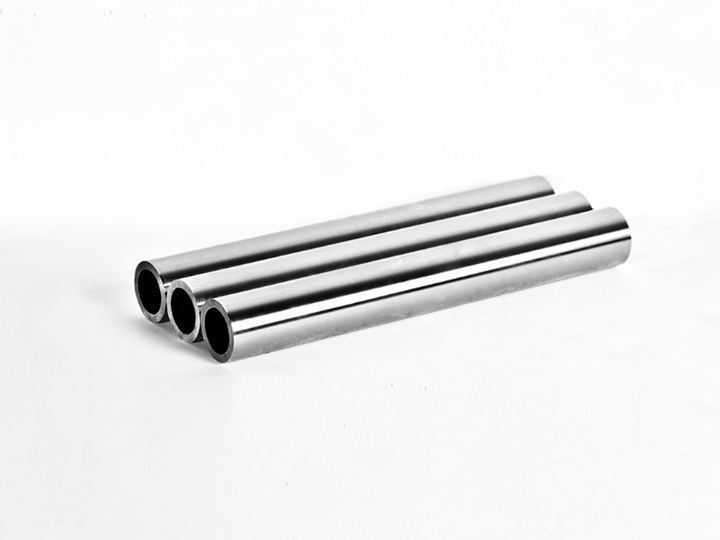
The cylinder barrel is the main body of the cylinder, which is a closed cylindrical structure, used to contain the working medium and provide a movement space for the piston. The cylinder barrel is usually made of high-strength seamless steel pipe (such as 45# steel, 20# steel) or aluminum alloy (for lightweight scenarios), and the inner surface is precision machined (honing or polishing) to ensure high dimensional accuracy and surface smoothness, reducing the friction between the piston and the cylinder barrel. The inner diameter of the cylinder barrel determines the effective area of the piston, which directly affects the output force of the cylinder.
3.2 Piston
The piston is a key component in the cylinder, which divides the cylinder barrel into two independent chambers (rod end chamber and rodless end chamber). The piston is installed inside the cylinder barrel and can move linearly along the inner wall of the cylinder barrel. The piston is usually made of cast iron, aluminum alloy, or engineering plastics, and a seal (such as O-ring, piston ring) is installed on the outer circumference of the piston to prevent the working medium from leaking between the two chambers. The structure of the piston can be divided into integral type and combined type: integral piston has simple structure and high rigidity, suitable for small and medium-sized cylinders; combined piston is easy to disassemble and maintain, suitable for large cylinders or cylinders requiring frequent maintenance.
3.3 Piston Rod
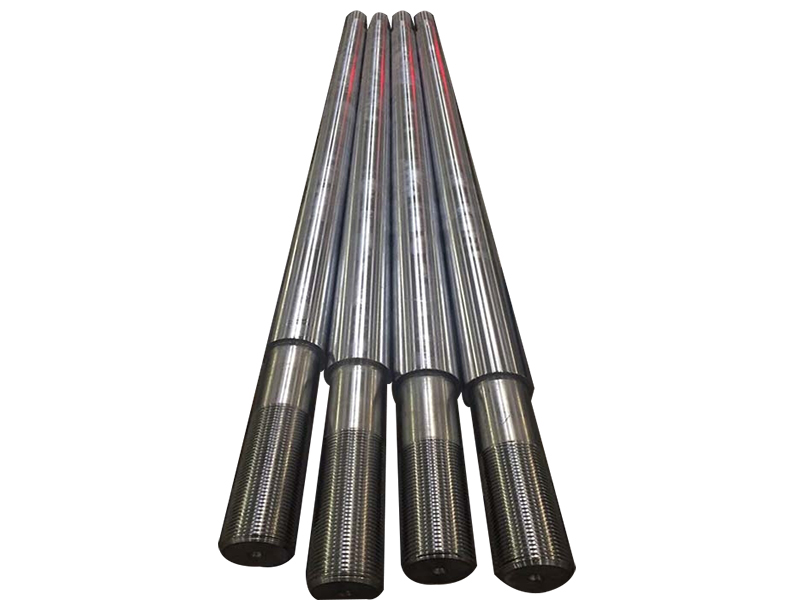
The piston rod is connected to the piston and extends out of the cylinder barrel, used to transmit the mechanical energy output by the piston to the external load. The piston rod is usually made of high-strength alloy steel (such as 40Cr, 304 stainless steel), and the surface is subjected to chrome plating or nitriding treatment to improve wear resistance and corrosion resistance. The diameter of the piston rod is determined according to the output force and structural requirements: the larger the diameter, the higher the rigidity and load-bearing capacity of the piston rod. The connection between the piston rod and the piston is usually realized by threads, pins, or flanges, ensuring firm connection and no looseness during operation.
3.4 End Cover
The end cover is installed at both ends of the cylinder barrel, used to seal the cylinder barrel and support the piston rod. The end cover is usually made of cast iron, aluminum alloy, or steel plate, and is fixed to the cylinder barrel by bolts or threads. The end cover at the rod end is equipped with a guide sleeve to guide the movement of the piston rod, ensuring that the piston rod moves linearly without deviation. The end cover is also equipped with an air inlet/outlet (for pneumatic cylinders) or oil inlet/outlet (for hydraulic cylinders) to realize the input and output of the working medium. In addition, some end covers are equipped with buffer devices (such as buffer rings, buffer valves) to reduce the impact when the piston moves to the end of the stroke.
3.5 Seal Components
Seal components are essential components of cylinders, used to prevent the leakage of working medium and the entry of external impurities (such as dust, water) into the cylinder barrel, ensuring the normal operation of the cylinder. Common seal components include piston seals, rod seals, and static seals: piston seals are installed on the piston to prevent the working medium from leaking between the two chambers of the cylinder; rod seals are installed on the guide sleeve of the end cover to prevent the working medium from leaking from the gap between the piston rod and the end cover; static seals are installed between the cylinder barrel and the end cover to prevent the working medium from leaking from the connection part. Common seal materials include nitrile rubber (NBR), fluorine rubber (FKM), and polytetrafluoroethylene (PTFE), which are selected according to the working medium, working temperature, and pressure.
3.6 Other Auxiliary Components
According to the application requirements, cylinders may also be equipped with auxiliary components such as guide sleeves, buffers, sensors, and positioners: guide sleeves are used to improve the guiding accuracy of the piston rod and reduce wear; buffers are used to absorb the impact energy when the piston moves to the end of the stroke, protecting the cylinder and external load; sensors (such as magnetic switches) are used to detect the position of the piston, realizing automatic control of the cylinder; positioners are used to adjust the stroke of the cylinder, ensuring precise positioning.
4. Classification of Cylinders
Cylinders can be classified according to different standards, and each type of cylinder has unique structural characteristics and performance advantages, suitable for different application scenarios. The common classification standards and specific types are as follows:
4.1 Classification by Working Medium
- Pneumatic Cylinder (Pneumatic Cylinder): Using compressed air as the working medium, it is widely used in industrial automation, electronic equipment, and other fields. It has the advantages of fast response, simple structure, low cost, and easy maintenance. Common types include standard cylinders, rodless cylinders, and compact cylinders. Pneumatic cylinders are suitable for scenarios requiring fast movement and low load-bearing capacity (usually less than 100kN).
- Hydraulic Cylinder (Hydraulic Cylinder): Using hydraulic oil as the working medium, it is widely used in engineering machinery, heavy equipment, and other fields. It has the advantages of large output force, high positioning accuracy, and stable operation. Common types include plunger cylinders, piston cylinders, and telescopic cylinders. Hydraulic cylinders are suitable for scenarios requiring large load-bearing capacity and high positioning accuracy.
4.2 Classification by Structural Form
- Standard Cylinder: The most common type of cylinder, with a simple structure, including piston, piston rod, cylinder barrel, and end cover. It is divided into single-acting and double-acting types, suitable for general linear drive scenarios (such as pushing, pulling, lifting). The installation methods include foot-mounted, flange-mounted, and ear-mounted.
- Rodless Cylinder: The piston rod is not extended out of the cylinder barrel, and the movement is realized by the slider installed on the cylinder barrel. It has the advantages of small installation space, long stroke, and smooth movement. Common types include magnetic rodless cylinders and mechanical rodless cylinders, suitable for scenarios with limited installation space (such as electronic equipment, automated production lines).
- Compact Cylinder: The overall structure is compact, with a small diameter and short length, suitable for scenarios with limited installation space (such as small machinery, electronic equipment). The output force is small, usually less than 10kN.
- Telescopic Cylinder: Composed of multiple nested cylinder barrels (telescopic sections), which can realize long-stroke movement with a small installation space. It is divided into single-acting and double-acting types, suitable for scenarios requiring long stroke and limited installation space (such as engineering machinery, hydraulic lifts).
- Rotary Cylinder: Converting the linear motion of the piston into rotary motion, outputting torque. Common types include rack and pinion rotary cylinders and vane rotary cylinders, suitable for scenarios requiring rotary drive (such as clamping, indexing).
4.3 Classification by Motion Mode
- Linear Cylinder: The piston moves linearly along the cylinder barrel, outputting linear force and displacement. It is the most common type of cylinder, suitable for most linear drive scenarios (such as pushing, pulling, lifting).
- Rotary Cylinder: The piston moves linearly, and the linear motion is converted into rotary motion through a transmission mechanism (such as rack and pinion, vane), outputting torque. Suitable for scenarios requiring rotary drive (such as clamping, indexing, and reversing).
- Compound Cylinder: Combining linear motion and rotary motion, realizing complex motion (such as linear movement while rotating). Suitable for scenarios requiring complex motion (such as machining, assembly).
4.4 Classification by Action Mode
- Single-Acting Cylinder: The working medium only acts on one side of the piston, providing driving force for one-way movement of the piston, and the reset is realized by springs, gravity, or external forces. It has the advantages of simple structure and low cost, suitable for scenarios requiring one-way drive (such as lifting, clamping).
- Double-Acting Cylinder: The working medium alternately acts on both sides of the piston, providing driving force for the forward and backward movement of the piston. It has the advantages of stable movement, adjustable speed, and large output force, suitable for scenarios requiring two-way drive (such as pushing and pulling, reciprocating motion).
4.5 Other Special Types of Cylinders
- Servo Cylinder: Combining pneumatic/hydraulic technology and servo control technology, realizing precise control of speed, displacement, and force. It has high positioning accuracy (up to ±0.01mm) and stable performance, suitable for high-precision drive scenarios (such as precision machining, medical equipment).
- Shock Absorber Cylinder: Equipped with a high-performance buffer device, which can effectively absorb the impact energy when the piston moves to the end of the stroke, protecting the cylinder and external load. Suitable for scenarios with large impact (such as heavy equipment, stamping machinery).
- Corrosion-Resistant Cylinder: Made of corrosion-resistant materials (such as 316L stainless steel) and equipped with corrosion-resistant seals, suitable for corrosive environments (such as marine equipment, chemical industry).
5. Comprehensive Application Guide for Cylinders
The rational selection and standardized application of cylinders are the key to ensuring the stable operation of pneumatic and hydraulic systems, improving production efficiency, and reducing maintenance costs. The selection of cylinders must be based on the application scenario, working conditions, and performance requirements, and the appropriate type, specification, and supporting components must be selected. This section sorts out the key selection factors, matching principles, installation and maintenance points of cylinders, providing a comprehensive application guide for practitioners.
5.1 Key Selection Factors
- Working Conditions: Including working medium (compressed gas or hydraulic oil), working pressure, working temperature, environmental conditions (such as dust, corrosion, high temperature), and load type (static load, dynamic load, impact load). For example, corrosive environments require corrosion-resistant cylinders; high-temperature environments require high-temperature resistant seals and materials; impact loads require cylinders with buffer devices.
- Performance Requirements: Including output force, movement speed, positioning accuracy, and stroke. The output force is determined by the working pressure and the effective area of the piston; the movement speed is related to the flow rate of the working medium and the diameter of the cylinder; the positioning accuracy is determined by the type of cylinder (such as servo cylinders have higher positioning accuracy than standard cylinders); the stroke is determined by the application scenario, ensuring that the cylinder can meet the movement range requirements.
- Installation Space: According to the installation space of the equipment, select the appropriate structural type of cylinder. For example, limited installation space requires compact cylinders or rodless cylinders; long-stroke requirements with limited installation space require telescopic cylinders.
- Control Requirements: According to the control mode of the system, select the appropriate cylinder type. For example, precise speed and displacement control require servo cylinders; simple on-off control requires standard cylinders; position detection requires cylinders equipped with magnetic switches.
- Cost Factor: On the premise of meeting the performance requirements, select the cylinder with reasonable cost. For example, general linear drive scenarios can select standard pneumatic cylinders; high-precision and large-load scenarios require hydraulic cylinders or servo cylinders, which have higher costs.
5.2 Matching Principles with Supporting Components
Cylinders cannot work independently and need to be matched with supporting components (such as air sources, hydraulic pumps, valves, pipelines, and sensors) to form a complete pneumatic or hydraulic system. The matching principles are as follows:
- Matching with Air Source/Hydraulic Pump: The output pressure and flow rate of the air source (for pneumatic cylinders) or hydraulic pump (for hydraulic cylinders) must match the working pressure and flow rate requirements of the cylinder. The pressure of the air source is usually 0.4~0.6MPa, and the pressure of the hydraulic pump is usually 10~31.5MPa.
- Matching with Valves: The type and specification of the valve (such as solenoid valve, directional control valve) must match the cylinder. For example, double-acting cylinders require two-position five-way solenoid valves; single-acting cylinders require two-position three-way solenoid valves. The flow rate of the valve must be greater than the flow rate of the cylinder to ensure the normal movement of the cylinder.
- Matching with Pipelines: The diameter of the pipeline must match the air inlet/outlet (or oil inlet/outlet) of the cylinder, ensuring that the working medium can flow smoothly, reducing pressure loss. The length of the pipeline should be as short as possible, avoiding excessive bending and reducing flow resistance.
- Matching with Sensors and Controllers: If position detection or automatic control is required, the sensor (such as magnetic switch) and controller must match the cylinder. The magnetic switch should be installed at the appropriate position of the cylinder to accurately detect the position of the piston; the controller should be able to receive the signal of the sensor and control the movement of the cylinder.
5.3 Installation Points
The correct installation of cylinders is the basis for ensuring their stable operation. The key installation points are as follows:
- Installation Alignment: The cylinder must be installed horizontally or vertically, ensuring that the piston rod is aligned with the external load, avoiding eccentricity. Eccentric installation will cause uneven wear of the piston rod and seal, reducing the service life of the cylinder.
- Fixing Firmly: The cylinder barrel and end cover must be fixed firmly with bolts, ensuring no looseness during operation. The installation base must have sufficient rigidity to avoid vibration during the operation of the cylinder.
- Seal Installation: The seal components must be installed correctly, ensuring that the seal is tight without leakage. When installing the seal, apply a small amount of lubricant to the seal and the installation surface to avoid damaging the seal.
- Buffer Adjustment: If the cylinder is equipped with a buffer device, adjust the buffer valve according to the working conditions to ensure that the buffer effect is appropriate. Too strong buffer will affect the movement speed of the cylinder; too weak buffer will cause impact.
- Sensor Installation: The magnetic switch should be installed at the position corresponding to the piston stroke, ensuring that the sensor can accurately detect the position of the piston. The wiring of the sensor should be neat and avoid contact with moving parts.
5.4 Maintenance Points
Scientific and standardized maintenance is an important guarantee for extending the service life of cylinders and reducing failure rates. The key maintenance points are as follows:
- Daily Inspection: Check the cylinder for leakage (working medium leakage, air leakage), the piston rod for scratches, wear, or corrosion, and the connection parts for looseness. If leakage is found, replace the seal in time; if the piston rod is worn or corroded, repair or replace it in time; if the connection parts are loose, tighten them in time.
- Regular Lubrication: For pneumatic cylinders, regularly add lubricating oil to the air source to ensure that the piston, piston rod, and guide sleeve are lubricated, reducing friction. For hydraulic cylinders, the hydraulic oil should be replaced regularly (usually every 6~12 months), and the oil filter should be cleaned to ensure the cleanliness of the hydraulic oil.
- Cleaning: Regularly clean the surface of the cylinder to remove dust, oil, and other impurities, avoiding the entry of impurities into the cylinder barrel and damaging the seal and piston.
- Periodic Inspection: Every 3~6 months, disassemble the cylinder for inspection, check the wear of the piston, piston rod, and seal, and replace the worn parts. Check the cylinder barrel for deformation or wear, and repair or replace it if necessary.
- Environmental Protection: For cylinders working in corrosive or dusty environments, install protective covers or seals to isolate the cylinder from the harsh environment, reducing corrosion and wear.
6. Practical Application Cases and Effect Analysis
To further verify the application value of different types of cylinders and the importance of rational selection and standardized application, this section selects typical application cases in industrial automation, engineering machinery, and medical equipment fields, and analyzes the performance improvement and economic benefits brought by scientific selection and maintenance of cylinders.
6.1 Case 1: Pneumatic Cylinder Application in Industrial Automation Production Lines
An industrial automation manufacturer's production line uses standard double-acting pneumatic cylinders to realize the pushing and clamping of workpieces. The original cylinders use ordinary nitrile rubber seals, with problems such as short service life (only 6 months), frequent air leakage, and unstable movement speed. The production efficiency is affected, and the annual maintenance cost is about 15,000 yuan.
The manufacturer optimized the selection and maintenance: replaced the ordinary pneumatic cylinders with corrosion-resistant pneumatic cylinders (304 stainless steel cylinder barrel, fluorine rubber seals), and formulated a standardized maintenance plan (daily inspection, weekly lubrication, quarterly cleaning). After the improvement, the service life of the cylinders is extended to 36 months, the air leakage problem is completely solved, the movement speed is stable, and the annual maintenance cost is reduced to 3,000 yuan. The production efficiency of the production line is increased by 25%, achieving significant economic benefits.
6.2 Case 2: Hydraulic Cylinder Application in Engineering Machinery
A construction machinery manufacturer produces excavators, and the hydraulic cylinders of the original excavator arms use plunger cylinders, with problems such as large output force but low positioning accuracy, and easy oil leakage. The excavator's operation accuracy is low, and the maintenance cost is high (about 20,000 yuan per excavator per year).
The manufacturer optimized the selection: replaced the plunger cylinders with double-acting piston hydraulic cylinders, equipped with servo control systems and high-performance seals, and strengthened daily maintenance (regular oil replacement, seal inspection). After the improvement, the positioning accuracy of the excavator arm is improved to ±0.1mm, the oil leakage problem is solved, the maintenance cost is reduced to 5,000 yuan per excavator per year, and the operation efficiency of the excavator is increased by 20%. The product competitiveness of the excavator is significantly improved.
6.3 Case 3: Servo Cylinder Application in Medical Equipment
A medical equipment manufacturer produces surgical robots, and the original precision drive components use standard pneumatic cylinders, with problems such as low positioning accuracy, unstable movement, and poor controllability, which affect the surgical accuracy.
The manufacturer optimized the selection: replaced the standard pneumatic cylinders with servo hydraulic cylinders, which can realize precise control of speed, displacement, and force, with a positioning accuracy of ±0.01mm. At the same time, equipped with high-precision sensors and controllers to realize automatic control of the cylinder. After the improvement, the surgical accuracy of the robot is significantly improved, the operation is stable and reliable, and the robot has been widely used in major hospitals, improving the medical treatment effect.
7. Common Faults and Solutions in Cylinder Operation
In the operation process of cylinders, due to improper selection, non-standard installation, inadequate maintenance, or wear of components, some common faults often occur, which affect the normal operation of the cylinder. This section analyzes these common faults and proposes corresponding solutions.
7.1 Common Faults and Solutions for Pneumatic Cylinders
- Air Leakage: The main reasons are worn seals, loose connection parts, or damaged cylinder barrel. The solution is to replace the worn seals, tighten the connection parts, and repair or replace the damaged cylinder barrel.
- Unstable Movement Speed: The main reasons are unstable air source pressure, insufficient lubrication, or blocked pipelines. The solution is to stabilize the air source pressure, add lubricating oil regularly, and clean the blocked pipelines.
- Piston Rod Jammed: The main reasons are eccentric installation, worn piston or cylinder barrel, or foreign objects entering the cylinder barrel. The solution is to adjust the installation position to ensure alignment, replace the worn piston or cylinder barrel, and clean the foreign objects in the cylinder barrel.
- Insufficient Output Force: The main reasons are low air source pressure, small effective area of the piston, or worn seals. The solution is to increase the air source pressure, select a cylinder with a larger diameter, and replace the worn seals.
7.2 Common Faults and Solutions for Hydraulic Cylinders
- Oil Leakage: The main reasons are worn seals, damaged cylinder barrel or piston rod, or loose connection parts. The solution is to replace the worn seals, repair or replace the damaged cylinder barrel or piston rod, and tighten the connection parts.
- Slow Movement Speed: The main reasons are insufficient hydraulic oil flow, blocked oil pipelines, or worn hydraulic valves. The solution is to increase the hydraulic oil flow, clean the blocked oil pipelines, and replace the worn hydraulic valves.
- Piston Rod Bending: The main reasons are eccentric load, impact load, or insufficient rigidity of the piston rod. The solution is to correct the piston rod (for slight bending) or replace the piston rod (for severe bending), and avoid eccentric load and impact load.
- Insufficient Output Force: The main reasons are low hydraulic pressure, small effective area of the piston, or hydraulic oil pollution. The solution is to increase the hydraulic pressure, select a cylinder with a larger diameter, and replace the polluted hydraulic oil.
7.3 Common Faults and Solutions for All Types of Cylinders
- Buffer Failure: The main reasons are blocked buffer valve, worn buffer ring, or insufficient buffer oil (for hydraulic cylinders). The solution is to clean the buffer valve, replace the worn buffer ring, and add buffer oil.
- Sensor Failure: The main reasons are loose sensor installation, damaged sensor, or poor wiring. The solution is to re-install the sensor, replace the damaged sensor, and check and repair the wiring.
- Corrosion of Piston Rod: The main reasons are harsh environmental conditions (corrosion, high humidity) or insufficient anti-corrosion treatment. The solution is to replace the corroded piston rod, perform anti-corrosion treatment (such as chrome plating), and install protective covers.
8. Future Development Trends of Cylinders
With the continuous development of industrial automation, intelligent manufacturing, and new material technology, cylinders will develop towards intelligence, high precision, lightweight, and energy conservation, further improving their performance and expanding their application scope.
- Intelligent Development: Integrate intelligent technologies (such as IoT, sensors, AI) into cylinders, realize real-time monitoring of cylinder operation parameters (such as pressure, temperature, displacement, wear), predict the service life through AI algorithms, and realize automatic lubrication, fault early warning, and remote maintenance, reducing manual maintenance and improving the reliability of the system.
- High Precision Development: With the demand for high-precision drive in precision machining, medical equipment, and other fields, the positioning accuracy and movement stability of cylinders will be further improved. Servo cylinders will be widely used, and the positioning accuracy will reach ±0.001mm, meeting the high-precision drive requirements.
- Lightweight Development: Use lightweight materials (such as aluminum alloy, carbon fiber composites) to manufacture cylinders, reducing the overall weight of the cylinder while ensuring output force and rigidity. Lightweight cylinders are suitable for aerospace, automotive, and other fields requiring lightweight equipment.
- Energy Conservation and Environmental Protection: Optimize the structural design of cylinders, reduce energy consumption (such as reducing air leakage of pneumatic cylinders, improving hydraulic oil utilization rate of hydraulic cylinders). Develop environmentally friendly seals and working media, reducing environmental pollution.
- Integration and Miniaturization: With the miniaturization of electronic equipment and medical equipment, cylinders will develop towards miniaturization, with smaller volume and lighter weight. At the same time, the integration of cylinders and other components (such as valves, sensors) will be realized, reducing the number of parts, improving the structural stability, and reducing the installation space.









 Home
News
Industry News
Detailed Explanation Of Cylinder Working Principles: Structure, Types, And Application Guide
Home
News
Industry News
Detailed Explanation Of Cylinder Working Principles: Structure, Types, And Application Guide 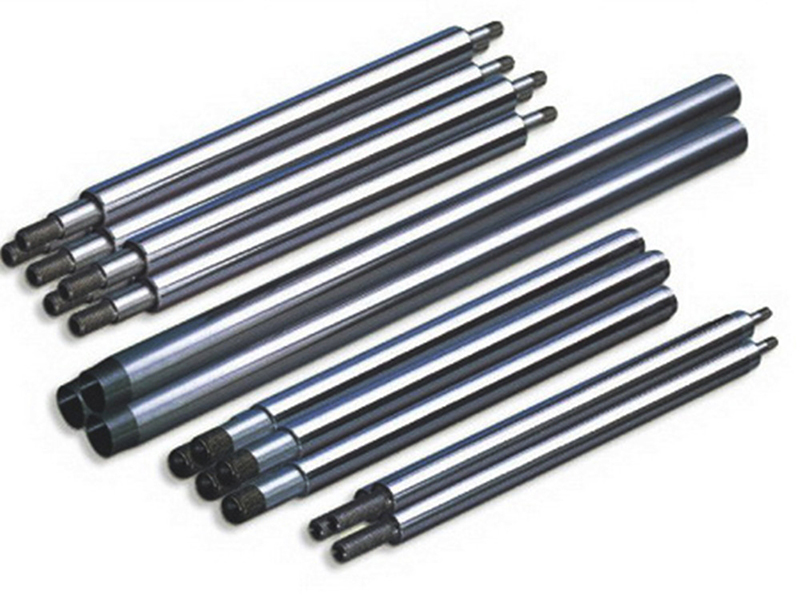

 +86 13771119215