Introduction
Standard piston rods for industrial hydraulic cylinders-typically 20-60mm diameter and 500-2,000mm length-are manufactured using well-established processes that deliver consistent quality at high volume. But as cylinder applications grow in scale, the piston rods grow with them: large diameter rods for high-force hydraulic presses and marine actuators, extra-long rods for large-format machines and offshore equipment.
Large and extra-long piston rods are not simply scaled-up versions of standard rods. At larger sizes, different physical phenomena become dominant, manufacturing processes behave differently, and the cost and consequence of errors increase dramatically.
This guide covers the engineering analysis, design considerations, and manufacturing requirements for large diameter and extra-long piston rods.
Engineering Challenges for Large Diameter Rods
Column Buckling: The Governing Constraint
For standard diameter rods, the primary design consideration is often fatigue strength or pressure loading. But as diameter increases, the buckling constraint becomes increasingly dominant because the weight of the rod itself contributes to the compressive load.
The column buckling equation:
P_critical = (pi^2 * E * I) / (K * L)^2
Where I (second moment of area) for a round rod is proportional to d^4. This means that doubling the diameter increases the buckling load by a factor of 16, not 2.
The practical implication: For a fixed length and material, there is a minimum diameter below which the rod will buckle under its own weight before it reaches its compressive strength limit. This minimum diameter is often overlooked in design.
Minimum diameter to resist self-buckling:
d_min = (64 * E * I / (rho * g * A))^(1/4)
For a steel rod at 5,000mm unsupported length, the minimum diameter to prevent self-buckling is approximately 40-50mm. Any rod of smaller diameter would buckle under its own weight.
Heat Treatment Challenges in Large Sections
Large diameter rods require special attention to heat treatment because:
Larger cross-sections cool more slowly during quenching, which affects the martensitic transformation and resulting hardness
Hardenability limitations: CK45 steel, which through-hardens adequately in sections up to approximately 30mm, will not achieve full hardness in a 100mm diameter rod
Hardness gradient: The surface cools faster than the core during quenching, creating a hardness gradient through the cross-section
The hardenability solution: 42CrMo (AISI 4140) has significantly better hardenability than CK45 due to its chromium and molybdenum content. It achieves uniform hardness through much larger cross-sections. For large diameter piston rods (above 60-80mm), 42CrMo is the standard material choice.
Hardness uniformity requirement: The hardness variation across the cross-section of a large diameter rod should not exceed 3-5 HRC points. This is verified by hardness testing at multiple points on the cross-section (surface, mid-radius, center) after heat treatment.
Grinding Challenges for Large Diameter Rods
Grinding a large diameter rod presents fixturing challenges that do not exist for standard rods:
Mass and inertia: A 100mm diameter by 4,000mm long steel rod weighs approximately 250kg. Centering and rotating this mass in grinding chucks requires significant mechanical capacity.
Deflection under its own weight: A long rod supported at its ends will deflect in the middle due to its own weight, creating a bow that must be accounted for in grinding.
Thermal growth during grinding: The grinding process generates heat. A large mass of steel conducts and accumulates this heat differently than a small rod, causing thermal distortion during the grinding process.
Solutions:
Steady rests: Support the rod at intermediate points during grinding to reduce deflection
In-process measurement: Measure the rod diameter continuously during grinding using laser or air gauges, adjusting the grinding parameters based on real-time measurements
Controlled grinding parameters: Use lighter depth of cut and more passes to minimize thermal input and distortion
Engineering Challenges for Extra-Long Rods
Critical Speed: The Governing Constraint
Extra-long piston rods face a fundamental physics constraint: the lateral natural frequency (critical speed) of the rod decreases as length increases (proportional to 1/L^2). If the operating frequency approaches or exceeds this critical speed, resonance causes excessive vibration.
Critical speed equation (simplified for pinned-pinned end conditions):
N_critical = (pi/2) * sqrt(E*Ig / (w * L^3)) * 60
Where:
E = Young's modulus (210 GPa for steel)
Ig = Polar moment of inertia (for round rod: pi*d^4/32)
w = Weight per unit length
L = Unsupported length
The critical insight: For a fixed diameter, doubling the length reduces the critical speed by a factor of approximately 5.7 (sqrt(8)). This means that very long rods require disproportionately larger diameters to maintain adequate critical speed margin.
Design rule: For high-cycle applications (above 1Hz operating frequency), the critical speed must exceed the operating frequency by at least 1.5-2x. For a sorting robot operating at 5Hz, a 3,000mm long rod would require approximately 60-80mm diameter to achieve 7.5-10Hz critical speed.
Straightness Challenges for Long Rods
Maintaining straightness in extra-long rods is significantly more difficult than in standard rods because:
The rod weight creates continuous bowing between supports
Thermal gradients during manufacturing (grinding heat, heat treatment) cause differential expansion
Residual stress from prior operations redistributes over time, causing gradual distortion
Target straightness for extra-long rods:
|
Application |
Straightness Requirement |
|
Standard industrial |
0.03-0.05mm/m |
|
Precision machine tools |
0.01-0.02mm/m |
|
High-precision CNC |
0.005-0.01mm/m |
For a 5,000mm rod, these requirements translate to total bow of 0.05-0.25mm-a very tight tolerance for a 5-meter long component.
Measurement and Inspection Challenges
Inspecting a 5,000mm rod for straightness requires methods that account for the rod's weight deflection between supports:
V-block method: Unsupported span causes deflection that appears as apparent straightness error
Surface plate method: The rod is supported on V-blocks at its anti-nodes (the points of minimum deflection for the specific support spacing), and a dial indicator traverses the rod
Laser interferometer straightness measurement: Provides the highest accuracy measurement but requires specialized equipment and a controlled environment
Hollow Piston Rods: Weight Reduction Solution
When to Specify Hollow Rods
For extra-long applications where the critical speed is the governing constraint, increasing the rod diameter to raise critical speed may be impractical due to weight, cost, or installation envelope constraints. A hollow piston rod provides an alternative solution.
Hollow rod advantages:
Reduced weight: A hollow rod with 60% of the outer diameter and 40% inner diameter (wall thickness 40% of outer diameter) weighs approximately 36% less than a solid rod of the same outer diameter
Improved critical speed: For the same weight, a hollow rod has significantly higher second moment of area (I) and polar moment of inertia (Ig), raising critical speed
Hollow rod critical speed comparison (5,000mm unsupported length):
Solid 50mm diameter rod: Critical speed approximately 4-5 Hz, weight approximately 77kg
Hollow 60mm OD x 30mm ID rod: Critical speed approximately 9-10 Hz, weight approximately 54kg
The hollow rod achieves 2x the critical speed at 70% of the weight of the solid rod.
Manufacturing Considerations for Hollow Rods
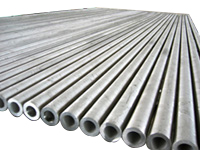
Hollow piston rods are manufactured by:
Hollow bar stock: Seamless hot-rolled or cold-drawn hollow bar is used as the starting material
Hollow bar finishing: The OD and ID are finish machined/ground to final dimensions
Quality considerations:
Wall thickness variation in hollow bar must be controlled to ensure uniform mechanical properties
The ID surface (inner diameter) must be smooth enough to not obstruct hydraulic flow if the rod is used in double-rod-end cylinders
Chrome plating is applied only to the OD surface; the ID is typically not treated
Application Examples
Large Hydraulic Press Cylinder
Application: 10,000kN (1,000 tonne) hydraulic press for metal forming
Requirements:
Piston rod diameter: 200-280mm (calculated from force and pressure)
Stroke: 1,500mm
Operating pressure: 25-30 MPa
Positioning accuracy: +/- 0.1mm
Design decisions:
Material: 42CrMo Q&T (for adequate hardenability at 200mm+ diameter)
Chrome coating: 0.04mm heavy duty (for high load, high abrasion environment)
Critical speed not limiting (stroke is moderate)
Buckling analysis required (high compressive load)
Long-Stroke Offshore Hydraulic Actuator
Application: Offshore platform hydraulic actuator for valve operation
Requirements:
Rod diameter: 80mm
Stroke: 6,000mm
Marine environment (seawater exposure)
High reliability (20+ year service life)
Design decisions:
Material: 316L stainless with hard chrome plating (marine corrosion resistance)
Hollow rod design to manage weight and critical speed
Chrome coating: 0.03mm with crack density verification for seawater service
Straightness: 0.02mm/m (marine salt spray accelerates wear on misaligned rods)
Key Takeaways
Large diameter rods (above 80mm) require 42CrMo alloy steel instead of CK45 due to superior hardenability needed for uniform hardness through large cross-sections; CK45 will not achieve full hardness in sections above approximately 30mm
Extra-long rods (above 3,000mm) are governed by critical speed (lateral natural frequency) which decreases with length squared; for a 5Hz application, a 5,000mm rod may require 60-80mm diameter to achieve the required 7.5-10Hz critical speed
Hollow piston rods provide an effective solution for long-stroke applications where critical speed is limiting: a hollow 60mm OD x 30mm ID rod achieves 2x the critical speed at 70% the weight of a solid 50mm rod
Manufacturing challenges for large/extra-long rods include fixturing for grinding (steady rests required), thermal distortion management (lighter cuts, more passes), and uniform chrome plating (optimized anode geometry)
Buckling analysis is critical for large diameter rods because rod self-weight contributes significantly to the compressive load; always verify that the selected diameter provides adequate safety margin (minimum 3x) against Euler buckling
Conclusion
Large diameter and extra-long piston rods require engineering analysis that goes beyond standard rod sizing methods. The key differences are the shift in governing constraints (from fatigue to buckling and critical speed), the material selection implications (42CrMo for large sections, hollow designs for long strokes), and the manufacturing complexity that increases with size.
For equipment manufacturers specifying large or long-stroke hydraulic cylinders, engaging with the piston rod manufacturer early in the design process is valuable. The trade-offs between diameter, length, weight, critical speed, and manufacturing cost are complex, and a supplier with large rod manufacturing experience can identify solutions that might not be apparent from first principles.
Wuxi Xinluo Hydraulic Machinery Co., Ltd. manufactures large diameter (80-200mm) and extra-long (up to 6,000mm) piston rods with in-house heat treatment, grinding, and chrome plating capability, including hollow rod designs for long-stroke applications.








 Home
News
Industry News
Large Diameter And Extra-Long Piston Rod: Engineering Challenges, Design Considerations, And Manufacturing Requirements
Home
News
Industry News
Large Diameter And Extra-Long Piston Rod: Engineering Challenges, Design Considerations, And Manufacturing Requirements 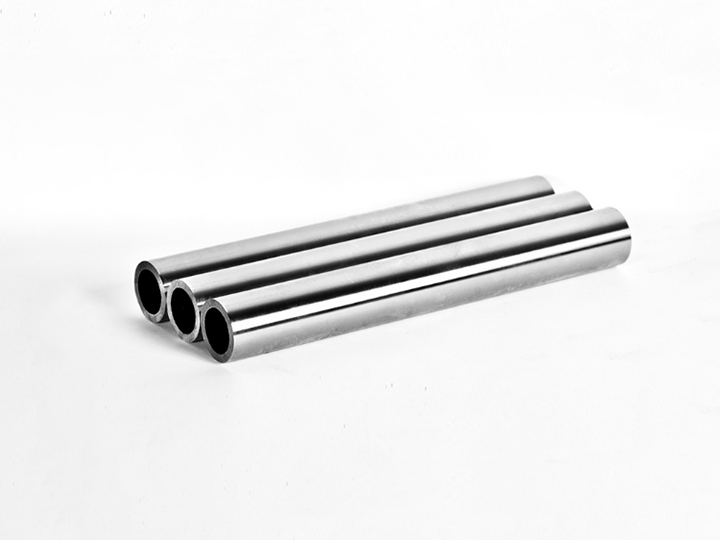

 +86 13771119215