Introduction
When selecting a piston rod for a hydraulic or pneumatic cylinder, the surface treatment is often more critical than the base material itself. A poorly chosen or poorly applied surface coating will fail prematurely-even if the underlying steel is correctly specified-leading to scoring of the cylinder bore, seal damage, and costly downtime.
Hard chrome plating remains the industry standard surface treatment for piston rods across virtually all heavy-duty industrial applications. While alternative coatings (electroless nickel, thermal spray, PVD coatings) have emerged in recent years, hard chrome plating continues to dominate because of its unique combination of hardness, lubricity, corrosion resistance, and cost-effectiveness at scale.
This guide provides a comprehensive technical reference covering the chrome plating process, performance characteristics, application-specific selection criteria, and quality verification methods for hard chrome plated piston rods.
What Is Hard Chrome Plating?
The Electrochemical Process
Hard chrome plating (also called industrial chrome plating or engineering chrome plating) is an electroplating process that deposits a layer of chromium metal onto a prepared steel substrate through electrochemical reduction of chromic acid solution. Unlike decorative chrome (which is a thin bright layer over nickel), hard chrome plating produces a thick, wear-resistant coating that is mechanically bonded to the substrate.
Key process parameters:
Bath composition: Chromic acid (CrO3) and sulfuric acid (H2SO4) in ratio typically 100:1
Bath temperature: 50-60 degrees C for conventional hard chrome; 65-75 degrees C for deep cracking types
Current density: 30-60 A/dm2 depending on desired coating properties
Deposition rate: Approximately 0.025-0.05mm per hour
The process produces a coating that is not purely chromium metal but contains a controlled population of microcracks-an intentional feature that differentiates hard chrome from decorative chrome.
Coating Properties and Performance Characteristics
Hardness and Wear Resistance
The most significant property of hard chrome plating is its extreme surface hardness. The coating achieves HV750-1100 depending on bath conditions and post-plating treatment, which corresponds to approximately HRC65-72. This hardness level is 2-3x that of hardened steel and exceeds most alternative surface treatments.
Wear resistance evidence: In a controlled 5,000-hour continuous operating test in dusty construction machinery environments, chrome plated piston rods showed no significant surface wear. Untreated rods under identical conditions showed wear exceeding 0.5mm over the same period.
The wear resistance mechanism is two-fold:
The hard chromium layer resists initial abrasion and adhesion wear
The low surface roughness (Ra less than or equal to 0.2 micrometers) minimizes seal wear and friction
Corrosion Resistance
Chromium is one of the most corrosion-resistant metals for industrial applications. The chrome plating layer provides corrosion resistance through two mechanisms:
Barrier protection: The chromium layer acts as a physical barrier preventing corrosive media from reaching the steel substrate.
Self-healing passive film: Chromium spontaneously forms a thin, stable chromium oxide film (Cr2O3) on exposed surfaces when damaged, which resists further corrosion attack.
Performance data:
Neutral salt spray test: Greater than 500 hours without red corrosion
Marine environment: Chrome plated rods show over 90% reduction in corrosion rate compared to untreated rods
pH range stability: Excellent resistance in humid atmospheres, alkaline solutions, and organic acids
Friction and Lubricity
The chrome plating layer provides an exceptionally smooth surface finish that minimizes friction. The as-plated surface roughness of Ra less than or equal to 0.2 micrometers is achievable without post-grinding, and can be improved to Ra less than or equal to 0.1 micrometers with light polishing.
When combined with appropriate lubrication (such as specialty high-performance grease), the friction coefficient of chrome plated surfaces can reach 0.05-among the lowest of any metallic coating. This low friction translates directly to energy efficiency in pneumatic systems. In one documented case, switching to chrome plated piston rods in a sorting system cylinder increased operating frequency by 20% and reduced energy consumption by 15%.
Microcrack Structure: The Critical Quality Parameter
Why Microcracks Are Intentional
Unlike decorative chrome, which seeks to minimize cracks, hard chrome plating intentionally produces a network of microcracks in the coating. These microcracks serve a critical function: stress relief.
Without microcracks, the hard chrome coating would develop high internal tensile stresses during plating and cooling, causing spontaneous cracking or delamination from the substrate. The microcrack network allows the coating to relieve these stresses while maintaining its hardness and wear resistance.
Quality Specification
A properly controlled hard chrome plating process produces a microcrack density of greater than 2,000 cracks per linear centimeter. This density ensures:
Adequate stress relief to prevent coating delamination
Sufficient crack continuity to allow lubricant retention on the surface
No single crack penetrating through the full coating thickness (which would compromise corrosion resistance)
Verification method: Microcrack density is measured by scanning electron microscopy (SEM) examination of the coating surface after light etching to reveal crack patterns. The count is performed over a measured distance and expressed as cracks per cm.
Common quality failure: Insufficient crack density indicates excessive internal stress, which correlates with poor adhesion and risk of premature delamination under dynamic loading.
Coating Thickness Selection
Coating thickness is selected based on operating conditions and expected coating life. The relationship is approximately linear: doubling the coating thickness roughly doubles the available wear allowance before substrate exposure.
Thickness Options
|
Type |
Single-Sided Thickness |
Application |
|
Economy |
0.015mm (1.5 threads) |
Light duty, low pressure, indoor environments |
|
Standard |
0.02-0.025mm (2-2.5 threads) |
General industrial hydraulic/pneumatic |
|
Heavy Duty |
0.03-0.04mm (3-4 threads) |
Construction machinery, oilfield equipment, high pressure |
|
Extra Heavy |
0.05mm+ |
Severe service, abrasive media, long stroke |
Thickness Uniformity
Quality specifications require that the coating thickness variation across the rod surface does not exceed 10% dispersion error (per GB/T 11379-89 standard). Non-uniform coating can cause:
Localized wear-through in thin areas
Seal damage from stepped surface profile
Aesthetic and quality concerns
Thickness measurements are made using eddy current coating thickness gauges at multiple points along the rod length and around the circumference.
Application-Specific Selection Guide
Hydraulic Excavator and Loader Cylinder Rods
Operating conditions: High pressure (20-35MPa), frequent impact loads, dusty outdoor environment, wide temperature range
Recommended specification:
Material: 45 steel or 42CrMo, quenched and tempered
Coating: Hard chrome, 0.03mm minimum thickness
Surface roughness: Ra 0.2-0.4 micrometers
Expected life: 3-5x longer than unplated rods in equivalent service
CNC Machine Tool Servo Cylinder Rods
Operating conditions: High precision, low speed, high frequency bidirectional loading, clean environment
Recommended specification:
Material: 42CrMo, induction hardened or deep hardened
Coating: Hard chrome, 0.02-0.025mm
Straightness: 0.01mm/m or better
Surface roughness: Ra 0.1-0.2 micrometers
Pneumatic Sorting Robot Cylinder Rods
Operating conditions: High frequency (above 5Hz), clean environment, minimal lubrication
Recommended specification:
Material: CK45 carbon steel, normalized or stress relieved
Coating: Hard chrome, 0.02mm
Surface roughness: Ra 0.15-0.25 micrometers
Friction performance: Verified at 5Hz+ operating frequency without leakage
Marine Platform Hydraulic Actuator Rods
Operating conditions: Saltwater environment, 20+ year service life requirement, high humidity
Recommended specification:
Material: 316L stainless steel substrate
Coating: Hard chrome over stainless steel (composite structure)
Coating thickness: 0.03-0.04mm
Salt spray rating: Greater than 1,000 hours
Expected life: 20+ years in seawater service
High Temperature Application Rods (above 300 degrees C)
Operating conditions: Elevated temperature, thermal cycling, oxidation resistance required
Recommended specification:
Standard hard chrome maintains properties up to 480 degrees C
Above 500 degrees C: Chrome layer begins oxidizing and losing hardness
For temperatures above 400 degrees C: Consider thermal spray coatings (HVOF WC-Co, etc.) as alternatives
Key Takeaways
Hard chrome plating on piston rods delivers coating hardness of HV750-1100 (HRC65-72), providing 2-3x harder surface than hardened steel base material
The three core benefits are wear resistance (3-5x life extension in construction machinery), corrosion resistance (500+ hours salt spray rating, 90%+ reduction in marine corrosion rate), and low friction coefficient (Ra less than or equal to 0.2 micrometers, friction coefficient as low as 0.05 with lubrication)
Microcrack density of greater than 2,000 cracks per cm is a critical quality parameter that allows stress relief while maintaining coating integrity; verified by SEM analysis
Coating thickness selection ranges from 0.015mm economy grade for light duty to 0.05mm+ for severe service, with GB/T 11379-89 requiring less than or equal to 10% thickness dispersion error
Application-specific selection: heavy duty (0.03mm+, 20-35MPa) for construction machinery, standard (0.02-0.025mm) for general industrial, and composite 316L + chrome for marine environments requiring 20+ year service life
Conclusion
Hard chrome plated piston rods represent the current industrial standard for hydraulic and pneumatic cylinder applications requiring durability, corrosion resistance, and precision movement. The coating's unique combination of extreme hardness, self-lubricating surface, and corrosion resistance delivers measurable performance advantages across all application categories.
For equipment manufacturers and end users specifying hydraulic and pneumatic systems, the quality of the chrome plating-specifically thickness control, microcrack density, and adhesion-directly determines cylinder service life and maintenance intervals. Treating chrome plating as a commodity purchase rather than a technically specified component is a common and costly mistake.
Wuxi Xinluo Hydraulic Machinery Co., Ltd. manufactures hard chrome plated piston rods to ISO 9001 quality standards, with full in-house chrome plating capability and custom manufacturing for specific application requirements.









 Home
News
Industry News
Hard Chrome Plated Piston Rod: Complete Technical Guide To Surface Treatment, Performance Standards, And Selection Criteria
Home
News
Industry News
Hard Chrome Plated Piston Rod: Complete Technical Guide To Surface Treatment, Performance Standards, And Selection Criteria 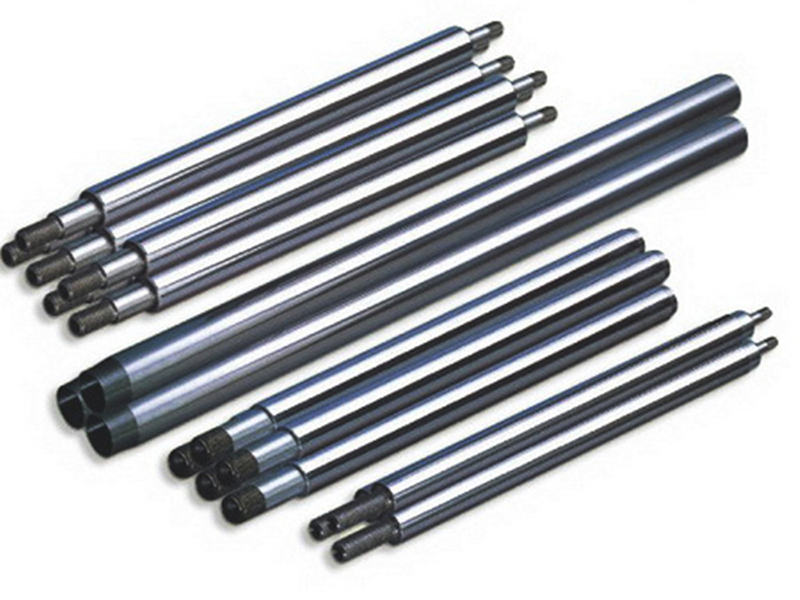

 +86 13771119215