1. Introduction
In the era of industrial automation, the demand for efficient, reliable, and low-cost power transmission components is increasing. Pneumatic transmission, as one of the main forms of fluid transmission, has been widely used in various industrial fields due to its advantages of clean energy, fast response, and simple control. Air cylinders, as the executive component of pneumatic transmission systems, are responsible for converting the pressure energy of compressed air into mechanical energy that can drive mechanical equipment to complete linear or rotary movement, and are widely used in processes such as material handling, automatic feeding, positioning, clamping, and sorting.
With the continuous development of industrial automation technology, the application scenarios of air cylinders have become more diverse and complex, and higher requirements have been put forward for their performance, precision, and reliability. From simple single-acting cylinders in basic mechanical equipment to high-precision servo-controlled cylinders in intelligent manufacturing, air cylinders have continuously optimized their structure and performance to meet the needs of different industries. However, in practical applications, many problems still exist: inadequate understanding of the working principles leads to improper type selection; neglect of structural characteristics and installation requirements results in unstable operation or premature failure; lack of standardized maintenance and fault handling capabilities affects the service life of air cylinders and the normal operation of the entire pneumatic system.
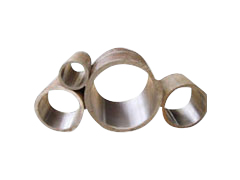
Against this background, conducting a comprehensive technical analysis of
air cylinders, clarifying their working principles, structural characteristics, types, and application norms, is of great practical significance for promoting the standardized application of air cylinders and improving the efficiency and stability of pneumatic transmission systems. This paper takes the core demand of ""safe, efficient, and rational application of air cylinders"" as the starting point, systematically sorts out the technical system of air cylinders, and provides valuable technical guidance for the selection, use, and maintenance of air cylinders in various engineering projects.
2. Working Principles of Air Cylinders
The working principle of air cylinders is based on the basic law of gas pressure: when compressed air is introduced into the cylinder cavity, the pressure of the compressed air acts on the piston, generating a thrust or pull force, which drives the piston rod to move linearly or drives the rotor to rotate, thereby realizing the conversion of pneumatic energy to mechanical energy. The core of the working principle lies in the control of gas intake and exhaust, which determines the direction, speed, and force of the cylinder's movement. The following is a detailed elaboration of the basic working principles of air cylinders, including the working mechanism of different types of cylinders and the key factors affecting their operation.
2.1 Basic Working Mechanism
The basic working process of an air cylinder can be divided into three stages: intake, movement, and exhaust. Taking the most common double-acting cylinder as an example, the specific working mechanism is as follows:
1. Intake Stage: Compressed air is filtered, decompressed, and regulated by the pneumatic control valve (such as a solenoid valve), and then enters one of the two cavities of the cylinder (rod cavity or rodless cavity) through the air inlet. The pressure of the compressed air in the cavity rises rapidly, forming a pressure difference with the other cavity (which is connected to the exhaust port and in a low-pressure state).
2. Movement Stage: When the pressure difference between the two cavities of the cylinder is greater than the resistance (including the load force, friction force, and spring force), the piston is pushed to move in the direction of the low-pressure cavity. The piston drives the piston rod to extend or retract, converting the pressure energy of the compressed air into linear mechanical energy, which is used to drive the external load to complete the specified action.
3. Exhaust Stage: When the piston moves to the limit position (controlled by a limit switch or the mechanical structure of the cylinder), the pneumatic control valve reverses, cutting off the air intake to the original high-pressure cavity and connecting it to the exhaust port. At the same time, compressed air is introduced into the original low-pressure cavity, and the above process is repeated, realizing the reciprocating movement of the piston rod.
For single-acting cylinders, only one cavity is connected to compressed air, and the return movement of the piston rod is realized by external forces such as springs, weights, or gravity. Its working principle is simpler than that of double-acting cylinders, but it has the characteristics of unidirectional force and limited return force.
2.2 Key Factors Affecting Working Performance
The working performance of air cylinders is affected by many factors, which directly determine their movement speed, output force, precision, and stability. The main key factors are as follows:
- Compressed Air Pressure: The output force of the air cylinder is directly proportional to the pressure of the compressed air and the effective area of the piston. The higher the air pressure, the greater the output force, but it should not exceed the rated pressure of the cylinder to avoid damage to the cylinder body and seals.
- Air Flow Rate: The air flow rate determines the movement speed of the cylinder. The larger the air flow rate, the faster the movement speed of the piston rod. The air flow rate can be adjusted by flow control valves (such as throttle valves) to meet the different speed requirements of the operation.
- Friction Force: The friction force between the piston and the cylinder barrel, the piston rod and the guide sleeve, and the seals will affect the movement smoothness and response speed of the cylinder. Reducing friction through reasonable lubrication and selecting high-quality seals can improve the working performance of the cylinder.
- Load Characteristics: The size, direction, and stability of the external load directly affect the output force and movement stability of the cylinder. For variable loads or impact loads, it is necessary to select cylinders with sufficient output margin and install buffer devices to avoid damage to the cylinder.
2.3 Energy Conversion Characteristics
Air cylinders realize the conversion of pneumatic energy to mechanical energy through the pressure of compressed air. Compared with other power transmission components (such as hydraulic cylinders and electric motors), air cylinders have the following energy conversion characteristics: high conversion efficiency in short-stroke, high-frequency reciprocating movement; fast response speed, which can complete the start and stop of movement in a short time; clean and pollution-free, no leakage of harmful substances, suitable for clean production environments; low energy consumption when idling, which can save energy.
However, due to the compressibility of air, the movement precision of air cylinders is relatively low compared with hydraulic cylinders, and there may be a certain amount of movement error. In scenarios requiring high precision, it is necessary to adopt auxiliary positioning devices or select high-precision air cylinders.
3. Structure of Air Cylinders
The structure of air cylinders is relatively simple, but each component plays a crucial role in ensuring their normal operation. A standard air cylinder is composed of basic components such as a cylinder barrel, piston, piston rod, end cover, seals, and air inlet/outlet ports. For special types of air cylinders, additional components such as buffers, guide devices, and position sensors are added. The following is a detailed elaboration of the structural components of air cylinders and their functional roles.
3.1 Basic Structural Components
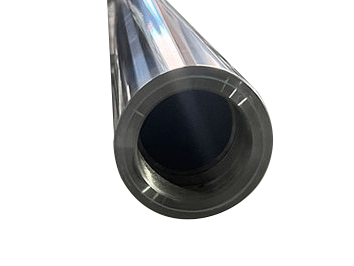
- Cylinder Barrel: The cylinder barrel is the main body of the air cylinder, which provides a sealed cavity for the movement of the piston. It is usually made of high-strength seamless steel pipe, aluminum alloy, or stainless steel, with high precision and wear resistance. The inner surface of the cylinder barrel is usually polished or honed to reduce friction between the piston and the cylinder barrel and ensure the sealing performance.
- Piston: The piston is a key component that converts air pressure into mechanical force, which is installed inside the cylinder barrel and can move linearly along the inner wall of the cylinder barrel. The piston is usually made of aluminum alloy, cast iron, or engineering plastics, and is equipped with seals (such as O-rings, piston rings) to prevent air leakage between the two cavities of the cylinder.
- Piston Rod: The piston rod is connected to the piston and extends out of the cylinder barrel, used to transmit the mechanical force generated by the piston to the external load. It is usually made of high-strength steel, and the surface is chrome-plated or nitrided to improve wear resistance and corrosion resistance. The connection between the piston rod and the piston is usually realized by threads or pins, ensuring firm connection and coaxiality.
- End Cover: The end cover is installed at both ends of the cylinder barrel, playing a role in sealing and supporting. The end cover is usually made of aluminum alloy or cast iron, and is equipped with air inlet/outlet ports, guide sleeves, and seals. The guide sleeve is used to guide the movement of the piston rod, ensuring the coaxiality of the piston rod and the cylinder barrel, and reducing friction.
- Seals: Seals are key components to ensure the sealing performance of the air cylinder, preventing compressed air from leaking between the piston and the cylinder barrel, the piston rod and the guide sleeve, and the end cover and the cylinder barrel. Common seals include O-rings, Y-rings, V-rings, and piston rings, which are made of nitrile rubber, fluorine rubber, or polyurethane, suitable for different working pressures and temperatures.
- Air Inlet/Outlet Ports: The air inlet/outlet ports are located on the end cover, used to connect the air pipe and the pneumatic control valve, and realize the intake and exhaust of compressed air. The size of the air inlet/outlet ports affects the air flow rate and the movement speed of the cylinder.
3.2 Auxiliary Structural Components
For air cylinders used in special scenarios, auxiliary structural components are usually added to improve their performance and adaptability. Common auxiliary components include:
- Buffer Devices: Installed at both ends of the cylinder barrel, used to absorb the impact force when the piston moves to the limit position, reducing noise and preventing damage to the cylinder and external load. Common buffer devices include hydraulic buffers and rubber buffers. Hydraulic buffers have good buffering effect and are suitable for high-speed and heavy-load scenarios; rubber buffers are simple in structure and low in cost, suitable for low-speed and light-load scenarios.
- Position Sensors: Installed on the cylinder barrel, used to detect the position of the piston rod (such as extended position, retracted position), and feed back the position signal to the control system to realize automatic control of the cylinder. Common position sensors include magnetic switches, proximity switches, and photoelectric switches.
- Guide Devices: Used to improve the movement precision and stability of the piston rod, preventing the piston rod from bending or jamming. Common guide devices include guide rails, guide sleeves, and tie rods.
- Lubrication Devices: Used to lubricate the moving parts of the cylinder (such as the piston, piston rod, and guide sleeve), reducing friction and extending the service life of the cylinder. Common lubrication devices include oil mist lubricators, which mix lubricating oil with compressed air and send it to the cylinder cavity.
4. Types of Air Cylinders
Air cylinders can be classified into different types according to their structural forms, movement types, functional purposes, and working pressures. Different types of air cylinders have distinct structural characteristics, performance indicators, and applicable scopes. The following is a detailed classification and explanation of mainstream air cylinder types, focusing on their core characteristics and application scenarios.
4.1 Classification by Movement Type
According to the type of movement, air cylinders can be divided into linear cylinders and rotary cylinders, which are the two most basic types of air cylinders.
- Linear Cylinders: The piston rod moves linearly, which is the most widely used type of air cylinder. Linear cylinders can be further divided into single-acting cylinders and double-acting cylinders.
- Single-Acting Cylinders (SAC): Only one cavity (rodless cavity or rod cavity) is connected to compressed air, and the return movement of the piston rod is realized by external forces such as springs, weights, or gravity. Single-acting cylinders have the advantages of simple structure, low cost, and energy saving, but the output force is unidirectional, and the return force is limited. They are suitable for scenarios requiring unidirectional movement, such as lifting, pushing, and clamping.
- Double-Acting Cylinders (DAC): Both the rod cavity and the rodless cavity can be connected to compressed air, and the reciprocating movement of the piston rod is realized by the reversal of the air intake and exhaust. Double-acting cylinders have the advantages of bidirectional output force, stable movement, and adjustable speed, and are suitable for most industrial automation scenarios, such as material handling, automatic feeding, and positioning.
- Rotary Cylinders: Convert compressed air energy into rotary mechanical energy, driving the output shaft to rotate at a certain angle (usually 90°, 180°, or 360°). Rotary cylinders can be divided into vane-type rotary cylinders, rack-and-pinion rotary cylinders, and screw-type rotary cylinders. They have the advantages of compact structure, fast response, and high rotation precision, and are suitable for scenarios requiring rotary movement, such as clamping, indexing, and reversing.
4.2 Classification by Structural Form
According to the structural form, linear cylinders can be further divided into standard cylinders, thin cylinders, compact cylinders, and special structural cylinders.
- Standard Cylinders: Also known as ISO standard cylinders, they comply with international standards (such as ISO 6431), with standardized dimensions and installation methods, strong interchangeability. Standard cylinders have a wide range of stroke and bore sizes, stable performance, and are suitable for general industrial automation scenarios.
- Thin Cylinders: The cylinder barrel is thin, with a compact structure and small installation space, suitable for scenarios where the installation space is limited (such as small mechanical equipment, electronic equipment). Thin cylinders have a smaller output force than standard cylinders, suitable for light-load scenarios.
- Compact Cylinders: The overall structure is compact, the length is short, and the installation method is flexible (such as flange installation, foot installation). Compact cylinders are suitable for scenarios requiring small installation space and frequent movement, such as automatic sorting equipment and manipulators.
- Special Structural Cylinders: Including telescopic cylinders, rodless cylinders, and tandem cylinders. Telescopic cylinders have multiple stages of piston rods, which can achieve a long stroke in a small installation space, suitable for scenarios requiring long-stroke movement (such as lifting equipment); rodless cylinders have no exposed piston rod, with a compact structure and unlimited stroke (depending on the guide rail), suitable for scenarios requiring long-stroke, high-speed movement (such as material transportation); tandem cylinders are composed of two or more cylinders connected in series, which can output a larger force, suitable for heavy-load scenarios.
4.3 Classification by Functional Purpose
According to the functional purpose, air cylinders can be divided into general-purpose air cylinders and special-purpose air cylinders. General-purpose air cylinders are suitable for most common scenarios, while special-purpose air cylinders are designed for specific working environments and functional requirements.
- General-Purpose Air Cylinders: Including standard cylinders, thin cylinders, and compact cylinders, which have balanced performance in output force, speed, and reliability, and can meet the needs of most industrial automation scenarios.
- Special-Purpose Air Cylinders: Including corrosion-resistant cylinders, high-temperature resistant cylinders, explosion-proof cylinders, and vacuum cylinders. Corrosion-resistant cylinders are made of stainless steel or corrosion-resistant materials, suitable for corrosive environments (such as chemical plants, food processing plants); high-temperature resistant cylinders are made of high-temperature resistant materials and seals, suitable for high-temperature environments (such as metallurgical plants, drying equipment); explosion-proof cylinders are designed with explosion-proof structures, suitable for flammable and explosive environments (such as oil depots, chemical workshops); vacuum cylinders are used in vacuum environments, suitable for vacuum clamping, vacuum lifting, and other scenarios.
4.4 Classification by Working Pressure
According to the working pressure, air cylinders can be divided into low-pressure cylinders, medium-pressure cylinders, and high-pressure cylinders.
- Low-Pressure Cylinders: Working pressure ≤ 0.3MPa, suitable for light-load, low-speed scenarios, such as small-scale material handling and precision positioning.
- Medium-Pressure Cylinders: 0.3MPa < Working pressure ≤ 1.0MPa, the most commonly used type, suitable for most industrial automation scenarios, such as general hoisting, clamping, and feeding.
- High-Pressure Cylinders: Working pressure > 1.0MPa, suitable for heavy-load, high-speed scenarios, such as large-scale material handling and heavy-duty clamping.
5. Application Guidelines for Air Cylinders
The rational selection and application of air cylinders are the premise of ensuring the safe and efficient operation of pneumatic transmission systems. The application of air cylinders must be based on the actual application scenario, load requirements, working environment, and control requirements, comprehensively considering the type, size, performance, and installation method of air cylinders. The following is a detailed elaboration of the application guidelines for air cylinders, including selection principles, installation requirements, daily maintenance, and common fault handling.
5.1 Selection Principles
The selection of air cylinders must follow the following core principles to ensure the safety, reliability, and economy of the air cylinder in practical application:
1. Load Matching Principle: The output force of the selected air cylinder must be greater than the maximum working load, and a safety margin of 1.2-1.5 times must be reserved. The output force of the air cylinder can be calculated according to the formula: F = P × A (F is the output force, P is the working pressure, A is the effective area of the piston). For impact loads or variable loads, the safety margin should be appropriately increased to 1.5-2.0 times.
2. Movement Type Matching Principle: Select the appropriate movement type (linear or rotary) according to the movement requirements of the external load. For linear movement, select linear cylinders; for rotary movement, select rotary cylinders. For unidirectional linear movement, single-acting cylinders can be selected; for bidirectional linear movement, double-acting cylinders should be selected.
3. Installation Space Principle: Select the appropriate structural type of air cylinder according to the installation space. For scenarios with limited installation space, select thin cylinders, compact cylinders, or rodless cylinders; for scenarios requiring long strokes, select telescopic cylinders.
4. Working Environment Principle: Select the appropriate type of air cylinder according to the working environment. For corrosive environments, select corrosion-resistant cylinders; for high-temperature environments, select high-temperature resistant cylinders; for flammable and explosive environments, select explosion-proof cylinders.
5. Control Precision Principle: Select the appropriate air cylinder and auxiliary components according to the control precision requirements. For scenarios requiring high positioning precision, select high-precision air cylinders and install position sensors; for scenarios requiring stable speed, install flow control valves.
6. Economy Principle: On the premise of meeting safety and performance requirements, select air cylinders with high cost performance, considering factors such as price, service life, and maintenance cost. It is not advisable to blindly pursue high-performance air cylinders, nor to select low-quality air cylinders to save costs.
5.2 Installation Requirements
The correct installation of air cylinders is crucial to ensuring their normal operation and service life. The installation of air cylinders must comply with the following requirements:
1. Installation Position: The air cylinder should be installed in a position that is easy to operate, maintain, and inspect, avoiding installation in harsh environments such as high temperature, humidity, and dust. The installation surface should be flat and smooth, ensuring that the cylinder barrel is horizontal or vertical, and the coaxiality of the piston rod and the external load is ensured to avoid eccentric load.
2. Fixing Method: The air cylinder should be fixed firmly using bolts, flanges, or other fixing methods, ensuring that there is no loosening or vibration during operation. The fixing bolts should be tightened according to the specified torque to avoid damage to the cylinder body.
3. Pipeline Connection: The air pipe connected to the air inlet/outlet ports should be clean and free of impurities, and the connection should be firm to avoid air leakage. The pipeline should be arranged neatly, avoiding bending and compression, and a filter, pressure reducing valve, and oil mist lubricator (if necessary) should be installed in the pipeline to ensure the quality of compressed air.
4. Buffer Adjustment: If the air cylinder is equipped with a buffer device, the buffer force should be adjusted according to the movement speed and load of the cylinder, ensuring that the piston can be smoothly buffered when moving to the limit position, reducing impact and noise.
5. Sensor Installation: If position sensors are installed, the installation position should be accurate, ensuring that the sensor can reliably detect the position of the piston rod. The sensor should be fixed firmly, avoiding damage during the movement of the cylinder.
5.3 Daily Maintenance Guidelines
Daily maintenance is an important link to extend the service life of air cylinders, reduce failure rates, and ensure safe operation. Operators must conduct comprehensive maintenance and inspection work regularly.
1. Cleaning: Regularly clean the surface of the air cylinder, remove dust, dirt, and oil stains, to avoid the accumulation of impurities affecting the movement of the piston rod and the sealing performance. For air cylinders used in dusty environments, a dust cover should be installed to prevent dust from entering the cylinder cavity.
2. Lubrication: Regularly lubricate the moving parts of the air cylinder. If the air cylinder requires lubrication, an oil mist lubricator should be used to add lubricating oil (such as No. 10 or No. 20 machine oil) to the compressed air, ensuring that the piston, piston rod, and guide sleeve are fully lubricated. The lubrication cycle should be determined according to the working environment and usage frequency, generally once a week for general environments.
3. Leakage Inspection: Regularly check the air cylinder for air leakage. Apply soapy water to the air inlet/outlet ports, pipeline connections, and seals, and observe whether there are bubbles. If air leakage is found, replace the seals or tighten the connections in time.
4. Movement Inspection: Regularly check the movement status of the air cylinder, including the movement speed, smoothness, and noise. If the movement speed is unstable, the movement is not smooth, or there is abnormal noise, check the air pressure, flow rate, and friction force, and troubleshoot in time.
5. Sensor Inspection: Regularly check the working status of the position sensor, ensure that the sensor can reliably send position signals, and replace the sensor if there is a fault.
5.4 Common Fault Handling
In the process of using air cylinders, common faults such as air leakage, unstable movement, no movement, and abnormal noise may occur. The following are common faults, causes, and handling methods:
- Fault 1: Air Leakage
- Causes: Damaged seals, loose pipeline connections, worn piston or cylinder barrel, uneven surface of the cylinder barrel.
- Handling Methods: Replace damaged seals, tighten pipeline connections, repair or replace worn piston or cylinder barrel, polish the inner surface of the cylinder barrel.
- Fault 2: Unstable Movement Speed
- Causes: Unstable air pressure, insufficient air flow rate, blocked flow control valve, excessive friction force, uneven load.
- Handling Methods: Adjust the pressure reducing valve to ensure stable air pressure, clean the flow control valve to ensure sufficient air flow rate, lubricate the moving parts to reduce friction, and adjust the load to ensure uniform load.
- Fault 3: No Movement of Piston Rod
- Causes: No compressed air input, blocked air inlet/outlet ports, damaged solenoid valve, stuck piston, excessive load.
- Handling Methods: Check the air supply system to ensure compressed air input, clean the air inlet/outlet ports, repair or replace the solenoid valve, disassemble the cylinder to check and unblock the piston, reduce the load or replace the air cylinder with a larger output force.
- Fault 4: Abnormal Noise
- Causes: Insufficient lubrication, loose fixing bolts, incorrect buffer adjustment, worn piston or guide sleeve, eccentric load.
- Handling Methods: Add lubricating oil, tighten fixing bolts, adjust the buffer device, repair or replace worn piston or guide sleeve, adjust the load to avoid eccentric load.
6. Development Trends of Air Cylinder Technology
With the continuous advancement of industrial automation, intelligent manufacturing, and material science, air cylinder technology is developing in the direction of intelligence, precision, energy conservation, and miniaturization. The main development trends are as follows:
- Intelligent Development: Air cylinders are integrated with intelligent technologies such as sensors, controllers, and the Internet of Things (IoT), realizing real-time monitoring of operating parameters (such as pressure, temperature, movement speed, and position), fault early warning, and remote diagnosis. Intelligent air cylinders can communicate with the upper control system, realizing automatic adjustment and optimization of operation parameters, improving the intelligence level of the pneumatic system.
- Precision Improvement: Through the optimization of structural design, the improvement of processing precision, and the adoption of high-precision position sensors and control technologies, the movement precision and positioning accuracy of air cylinders are continuously improved. High-precision air cylinders can meet the needs of intelligent manufacturing scenarios such as precision positioning, micro-movement, and high-speed sorting.
- Energy-Saving Optimization: By adopting new sealing technologies, optimizing the structure of the cylinder, and improving the efficiency of the pneumatic system, the energy consumption of air cylinders is reduced. For example, low-friction seals are used to reduce energy loss caused by friction; variable frequency control technology is adopted to adjust the air flow rate according to the load, realizing energy saving.
- Miniaturization and Lightweight: With the development of new materials (such as high-strength aluminum alloy, engineering plastics) and precision processing technology, air cylinders are developing towards miniaturization and lightweight. Miniature air cylinders have a compact structure, small volume, and light weight, suitable for small-scale intelligent equipment, electronic equipment, and other scenarios.
- Specialization and Customization: According to the specific needs of different industries and application scenarios, specialized and customized air cylinders are developed. For example, for the aerospace industry, high-precision, lightweight air cylinders are developed; for the medical industry, clean, corrosion-resistant air cylinders are developed; for the automotive industry, high-speed, heavy-load air cylinders are developed.
7. Conclusion
Air cylinders, as the core executive component of pneumatic transmission systems, play a crucial role in industrial automation, machinery manufacturing, and other fields, with the advantages of simple structure, reliable operation, fast response, and low cost. This paper systematically elaborates on the working principles of air cylinders, including the conversion mechanism of pneumatic energy to mechanical energy and the key factors affecting working performance; details the structural components of air cylinders and their functional roles; classifies air cylinders from multiple dimensions such as movement type, structural form, and functional purpose, and analyzes the performance characteristics and applicable scopes of each type; and puts forward scientific application guidelines, covering selection principles, installation requirements, daily maintenance, and common fault handling, providing professional technical support for the safe and efficient application of air cylinders.
With the continuous advancement of technology, air cylinders will develop towards intelligence, precision, energy conservation, and miniaturization, and their application scope will be further expanded. In practical applications, it is necessary to select the appropriate type of air cylinder according to the specific application scenario and load requirements, strictly abide by the installation requirements and maintenance guidelines, and effectively avoid faults and safety hazards.
It is hoped that this paper can help relevant practitioners fully grasp the core knowledge of air cylinders, promote the standardized, safe, and efficient application of pneumatic transmission systems, improve the efficiency and stability of industrial equipment, and make greater contributions to the development of the industrial automation industry.









 Home
News
Industry News
Air Cylinders: A Comprehensive Technical Explanation Of Working Principles, Structures, Types, And Application Guidelines
Home
News
Industry News
Air Cylinders: A Comprehensive Technical Explanation Of Working Principles, Structures, Types, And Application Guidelines 
 +86 13771119215