Introduction
A hydraulic cylinder is often described as consisting of just a tube, a rod, and some seals-but this simplicity is deceptive. The relationship between the piston rod and the cylinder barrel (honed tube) is a precision mechanical system where every dimensional parameter affects the others, and the performance of the cylinder is determined by how well these components work together.
The piston rod and the honed tube are the two precision components in a hydraulic cylinder. The piston rod is discussed extensively in the preceding articles. This article focuses on the cylinder barrel (honed tube), its manufacturing process, the critical quality parameters, and the system-level relationship between the tube and the rod.
Understanding the cylinder barrel is essential for correctly specifying hydraulic cylinders because mismatched or poorly manufactured barrels cause problems that are difficult to diagnose and expensive to fix: excessive oil leakage, high seal friction, premature seal failure, and rod scoring.
Honed Tube Manufacturing Process
Seamless vs. DOM Tube
The starting material for hydraulic cylinder barrels is either seamless steel tube or DOM (Drawn Over Mandrel) tube. Both are suitable for hydraulic cylinder barrels, but they have different characteristics.
Seamless tube: Manufactured by piercing and rolling a solid steel billet. The seamless construction means there is no longitudinal weld seam on the tube ID. Seamless tubes are specified when the highest structural integrity is required, such as in high-pressure hydraulic cylinders (above 21MPa) and in applications with high lateral loads.
DOM tube: Manufactured by welding a steel strip into a tube (creating a longitudinal weld seam), then drawing the tube over a mandrel through multiple dies. The drawing process refines the microstructure and creates a tube with consistent dimensions and good surface finish. DOM tubes are cost-effective for standard industrial hydraulic cylinders.
Both types are suitable for most hydraulic cylinder applications at pressures up to 35MPa when manufactured to appropriate tolerances. The key quality differentiator is not whether the tube is seamless or DOM, but the consistency of the manufacturing process.
Cold Drawing to Near-Final Diameter
The tube stock arrives at the honing facility in a nominal diameter that is larger than the finished bore diameter. The tube is cold drawn through a die to reduce the diameter and achieve the near-final dimensions with controlled wall thickness and improved surface finish.
Cold drawing sequence:
The tube is cleaned and lubricated
A draw head grips the tube end and pulls it through a die and mandrel
The die reduces the OD; the mandrel controls the ID
Each pass reduces the diameter by approximately 1-3mm
Multiple passes are required to achieve the final near-net dimension
The benefit of cold drawing: The process work-hardens the tube material, increasing tensile strength by 10-25% compared to the annealed condition. This is advantageous for cylinder barrel applications where the tube must resist pressure without yielding.
Precision Honing
Honing is the final machining process that creates the precision bore surface required for hydraulic cylinder barrels. Unlike boring (which cuts with a single-point tool), honing uses multiple abrasive stones that conform to the bore surface, creating a cross-hatched pattern that:
Achieves the target surface roughness (Ra 0.1-0.4 micrometers)
Corrects any remaining geometric errors (diameter variation, taper, out-of-round)
Creates a surface pattern that retains lubrication oil
Honing process parameters:
|
Parameter |
Standard Honing |
Precision Honing |
|
Surface roughness (Ra) |
0.4-0.8 micrometers |
0.1-0.2 micrometers |
|
Diameter tolerance |
IT8 (ISO 286) |
IT7 (ISO 286) |
|
Bore size range |
20-200mm |
20-150mm |
|
Typical stock removal |
0.05-0.15mm per side |
0.02-0.05mm per side |
Cross-hatched surface pattern: The honing stones oscillate axially while the tube rotates, creating a helical cross-hatched pattern. The angle of the cross-hatch (typically 30-60 degrees to the axis) affects oil retention and seal wear:
Steeper angles (closer to 90 degrees) retain more oil but may increase seal wear
Shallower angles (closer to 30 degrees) are smoother for seal operation but retain less oil
Critical Quality Parameters
Bore Diameter Tolerance (IT7-IT8)
The bore diameter tolerance determines the clearance between the piston seals and the tube bore. Too tight a clearance causes excessive seal friction and rapid seal wear. Too loose a clearance causes oil leakage past the piston seals.
IT7 vs. IT8 tolerance comparison (for 80mm nominal bore):
|
Tolerance Grade |
Tolerance |
Application |
|
IT7 |
+/- 0.020mm |
Precision hydraulic cylinders, servo systems |
|
IT8 |
+/- 0.030mm |
Standard industrial hydraulic cylinders |
Measurement method: Bore diameter is measured using a bore gauge (three-point internal micrometer) or an air gauge at multiple positions along the bore length and around the circumference.
Surface Roughness Parameters
Ra (Center Line Average) is the most commonly specified roughness parameter, but it does not fully describe the surface characteristics relevant to cylinder performance. Additional parameters are important:
Rp (Peak Height): The maximum height of the roughness profile above the mean line. High Rp values indicate sharp peaks that can damage seals on initial run-in.
Rpk (Reduced Peak Height): A statistical measure of the height of the tallest peaks. A low Rpk value indicates a surface with minimal sharp peaks that would damage seals.
Rvk (Reduced Valley Depth): A statistical measure of the depth of the deepest valleys. A higher Rvk value indicates a surface with deep valleys that retain lubrication oil.
The ideal hydraulic cylinder bore surface has:
Low Ra (0.1-0.4 micrometers)
Low Rpk (minimal sharp peaks)
Adequate Rvk (deep enough valleys to retain oil for lubrication)
Straightness
The bore straightness of a hydraulic cylinder barrel affects how smoothly the piston and rod assembly moves through the bore. Any bore curvature causes the piston to tilt within the bore, creating localized seal loading and accelerated wear.
Straightness requirements:
Standard hydraulic cylinders: 0.05-0.1mm/m
Precision hydraulic cylinders: 0.02-0.05mm/m
High-precision servo cylinders: 0.01-0.02mm/m
Measurement method: A precision straight bar (ground and polished rod) is inserted into the bore. A dial indicator measures the radial runout as the bar is traversed through the bore. The maximum indicated runout at any position is the straightness error.
Wall Thickness Uniformity
The cylinder barrel must have consistent wall thickness around the circumference and along the length. Non-uniform wall thickness creates localized stress concentrations under internal pressure.
Specification: Wall thickness variation should not exceed 5% of nominal wall thickness around the circumference and 10% along the length.
Measurement method: Ultrasonic thickness measurement at multiple points around the circumference and along the length.
The Cylinder System: Rod and Tube Relationship
Clearance Design
The hydraulic cylinder is a mated system where the clearance between the rod and the rod seal, and between the piston and the tube bore, must be correctly specified.
Rod-to-seal clearance:
The rod wiper seal and primary rod seal have a specific ID that is slightly larger than the rod OD
The clearance must be sufficient to allow free reciprocating motion without binding
Too tight a clearance causes seal friction and overheating
Too loose a clearance causes oil leakage past the seal
Piston-to-bore clearance:
The piston seals (typically piston seal + O-ring backup washer) have a specific OD that is slightly smaller than the tube bore ID
The clearance must allow the piston to move freely while maintaining a seal under pressure
Too tight a clearance causes piston seal extrusion (the seal is squeezed into the gap and damaged)
Too loose a clearance causes oil leakage past the piston seals
Pressure vs. Clearance Relationship
The operating pressure of the hydraulic cylinder affects the required clearances:
Higher pressure requires tighter clearances to prevent oil leakage (seals must be more fully compressed to contain pressure)
Lower pressure allows larger clearances (less pressure to contain, more tolerance for seal gap extrusion)
The practical implication: A cylinder barrel manufactured for a 7MPa application may not be suitable for a 21MPa application even if the bore diameter and surface finish are the same, because the clearance design was optimized for the lower pressure.
Material Compatibility
The cylinder barrel material and surface treatment must be compatible with the hydraulic fluid and operating environment:
Standard carbon steel barrel is suitable for petroleum-based hydraulic oil (HLP type) in indoor environments
For water-glycol or phosphate ester hydraulic fluids, compatibility must be verified with the barrel material and any surface treatment
For outdoor or marine environments, the barrel may require protective coating or stainless steel construction
Common Barrel Defects and Their Effects
Out-of-Round Bore
An out-of-round bore (also called lobing or ovality) causes the piston to tilt within the bore during each revolution, creating varying seal loading and accelerated wear.
Cause: Improper tube preparation before honing, incorrect honing tool pressure, or tube distortion from clamping.
Tapered Bore
A tapered bore (diameter varies systematically from one end to the other) causes the piston to bind at one end of the stroke.
Cause: Incorrect honing tool setup, worn or misaligned honing stones, or tube deflection during honing.
Incorrect Surface Texture
A surface that is too smooth (Ra below 0.1 micrometers) does not retain enough oil for lubrication, causing dry-running wear on the seals. A surface that is too rough (Ra above 0.8 micrometers) causes excessive seal wear.
Cause: Incorrect honing stone grit selection, incorrect honing parameters (speed, pressure, oscillation).
Surface Tears and Furrows
Deep scratches or furrows in the bore surface, oriented perpendicular to the axis, cause immediate seal damage and oil leakage.
Cause: Contamination (sand, metal chips) in the hydraulic oil or honing coolant, or damaged honing stones.
Key Takeaways
Hydraulic cylinder barrels (honed tubes) are manufactured by cold drawing seamless or DOM steel tube to near-final diameter, followed by precision honing to achieve Ra 0.1-0.4 micrometers surface roughness and IT7-IT8 diameter tolerance
Surface roughness parameters beyond Ra (Rpk, Rvk) are critical for cylinder performance: low Rpk (minimal sharp peaks) prevents seal damage, adequate Rvk (deep valleys) provides oil retention for lubrication
The cylinder is a mated system where bore diameter tolerance directly determines piston seal clearance and thus oil leakage and seal life; IT7 (standard: +/- 0.020mm on 80mm bore) is the minimum for 21MPa industrial service
Higher operating pressure requires tighter clearances; a barrel designed for 7MPa may not be suitable for 21MPa even with the same bore size and surface finish
Common barrel defects (out-of-round, taper, incorrect surface texture, tears/furrows) each cause specific cylinder failures (seal wear variation, binding, dry-running seal damage) and indicate specific manufacturing process failures
Conclusion
The
hydraulic cylinder barrel is as critical to cylinder performance as the piston rod, yet it receives less attention in most specifications. A precision-honed barrel with correct surface texture, proper diameter tolerance, and adequate straightness is essential for achieving the cylinder efficiency, seal life, and positioning accuracy that modern hydraulic systems require.
For equipment manufacturers specifying hydraulic cylinders, understanding the relationship between barrel manufacturing quality and cylinder performance enables better supplier evaluation and more appropriate specifications. The additional cost of a precision-honed barrel with tighter tolerances and verified surface texture parameters is typically recovered many times over in reduced cylinder failures and longer maintenance intervals.
Wuxi Xinluo Hydraulic Machinery Co., Ltd. manufactures precision-honed cylinder barrels (honed tubes) in sizes from 20mm to 200mm bore diameter with IT7 tolerance and Ra 0.1-0.4 micrometers surface finish, as part of complete hydraulic cylinder assemblies.









 Home
News
Industry News
Honed Tube And Hydraulic Cylinder Barrel: Manufacturing, Tolerances, And Performance Relationship
Home
News
Industry News
Honed Tube And Hydraulic Cylinder Barrel: Manufacturing, Tolerances, And Performance Relationship 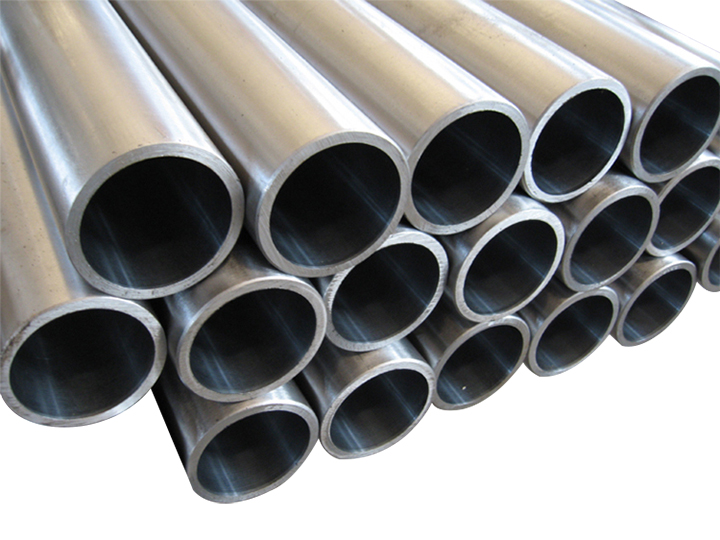

 +86 13771119215