The quenched piston rod is a key transmission component widely used in hydraulic cylinders, pneumatic cylinders, and other linear motion mechanisms, serving as the core part that connects the piston and external actuators to transmit force and motion. Unlike ordinary piston rods, the quenched piston rod undergoes a specialized heat treatment process—quenching—to significantly enhance its surface hardness, wear resistance, and fatigue strength, enabling it to adapt to harsh working environments with frequent reciprocating motion, high alternating loads, and corrosive media. The working principle of the quenched piston rod integrates heat treatment mechanism, mechanical transmission, and material performance, which directly determines the reliability, efficiency, and service life of the entire hydraulic or pneumatic system. This article systematically elaborates on the definition, quenching process principle, working mechanism, key performance advantages, and application adaptation of the quenched piston rod, providing practical technical guidance for engineers, maintenance personnel, and procurement professionals.
I. Overview of Quenched Piston Rod
A piston rod is a high-precision cylindrical component that connects the piston inside the cylinder to the external working mechanism, responsible for transmitting the linear force generated by hydraulic or pneumatic pressure and driving the reciprocating motion of the actuator. In practical applications, piston rods are subjected to complex forces: they bear alternating tensile and compressive stresses during reciprocating motion, sliding friction with seals and cylinder walls, and erosion from external dust, moisture, and corrosive media. These harsh working conditions place high demands on the material performance of piston rods—requiring sufficient surface hardness to resist wear, good core toughness to avoid brittle fracture, and excellent fatigue strength to withstand long-term cyclic loads.
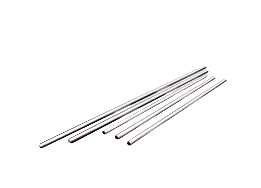
The
quenched piston rod achieves these performance requirements through a quenching heat treatment process. Quenching is a heat treatment method that heats the piston rod material to a temperature above the critical point, maintains a certain holding time to ensure uniform austenitization, and then rapidly cools it (usually using water, oil, or air) to transform the austenite into martensite, thereby significantly improving the surface hardness and strength of the piston rod. The core of the quenched piston rod remains relatively soft and tough due to the difference in cooling rate between the surface and the core, forming a hard surface and tough core structure that balances wear resistance and impact resistance—this is the fundamental basis for the stable operation of the quenched piston rod.
II. Quenching Process Principle: The Core of Performance Enhancement
The working performance of the quenched piston rod is essentially determined by its quenching process, which involves three key stages: heating, holding, and rapid cooling. Each stage directly affects the microstructure transformation of the material, thereby determining the final mechanical properties of the piston rod. The principle of the quenching process is to regulate the microstructure of the metal material through temperature control and cooling rate, achieving the desired combination of hardness, toughness, and wear resistance.
1. Heating Stage: Austenitization
The first step of the quenching process is to heat the piston rod (usually made of carbon steel or alloy steel such as 45# carbon steel, 40Cr alloy steel) to a temperature above its critical transformation point (Ac3 for hypoeutectoid steel, Ac1 for hypereutectoid steel). For common piston rod materials, the heating temperature is generally controlled at 820~860℃ for carbon steel and 840~880℃ for alloy steel. The purpose of heating is to transform the original ferrite and pearlite microstructure of the material into austenite—a uniform, high-temperature solid solution with good plasticity and ductility.
During the heating process, it is necessary to ensure uniform heating of the piston rod to avoid local overheating or underheating, which would lead to uneven microstructure and performance after quenching. For precision piston rods, controlled atmosphere heating or vacuum heating is often used to prevent oxidation and decarburization of the surface, ensuring the surface quality and dimensional precision of the piston rod.
2. Holding Stage: Uniform Austenitization
After reaching the preset heating temperature, the piston rod is held at that temperature for a certain period (holding time) to ensure that the internal and external temperatures of the rod are consistent and the ferrite-pearlite microstructure is completely transformed into austenite. The holding time is determined by the material, diameter, and heating method of the piston rod—usually 1~2 hours per 100mm diameter. Insufficient holding time will result in incomplete austenitization, leading to low surface hardness and poor wear resistance after quenching; excessive holding time will cause austenite grain coarsening, reducing the toughness and fatigue strength of the piston rod.
3. Rapid Cooling Stage: Martensite Transformation
The rapid cooling stage is the key to the quenching process, directly determining whether the austenite can be transformed into martensite. After the holding stage, the piston rod is rapidly cooled to room temperature or below using a suitable cooling medium. The cooling rate must be higher than the critical cooling rate of the material—only in this way can the austenite structure be prevented from transforming into pearlite or bainite (which have low hardness) and be converted into martensite, a hard and brittle microstructure.
Common cooling media for piston rod quenching include water, oil, and air: water cooling has a fast cooling rate, suitable for carbon steel piston rods, but may easily cause surface cracks due to excessive cooling stress; oil cooling has a slower cooling rate than water, which can reduce cooling stress and avoid cracks, suitable for alloy steel piston rods; air cooling is suitable for small-diameter piston rods or materials with good hardenability. After rapid cooling, the surface of the piston rod forms a dense martensite layer, while the core, due to the slow cooling rate, remains a ferrite-pearlite structure with good toughness—forming the hard surface, tough core structure that is critical for the working performance of the quenched piston rod.
III. Working Mechanism of Quenched Piston Rod
The working mechanism of the quenched piston rod is based on its unique hard surface, tough core structure, which enables it to stably transmit force and motion while resisting wear, fatigue, and corrosion in complex working environments. Its working process can be divided into three core links: force transmission, friction resistance, and fatigue resistance, which are closely coordinated to ensure the stable operation of the entire system.
1. Force Transmission Mechanism
In hydraulic or pneumatic systems, the piston rod transmits the linear force generated by the pressure of the hydraulic fluid or compressed air to the external actuator. When the hydraulic fluid enters the cylinder, it pushes the piston to move linearly, and the piston drives the piston rod to move synchronously, thereby driving the external mechanism (such as the arm of construction machinery, the slider of a hydraulic press) to complete the work. The quenched piston rod can withstand high alternating tensile and compressive stresses during this process due to its enhanced strength after quenching.
The tough core structure of the quenched piston rod plays a key role in force transmission: the soft and tough core can absorb the impact energy generated during the movement, avoid brittle fracture under high load, and ensure the reliability of force transmission. At the same time, the high dimensional precision of the quenched piston rod (achieved through subsequent precision machining such as grinding and rolling) ensures a tight fit with the piston and seals, preventing fluid leakage and ensuring efficient force transmission.
2. Friction Resistance Mechanism
During the reciprocating motion of the piston rod, its surface is in sliding contact with the seals and the inner wall of the cylinder barrel, generating friction. The hard surface structure of the quenched piston rod (surface hardness up to HRC 55~62) significantly improves its wear resistance, reducing the wear caused by friction between the piston rod and the mating components. This not only extends the service life of the piston rod but also reduces the wear of the seals, avoiding fluid leakage and improving the efficiency of the hydraulic or pneumatic system.
In addition, the surface of the quenched piston rod is usually subjected to subsequent finishing processes such as grinding and rolling, which reduce the surface roughness to Ra ≤ 0.1 μm. The smooth surface further reduces friction resistance, minimizes the damage to the seals caused by friction, and ensures the smoothness and stability of the piston rod's reciprocating motion. According to practical tests, the surface hardness of the quenched piston rod is increased by about 30% compared with the unquenched piston rod, and the wear resistance is increased by 2~3 times.
3. Fatigue Resistance Mechanism
The piston rod is in a state of frequent reciprocating motion during work, bearing alternating tensile and compressive stresses, which easily leads to fatigue cracks and even fatigue failure over time. The quenching process significantly improves the fatigue strength of the piston rod: the martensite layer on the surface generates residual compressive stress, which can inhibit the initiation and expansion of fatigue cracks; the tough core can absorb the cyclic load energy, reducing the stress concentration at the surface defects.
The residual compressive stress generated by quenching, combined with the cold-worked hardening layer formed by subsequent rolling processing, can improve the fatigue strength of the piston rod by 25~30%, enabling it to withstand long-term cyclic loads without fatigue failure. This is particularly important for applications with high-frequency reciprocating motion, such as construction machinery, automated production lines, and agricultural machinery.
IV. Key Performance Advantages of Quenched Piston Rod
The quenching process endows the piston rod with excellent comprehensive performance, which is significantly superior to unquenched piston rods. Its key performance advantages are closely related to its working principle and are reflected in the following aspects:
- High Surface Hardness and Wear Resistance: The surface hardness of the quenched piston rod can reach HRC 55~62, which is much higher than that of unquenched piston rods (HRC 20~30). The hard martensite surface can effectively resist wear caused by sliding friction, extending the service life of the piston rod and mating components (seals, cylinder barrel).
- Good Core Toughness: The core of the quenched piston rod remains a soft and tough ferrite-pearlite structure, which can absorb impact energy and avoid brittle fracture under high load or impact, ensuring the reliability and safety of the piston rod during work.
- Enhanced Fatigue Strength: The residual compressive stress generated by quenching and the cold-worked hardening layer formed by subsequent processing significantly improve the fatigue strength of the piston rod, enabling it to withstand long-term cyclic loads without fatigue failure, which is critical for high-frequency reciprocating motion applications.
- High Dimensional Stability: The quenching process is accompanied by strict temperature control and subsequent stress relief treatment, which reduces the internal stress of the piston rod and ensures its dimensional stability during long-term use. This avoids dimensional deformation caused by stress release, ensuring the tight fit with the piston and seals.
- Strong Corrosion Resistance (with surface treatment): The quenched surface of the piston rod can be further subjected to surface treatments such as chrome plating, phosphating, or nitriding, which form a protective layer on the surface, enhancing corrosion resistance and enabling the piston rod to adapt to humid, corrosive, or dusty working environments.
V. Application Adaptation of Quenched Piston Rod
Due to its excellent performance, the quenched piston rod is widely used in various industrial fields that require high reliability, high wear resistance, and long service life. Its application scenarios are closely related to its working principle, mainly including the following fields:
1. Construction Machinery
Construction machinery such as excavators, cranes, loaders, and bulldozers have hydraulic cylinders that require piston rods to withstand high pressure (200~350 MPa), heavy loads, and harsh working environments (dust, moisture, vibration). The quenched piston rod, with its high surface hardness, wear resistance, and fatigue strength, can stably transmit force and motion, ensuring the normal operation of the machinery. For example, the piston rods of excavator hydraulic cylinders are usually made of 40Cr alloy steel and subjected to quenching treatment to withstand the high alternating loads generated during digging and lifting.
2. Industrial Hydraulic Equipment
Industrial hydraulic equipment such as hydraulic presses, injection molding machines, and metal forming equipment require piston rods to have high precision, smooth motion, and long service life. The quenched piston rod, after precision grinding and rolling, has a smooth surface and high dimensional precision, which can minimize friction with seals and ensure leak-proof operation. For example, the piston rods of hydraulic presses use quenched alloy steel to withstand ultra-high pressures (≥ 300 MPa) and frequent cyclic loads during metal forming.
3. Automotive and Aerospace Industry
In the automotive industry, quenched piston rods are used in hydraulic brake systems, suspension systems, and power steering systems, requiring lightweight, compact design, and reliable performance. The hard surface, tough core structure of the quenched piston rod ensures high wear resistance and impact resistance while reducing weight. In the aerospace industry, quenched piston rods are used in aircraft landing gear and hydraulic control systems, requiring high precision, high reliability, and fatigue resistance to adapt to extreme working conditions (high altitude, temperature changes, vibration).
4. Agricultural Machinery
Agricultural machinery such as tractors, harvesters, and irrigation equipment use hydraulic systems to drive lifting, tilting, and steering functions. The quenched piston rod, with its cost-effectiveness and excellent wear resistance, can withstand dust, moisture, and frequent use, ensuring the reliability of the machinery in agricultural production. For example, the piston rods of tractor hydraulic cylinders are usually made of 45# carbon steel and subjected to quenching treatment to meet medium-pressure requirements.
5. Other Fields
- Marine and Offshore Equipment: Quenched piston rods with chrome plating or stainless steel quenching are used in ship hydraulic systems (steering systems, crane hydraulic cylinders) to withstand saltwater corrosion and humid environments.
- Medical Equipment: Stainless steel quenched piston rods are used in medical devices such as surgical robots and hydraulic lifts, where hygiene, corrosion resistance, and precision are critical.
- Mining Equipment: Heavy-duty quenched piston rods are used in mining hydraulic cylinders (coal mine hydraulic supports, ore crushers) to withstand high pressure and abrasive environments.
VI. Key Notes on Quenching Process and Operation
The working performance of the quenched piston rod is closely related to the quenching process and subsequent processing. To ensure its stable performance, the following key notes should be observed:
- Strict Control of Quenching Parameters: The heating temperature, holding time, and cooling rate must be strictly controlled according to the material of the piston rod. Excessive heating temperature will cause grain coarsening, while insufficient cooling rate will lead to incomplete martensite transformation, affecting surface hardness and wear resistance.
- Stress Relief Treatment: After quenching, the piston rod has large internal stress, which needs to be subjected to tempering treatment (180~220℃) to reduce internal stress, improve toughness, and avoid deformation or cracks during use.
- Precision Machining After Quenching: The quenched piston rod needs to undergo precision grinding, rolling, and other finishing processes to ensure high dimensional precision and smooth surface, which is critical for reducing friction and ensuring the tight fit with seals.
- Surface Protection: According to the working environment, the surface of the quenched piston rod should be subjected to appropriate surface treatment (chrome plating, phosphating) to enhance corrosion resistance and further improve wear resistance.
VII. Conclusion
The working principle of the quenched piston rod is based on the hard surface, tough core structure formed by the quenching heat treatment process, which integrates heat treatment mechanism, mechanical transmission, and material performance. The quenching process transforms the microstructure of the piston rod material, enabling it to have high surface hardness, wear resistance, and fatigue strength, while maintaining good core toughness—this is the fundamental reason why the quenched piston rod can stably work in harsh industrial environments.
In the working process, the quenched piston rod completes force transmission, resists friction, and withstands cyclic loads through its unique structure, ensuring the reliability and efficiency of hydraulic or pneumatic systems. Its excellent comprehensive performance makes it widely used in construction machinery, industrial hydraulic equipment, automotive, aerospace, and other fields, becoming an indispensable key component in modern linear motion mechanisms.
Understanding the working principle of the quenched piston rod is crucial for selecting, using, and maintaining piston rods. By mastering the quenching process principle and working mechanism, engineers can select the appropriate quenched piston rod for specific applications, optimize the system design, and extend the service life of the equipment. With the continuous development of heat treatment technology and precision machining technology, the performance of quenched piston rods will be further improved, providing more reliable support for the development of modern industrial equipment.











 +86 13771119215