A precision shaft is a high-precision cylindrical component that serves as the core of mechanical systems, primarily responsible for supporting rotating parts, transmitting torque and motion, and ensuring precise positioning in various industrial equipment. Unlike ordinary shafts, precision shafts are characterized by ultra-tight dimensional tolerances, strict geometric accuracy, and superior surface quality, enabling them to operate stably in high-speed, high-precision, and harsh working environments. As an indispensable key component in modern precision machinery, the performance of precision shafts directly determines the accuracy, reliability, and service life of the entire mechanical system. This article systematically elaborates on the definition, core characteristics, manufacturing process, main types, working mechanism, application scenarios, and maintenance guidelines of precision shafts, integrating practical technical parameters and industry experience to provide comprehensive guidance for engineers, procurement personnel, and maintenance technicians.
I. Overview and Core Definition of Precision Shaft
In mechanical engineering, a shaft is a cylindrical component that transmits torque, supports rotating parts (such as gears, pulleys, and bearings), and guides linear or rotary motion. A precision shaft, however, goes beyond the basic functions of an ordinary shaft—it is meticulously designed and manufactured to meet extremely strict accuracy requirements, making it suitable for applications that demand high positional precision, low vibration, and stable transmission. The core essence of a precision shaft lies in its precision—reflected in dimensional accuracy, geometric accuracy, surface quality, and mutual position accuracy, which together ensure its ability to work in coordination with other components without errors or wear.
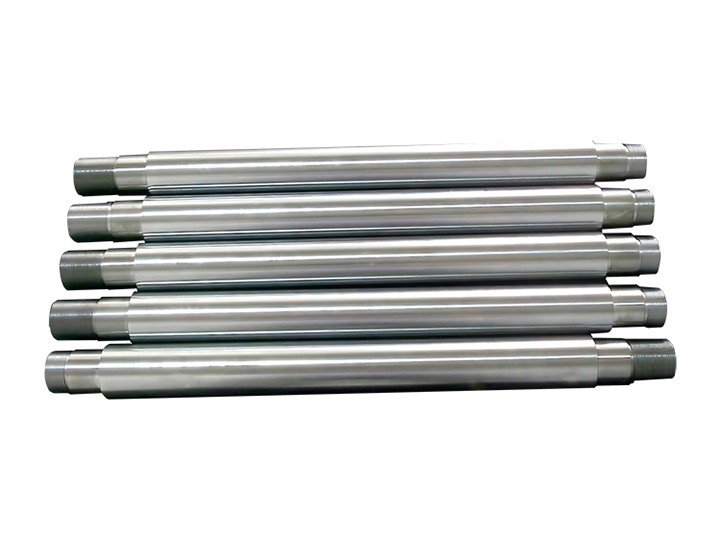
Precision shafts are widely used in fields such as precision machinery, automotive manufacturing, aerospace, medical equipment, and electronic devices. Their design must fully consider material properties, structural rationality, processing accuracy, and application environment to achieve the balance between mechanical performance and precision. Essentially, a precision shaft is a integration of material science, precision machining technology, and mechanical design, which lays the foundation for the high-performance operation of modern precision equipment.
II. Core Characteristics of Precision Shaft
The performance of precision shafts is mainly reflected in five core characteristics, which are the key differences from ordinary shafts and the basis for their application in high-precision scenarios:
1. Ultra-Tight Dimensional Tolerance
Dimensional accuracy is the most fundamental characteristic of precision shafts. The diameter, length, and other key dimensions of precision shafts are controlled within extremely narrow tolerance ranges, usually reaching IT5~IT7 grade, while the dimensional tolerance of transmission shaft necks is relatively low, generally IT6~IT9 grade. For high-end precision shafts used in aerospace and semiconductor equipment, the dimensional tolerance can be controlled within ±0.002 mm, ensuring a perfect fit with mating components (such as bearings, gears) and avoiding gaps that could affect transmission accuracy or cause vibration.
2. Strict Geometric Accuracy
Geometric accuracy includes roundness, cylindricity, straightness, and taper accuracy of the shaft body. For precision shafts, the roundness and cylindricity of shaft necks, external cones, and Morse taper holes must be limited within the dimensional tolerance range. The straightness error of high-precision shafts is usually less than 0.001 mm per meter, and the radial runout can reach 0.001~0.005 mm, ensuring stable rotation without eccentricity even at high speeds. Poor geometric accuracy will lead to uneven stress distribution, increased friction, and premature wear of mating components.
3. High Mutual Position Accuracy
Mutual position accuracy mainly refers to the coaxiality, perpendicularity, and parallelism between different parts of the precision shaft. For example, the coaxiality requirement between the shaft neck of the assembled transmission part and the supporting shaft neck is extremely high—any deviation will cause vibration during rotation, affecting the overall precision of the equipment. High-precision shafts usually require coaxiality errors less than 0.005 mm to ensure the synchronous operation of all components.
4. Superior Surface Quality
The surface quality of precision shafts is reflected in surface roughness and surface integrity. The surface roughness of the shaft diameter matching with transmission parts is usually Ra 2.5~0.63 μm, while the surface roughness of the supporting shaft diameter matching with bearings is Ra 0.63~0.16 μm. For high-end applications, the surface roughness can be reduced to Ra ≤ 0.01 μm through ultra-precision polishing. A smooth surface minimizes friction between the shaft and mating components, reduces wear, and prevents the generation of noise and heat. In addition, the surface of precision shafts must be free of scratches, pits, cracks, and other defects, which could lead to stress concentration and fatigue failure under cyclic loads.
5. Excellent Mechanical Performance
Precision shafts must have sufficient strength, toughness, wear resistance, and fatigue strength to withstand torque, axial force, and cyclic loads during operation. Through reasonable material selection and heat treatment, precision shafts can achieve a balance between hardness and toughness—surface hardness up to HRC 58~62 to resist wear, and a tough core to avoid brittle fracture. This hard surface and tough core structure ensures that precision shafts can operate stably for a long time in complex working conditions.
III. Manufacturing Process of Precision Shaft
The manufacturing of precision shafts is a closed-loop process of material preparation + precision machining + heat treatment + precision detection, involving multiple complex processes with strict quality control at each stage. The key processes are as follows, integrating advanced machining technologies to ensure the final precision and performance of the shaft:
1. Material Selection
The choice of base material directly determines the mechanical performance and service life of precision shafts. Common materials include:
- Carbon Steel: Such as 45# carbon steel, with high strength, good machinability, and low cost. It is suitable for general precision shafts in industrial machinery (such as conveyor belts, gearboxes) with low corrosion resistance requirements. After heat treatment, its surface hardness can reach HRC 45~55, meeting the needs of medium-precision applications.
- Alloy Steel: Such as 40Cr, 20CrMnTi, and high-speed steel (HSS). Alloy steel has excellent strength, wear resistance, and fatigue strength, making it suitable for high-precision, high-load, and high-speed applications (such as CNC machine tool spindles, automotive drivetrains). 40Cr alloy steel is widely used in precision shafts due to its good hardenability and machinability; high-speed steel is used for precision shafts in high-temperature and high-speed rotating equipment (such as turbine spindles).
- Stainless Steel: Such as 304, 316, and 316L stainless steel. It has superior corrosion resistance and hygiene, suitable for precision shafts in humid, corrosive, or hygienic environments (such as medical equipment, food processing equipment, marine engineering). Stainless steel precision shafts often require additional surface treatment to further improve wear resistance.
- Special Alloys: Such as titanium alloy and ceramic materials. Titanium alloy is lightweight and high-strength, suitable for precision shafts in aerospace and weight-sensitive precision instruments; ceramic materials have excellent wear resistance and high-temperature resistance, used in ultra-high-precision and harsh-environment applications (such as semiconductor production equipment).
2. Blank Preparation
The blank of precision shafts is usually prepared by cold drawing, forging, or bar cutting. Cold drawing blanks have uniform dimensions, dense internal structure, and good surface quality, reducing subsequent machining workload; forging blanks can improve the internal structure of the material, enhance mechanical performance, and are suitable for high-load precision shafts; bar cutting is suitable for small-diameter, simple-structured precision shafts. After blank preparation, the blank is subjected to straightening and surface cleaning to remove oxide layers, rust, and impurities, ensuring the stability of subsequent machining.
3. Precision Machining
Precision machining is the core stage to ensure the dimensional accuracy and geometric accuracy of precision shafts, mainly including the following processes:
- CNC Turning: Using CNC precision lathes to process the outer diameter, (steps), threads, and other features of the shaft. CNC turning has high machining accuracy and stability, with dimensional tolerance controlled within ±0.005 mm, ensuring the consistency of key dimensions. For complex-structured precision shafts, multi-axis CNC lathes are used to complete multi-angle and multi-feature machining in one setup.
- Precision Grinding: The most critical finishing process for precision shafts, including external grinding, internal grinding, and centerless grinding. Using precision grinding machines and high-precision abrasive tools, the surface roughness is reduced to Ra ≤ 0.1 μm, and the roundness and cylindricity are controlled within 0.002 mm. Centerless grinding is suitable for batch processing of small-diameter precision shafts, ensuring high consistency of dimensions and geometric accuracy.
- Special Processing: For precision shafts with complex features (such as keyways, splines, and surfaces), wire cutting (WEDM), CNC milling, or electrochemical machining are used. Wire cutting can achieve high-precision processing of keyways and surfaces, with keyway width tolerance ≤ ±0.01 mm, ensuring precise matching with (connecting components).
- Polishing and Deburring: Through electrochemical polishing or mechanical polishing, the surface roughness of the shaft is further reduced, and micro-burrs generated during machining are removed. This not only improves surface quality but also reduces friction and wear between the shaft and mating components. For high-end precision shafts, mirror polishing is used to achieve surface roughness Ra ≤ 0.01 μm, meeting the requirements of ultra-high-precision applications.
4. Heat Treatment
Heat treatment is used to improve the mechanical performance of precision shafts, enhance wear resistance and fatigue strength, and reduce internal stress. Common heat treatment processes include:
- Quenching and Tempering: The shaft is heated to 820~880℃, held for a certain time, and then rapidly cooled (water or oil cooling) to achieve quenching, which improves surface hardness; then tempering is performed at 180~220℃ to reduce internal stress, improve toughness, and form a hard surface and tough core structure. After quenching and tempering, the surface hardness of the shaft can reach HRC 55~62, and the fatigue strength is increased by 25~30%.
- Nitriding: A wear-resistant nitride layer is formed on the surface of the shaft through nitriding treatment, which improves surface hardness and corrosion resistance without affecting the dimensional accuracy of the shaft. It is suitable for precision shafts in high-temperature and high-pressure environments (such as hydraulic systems).
- Stress Relief Annealing: Performed after machining to eliminate internal stress generated during machining, ensuring the dimensional stability of the precision shaft during long-term use. Stress relief annealing is particularly important for long precision shafts, preventing dimensional deformation caused by stress release.
5. Precision Detection
Precision detection is an essential link to ensure the quality of precision shafts, covering dimensional accuracy, geometric accuracy, surface quality, and mechanical performance detection:
- Dimensional Detection: Using coordinate measuring machines (CMM), digital micrometers, and dial indicators to detect key dimensions such as diameter and length, ensuring compliance with tolerance requirements. Key dimensions are subject to 100% full inspection to avoid unqualified products from flowing into the next process.
- Geometric Accuracy Detection: Using roundness testers, laser interferometers, and straightness meters to detect roundness, cylindricity, straightness, and coaxiality, ensuring that geometric errors are within the allowable range.
- Surface Quality Detection: Using surface roughness testers to detect surface roughness; using magnetic particle testing (MT) and penetration testing (PT) to check for surface cracks and defects; using ultrasonic testing (UT) to detect internal looseness and inclusions, with defect equivalent ≤ φ2 mm as the qualification standard.
- Mechanical Performance Detection: Testing the hardness, tensile strength, and fatigue strength of the shaft to ensure compliance with design requirements. For high-end precision shafts, dynamic balance testing is also performed, with unbalance controlled ≤ 5g·mm to reduce vibration and noise during high-speed rotation.
IV. Main Types of Precision Shaft
Precision shafts are classified into various types based on material, structure, processing method, and application function, each tailored to specific industrial needs:
1. Classification by Material
- Carbon Steel Precision Shafts: Cost-effective, with good machinability and strength, suitable for general industrial machinery and medium-precision applications. They require surface treatment (such as zinc plating or chrome plating) to improve corrosion resistance.
- Alloy Steel Precision Shafts: High strength, wear resistance, and fatigue strength, suitable for high-load, high-speed, and high-precision applications (such as CNC machine tool spindles, automotive drivetrains).
- Stainless Steel Precision Shafts: Corrosion-resistant and hygienic, suitable for medical equipment, food processing equipment, and marine engineering.
- Special Alloy Precision Shafts: Such as titanium alloy and ceramic precision shafts, suitable for aerospace, ultra-high-precision instruments, and harsh-environment applications.
2. Classification by Structure
- Step Shaft: The most common type, with different diameters at different sections, used to install bearings, gears, and other components. Step shafts have strict coaxiality requirements between different shaft necks to ensure stable operation.
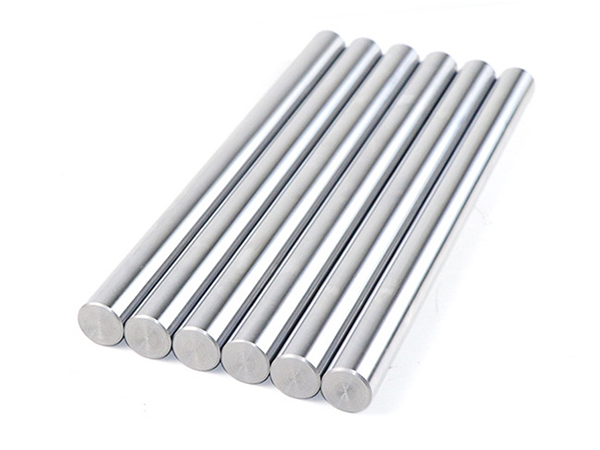
- Straight Shaft: Uniform diameter throughout the entire length, suitable for simple transmission scenarios (such as linear guide shafts) and applications requiring high straightness.
- Spline Shaft: Equipped with splines on the surface, used to transmit large torque and ensure precise positioning. It is widely used in automotive transmissions, CNC machine tools, and other equipment that require synchronous transmission.
- Spindle Shaft: A high-precision shaft used in machine tools, motors, and other equipment, requiring extremely high rotational accuracy and stability. Spindle shafts are usually processed by ultra-precision grinding and dynamic balance testing to reduce vibration during high-speed rotation.
3. Classification by Application Function
- Rotating Precision Shafts: Mainly used to transmit torque and support rotating parts, such as motor shafts, generator shafts, and machine tool spindles. They require high rotational accuracy, low vibration, and sufficient fatigue strength.
- Linear Guide Precision Shafts: Used as guide rails for linear motion systems (such as linear stages, 3D printers), providing a straight, smooth, and rigid path for translational movement. They require high straightness, surface hardness, and low surface roughness.
- Precision Instrument Shafts: Used in optical instruments (such as microscopes), measuring equipment (such as coordinate measuring machines), and medical devices. They require ultra-high dimensional precision and surface quality, with dimensional tolerance controlled within ±0.001 mm.
V. Working Mechanism of Precision Shaft
The working mechanism of precision shafts is based on their high precision and excellent mechanical performance, mainly realizing three core functions in mechanical systems: torque transmission, motion guidance, and precision positioning. These functions are closely coordinated to ensure the stable and high-precision operation of the entire system:
1. Torque Transmission Mechanism
In rotating mechanical systems, precision shafts transmit torque between the power source (such as motors) and driven components (such as gears, pulleys, and sprockets). The ultra-high dimensional accuracy and coaxiality of precision shafts ensure uniform torque transmission, avoiding torque loss and vibration caused by gaps between the shaft and mating components. The high strength and fatigue strength of the shaft enable it to withstand large torque and cyclic loads without deformation or fracture. For example, in CNC machine tools, the spindle shaft transmits torque to the cutting tool, and its high precision ensures stable cutting and consistent processing quality.
2. Motion Guidance Mechanism
In linear or rotary motion systems, precision shafts serve as guide components to ensure the accuracy and stability of motion. For rotary motion, the strict roundness and straightness of the shaft ensure that the rotating parts (such as bearings) operate without eccentricity, reducing friction and wear; for linear motion, the linear guide precision shaft provides a smooth and rigid guide path, ensuring that the slider or other components move linearly without deviation. The smooth surface of the precision shaft minimizes friction resistance, reducing energy consumption and extending the service life of the system.
3. Precision Positioning Mechanism
In precision equipment (such as medical robots, semiconductor equipment), precision shafts play a key role in precision positioning. The ultra-tight dimensional tolerance and mutual position accuracy of the shaft ensure that the components installed on the shaft are positioned accurately, with positioning errors less than 0.005 mm. This is crucial for applications that require high-precision operations, such as micro-machining, medical surgery, and semiconductor manufacturing. For example, in a surgical robot, the precision shaft ensures the accurate movement of the surgical instrument, improving the safety and precision of the surgery.
VI. Typical Application Scenarios of Precision Shaft
Due to their high precision and excellent performance, precision shafts are widely used in various industrial fields that require high reliability and high precision. Their application scenarios are closely related to their working mechanism and core characteristics:
1. Precision Machinery Industry
This is the largest application field of precision shafts. They are used in CNC machine tools (spindle shafts, feed shafts), precision grinders, and precision measuring instruments. These applications require precision shafts to have ultra-high rotational accuracy, low vibration, and stable performance. For example, the spindle shaft of a CNC machine tool uses alloy steel precision shafts processed by ultra-precision grinding, with radial runout ≤ 0.002 mm, ensuring high-precision cutting and machining accuracy.
2. Automotive Industry
In the automotive industry, precision shafts are used in engines, transmissions, steering systems, and brake systems. They require lightweight, high strength, and high precision to ensure the reliability and safety of the vehicle. For example, the transmission shaft and gear shaft in the automotive transmission use alloy steel precision shafts, which transmit torque stably and ensure smooth gear shifting; the precision shaft in the steering system ensures accurate steering and improves driving safety.
3. Aerospace Industry
Aerospace applications (aircraft engines, landing gear, navigation systems) require precision shafts with ultra-high precision, lightweight, and high reliability. Titanium alloy or ceramic precision shafts are used here, with dimensional tolerance controlled within ±0.001 mm and strict dynamic balance requirements. The precision shaft in the aircraft engine must withstand high temperature, high pressure, and high speed, ensuring stable operation under extreme conditions to ensure flight safety.
4. Medical Equipment Industry
Medical equipment (surgical robots, medical pumps, precision measuring instruments) requires precision shafts with high hygiene, corrosion resistance, and ultra-high precision. Stainless steel or titanium alloy precision shafts are used here, with smooth surfaces and no defects, ensuring no pollution to the medical environment. For example, the precision shaft in a surgical robot controls the movement of the surgical instrument, with positioning accuracy up to 0.001 mm, enabling minimally invasive and high-precision surgery.
5. Electronic and Semiconductor Industry
In electronic and semiconductor equipment (semiconductor lithography machines, electronic component mounting machines), precision shafts are used for precision positioning and motion transmission. They require ultra-high dimensional accuracy and surface quality, with surface roughness Ra ≤ 0.01 μm and positioning error ≤ 0.0005 mm. The precision shaft in the semiconductor lithography machine ensures the accurate positioning of the silicon wafer, which is crucial for the production of high-precision semiconductor chips.
6. Other Fields
- Food Processing Equipment: Stainless steel precision shafts are used in food processing machinery (such as filling machines, packaging machines), with corrosion resistance and hygiene, ensuring food safety.
- Marine and Offshore Equipment: Corrosion-resistant precision shafts are used in ship steering systems and marine pumps, withstanding saltwater corrosion and humid environments.
- Home Appliances: Precision shafts are used in high-end home appliances (such as air conditioners, washing machines), ensuring stable operation and low noise.
VII. Key Selection and Maintenance Guidelines
1. Selection Considerations
To select the optimal precision shaft for a specific application, consider the following key factors:
- Application Requirements: Determine the required dimensional tolerance, geometric accuracy, and surface roughness based on the application's precision requirements. For ultra-high-precision applications (such as semiconductor equipment), select precision shafts with IT5 grade tolerance and Ra ≤ 0.01 μm surface roughness; for general industrial applications, IT6~IT7 grade tolerance is sufficient.
- Working Environment: For corrosive environments (such as marine, chemical), select stainless steel or corrosion-resistant alloy precision shafts; for high-temperature, high-speed environments, select high-temperature-resistant alloy precision shafts (such as high-speed steel); for hygienic environments (such as medical, food), select stainless steel precision shafts with smooth surfaces.
- Load and Torque: Select the appropriate material and diameter based on the working load and torque. High-load applications require alloy steel precision shafts with thick diameters; low-load, high-precision applications can use lightweight materials (such as titanium alloy) to reduce weight.
- Mating Components: Ensure the precision shaft's dimensions and structure are compatible with mating components (such as bearings, gears). The coaxiality and surface roughness of the shaft must match the requirements of the mating components to avoid gaps or excessive friction.
2. Maintenance Guidelines
Proper maintenance is essential to extend the service life of precision shafts and ensure the stability of the mechanical system. Follow these guidelines:
- Regular Cleaning: Clean the surface of the precision shaft regularly to remove dust, debris, and lubricant residues. Use a soft cloth or brush to avoid scratching the surface; for precision shafts with high surface quality, use ultrasonic cleaning to remove tiny contaminants. Ensure the mating surface of the shaft is clean to avoid wear caused by impurities.
- Lubrication Maintenance: Maintain proper lubrication to reduce friction between the shaft and mating components. Use lubricants compatible with the working environment and load, and replenish or replace lubricants regularly. For high-speed precision shafts, use high-temperature-resistant lubricants to prevent lubricant failure at high temperatures. Good lubrication can extend the service life of the shaft and mating components by 2~3 times.
- Regular Inspection: Regularly inspect the precision shaft for dimensional deformation, surface defects (scratches, cracks), and wear. Use precision measuring tools to detect dimensional changes and geometric accuracy; use flaw detection equipment to check for internal and surface defects. If defects are found, repair or replace the shaft in time to avoid system failure.
- Proper Storage: Store unused precision shafts in a dry, clean, and well-ventilated environment, with a temperature of around 20℃ and humidity less than 65%. Avoid direct sunlight, moisture, and corrosive substances; cover the ends of the shaft to prevent dust and debris from entering. For long-term storage, apply a thin layer of anti-rust oil to the surface to prevent rusting.
- Correct Installation: Ensure the precision shaft is installed correctly, with accurate alignment and appropriate fit (neither too tight nor too loose). Improper installation will cause uneven stress, vibration, and premature wear of the shaft. Use professional installation tools and follow the installation specifications to ensure the coaxiality and parallelism of the shaft.
VIII. Conclusion
The precision shaft is a core component of modern precision mechanical systems, whose high precision, excellent mechanical performance, and stable working mechanism provide a solid foundation for the high-performance operation of various industrial equipment. Unlike ordinary shafts, precision shafts rely on strict material selection, advanced precision machining technology, and strict quality control to achieve ultra-tight dimensional tolerance, strict geometric accuracy, and superior surface quality, enabling them to adapt to high-precision, high-speed, and harsh working environments.
From the manufacturing process to the working mechanism, from application adaptation to maintenance management, every link of the precision shaft is closely related to its performance and service life. By understanding the core characteristics, manufacturing process, and working mechanism of precision shafts, engineers can select the appropriate precision shaft for specific applications, optimize system design, and improve equipment performance; proper maintenance can extend the service life of precision shafts, reduce operational costs, and ensure the stable operation of the system.
With the continuous development of precision machining technology, material science, and industrial automation, the precision and performance of precision shafts will be further improved. In the future, precision shafts will be more widely used in aerospace, medical equipment, semiconductor, and other high-tech fields, playing an increasingly important role in promoting the development of modern precision manufacturing industry. For anyone engaged in mechanical design, precision machining, or equipment maintenance, mastering the knowledge of precision shafts is crucial to improving work efficiency and ensuring equipment reliability.









 Home
News
Industry News
Precision Shaft: Definition, Manufacturing, Working Mechanism, And Industrial Applications
Home
News
Industry News
Precision Shaft: Definition, Manufacturing, Working Mechanism, And Industrial Applications 
 +86 13771119215