A linear shaft, also known as a linear optical axis or precision linear shaft, is a high-precision cylindrical component designed specifically for guiding and supporting linear motion in mechanical systems. Unlike ordinary rotating shafts, linear shafts focus on ensuring smooth, accurate, and stable linear displacement, serving as the core guiding element in linear motion mechanisms. Characterized by high straightness, excellent surface finish, precise dimensional accuracy, and strong wear resistance, linear shafts are widely used in various industrial fields that require high-precision linear motion, such as automated equipment, CNC machine tools, robotics, and hydraulic/pneumatic systems. As a key component determining the motion accuracy and stability of the entire mechanical system, the performance of linear shafts directly affects the operational efficiency, processing quality, and service life of equipment. This article systematically elaborates on the definition, core properties, manufacturing process, main types, working mechanism, typical application scenarios, and maintenance guidelines of linear shafts, integrating practical technical parameters and industry experience to provide comprehensive guidance for engineers, procurement personnel, and maintenance technicians.
I. Overview and Core Definition of Linear Shaft
In modern industrial manufacturing, linear motion systems are essential for automated production, precision machining, and intelligent equipment, and the linear shaft is the core guiding component of such systems. A linear shaft is a cylindrical metal bar processed through precision machining technologies, whose primary function is to guide mating components (such as linear bearings, sliding blocks, and piston rods) to move along a fixed linear path, while bearing radial and axial loads. Unlike hard chrome plated bars that focus on surface protection and wear resistance, linear shafts prioritize straightness, dimensional accuracy, and surface smoothness to ensure precise linear motion.
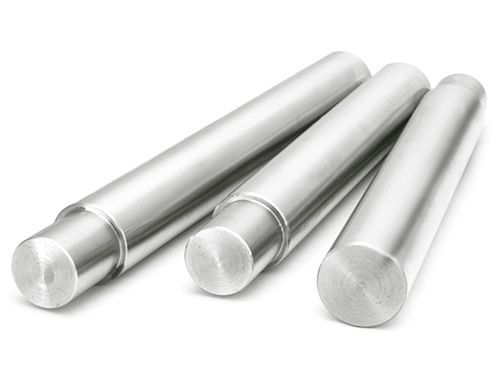
The core essence of a
linear shaft lies in its high-precision structure and stable guiding performance. It relies on strict material selection, advanced precision machining, and strict quality control to achieve ultra-high straightness, precise dimensional tolerance, and superior surface finish, enabling it to adapt to high-precision, high-speed, and high-load linear motion scenarios. Linear shafts are typically made of carbon steel, alloy steel, or stainless steel as the base material, and some are subjected to surface treatments (such as hard chrome plating, quenching, or polishing) to further enhance their wear resistance and corrosion resistance. This unique combination of precision and performance makes linear shafts indispensable in modern precision manufacturing and automated systems.
II. Core Properties of Linear Shaft
The performance of linear shafts is mainly reflected in five core properties, which are the key advantages over ordinary cylindrical bars and the basis for their application in high-precision linear motion scenarios:
1. Ultra-High Straightness
Straightness is the most critical property of a linear shaft, directly determining the accuracy of linear motion. The straightness error of industrial-grade linear shafts is usually controlled within 0.01~0.03 mm/m, and for high-end precision linear shafts, it can be as low as 0.005 mm/m. This ultra-high straightness ensures that mating components move along a fixed linear path without deviation, avoiding motion jitter or accuracy loss caused by shaft bending. It is the core guarantee for the precision of linear motion systems such as CNC machine tools and precision linear stages.
2. Precise Dimensional Accuracy
Linear shafts have extremely high dimensional accuracy, with outer diameter tolerance usually reaching IT5~IT7 grade. The diameter deviation is controlled within a few micrometers, ensuring a tight and uniform fit with mating components (such as linear bearings). For example, the outer diameter tolerance of a standard linear shaft with a diameter of 20 mm is usually ±0.008 mm, which avoids gaps or excessive friction between the shaft and the bearing, ensuring smooth motion and high positioning accuracy.
3. Excellent Surface Finish
The surface of linear shafts is subjected to precision polishing and grinding, resulting in an extremely smooth surface finish. The surface roughness (Ra) is usually 0.02~0.1 μm, and for high-precision applications, it can be as low as 0.01 μm. The smooth surface not only reduces friction between the shaft and mating components, reducing energy consumption and wear but also improves the sealing performance of the system, preventing dust and debris from entering the mating gap and affecting motion accuracy.
4. Strong Wear Resistance
Linear shafts are often subjected to frequent linear motion and load-bearing, so wear resistance is a key performance indicator. Through surface treatments such as quenching, tempering, or hard chrome plating, the surface hardness of linear shafts can reach HRC55~62, significantly improving their wear resistance. Compared with ordinary unprocessed cylindrical bars, the wear resistance of linear shafts is improved by 4~6 times, ensuring long-term stable operation in high-frequency motion scenarios.
5. Good Mechanical Strength and Toughness
The base material of linear shafts (carbon steel, alloy steel, or stainless steel) has excellent mechanical strength and toughness, enabling them to withstand radial and axial loads without deformation or fracture. For example, alloy steel linear shafts have a tensile strength of 800~1000 MPa and an impact energy of ≥40 J, which can adapt to high-load linear motion scenarios such as construction machinery and heavy-duty automated equipment. The balance between strength and toughness ensures the reliability and service life of linear shafts in harsh working conditions.
III. Manufacturing Process of Linear Shaft
The manufacturing of linear shafts is a complex precision machining process that involves base metal selection, blank processing, precision machining, surface treatment, and quality inspection. Each step has strict requirements to ensure the straightness, dimensional accuracy, and surface quality of the shaft. The key processes are as follows:
1. Base Metal Selection and Blank Preparation
The choice of base metal directly affects the performance and application scope of linear shafts. Common base metals include:
- Carbon Steel: Such as 45# carbon steel, which is cost-effective, has good machinability and strength, and is suitable for general industrial applications with low corrosion resistance requirements. It is the most widely used base material for linear shafts.
- Alloy Steel: Such as 40Cr, 20CrMnTi, and high-speed steel (HSS). Alloy steel has excellent strength, toughness, and wear resistance, making it suitable for high-load, high-speed, and high-precision applications (such as CNC machine tool guide shafts, robot arm guide shafts). 40Cr alloy steel is particularly widely used due to its good hardenability and machining performance.
- Stainless Steel: Such as 304, 316, and 316L stainless steel. It has inherent corrosion resistance and hygiene, and after precision machining, its surface finish and straightness meet high-precision requirements, making it suitable for corrosive and hygienic environments such as food processing equipment, medical equipment, and marine engineering.
After selecting the base metal, the blank is prepared through processes such as forging, rolling, or cold drawing to obtain a cylindrical blank with uniform diameter and stable internal structure. The blank is then subjected to annealing treatment to eliminate internal stress, improve machinability, and lay the foundation for subsequent precision machining.
2. Precision Machining
Precision machining is the core process of manufacturing linear shafts, mainly including turning, grinding, and polishing, to ensure straightness, dimensional accuracy, and surface finish:
- Turning: The blank is clamped on a precision lathe for turning, forming the basic cylindrical shape and ensuring the initial dimensional accuracy. The turning process controls the outer diameter tolerance within IT8~IT9 grade, laying the foundation for subsequent grinding.
- Grinding: Precision grinding is performed using a cylindrical grinder or centerless grinder, which is the key process to ensure the straightness and dimensional accuracy of the linear shaft. The grinding process controls the outer diameter tolerance within IT5~IT7 grade and the straightness error within 0.01~0.03 mm/m. For high-precision linear shafts, precision grinding with a grinding wheel speed of 30~50 m/s is used to further improve surface quality and dimensional accuracy.
- Polishing: After grinding, the surface of the shaft is polished using mechanical polishing or electrochemical polishing to reduce surface roughness. The polishing process can reduce the surface roughness (Ra) to 0.01~0.1 μm, making the surface extremely smooth and reducing friction between the shaft and mating components.
3. Surface Treatment (Optional)
To further enhance the wear resistance, corrosion resistance, and service life of linear shafts, surface treatment is usually performed after precision machining. Common surface treatment methods include:
- Quenching and Tempering: The linear shaft is subjected to high-temperature quenching and tempering treatment to improve surface hardness and internal toughness. The surface hardness can reach HRC55~62, significantly enhancing wear resistance.
- Hard Chrome Plating: A layer of hard chrome is plated on the surface of the linear shaft through electroplating, which further improves wear resistance and corrosion resistance. The chrome coating thickness is usually 0.8~5 μm, and the surface hardness can reach 650~1000 HV.
- Electrolytic Polishing: For stainless steel linear shafts, electrolytic polishing is used to improve surface finish and corrosion resistance, making the surface smooth and hygienic, meeting the requirements of food and medical industries.
- QPQ Treatment: An optional surface hardening treatment for stainless steel linear shafts, which enhances corrosion resistance (5% NaCl solution 2000h no rust) and surface hardness, expanding their application in harsh corrosive environments.
4. Quality Inspection
Quality inspection is an essential link to ensure the performance of linear shafts. The inspection items mainly include:
- Straightness Detection: Using a straightness tester or laser straightness measuring instrument to detect the straightness error of the linear shaft, ensuring it meets the design requirements (0.005~0.03 mm/m).
- Dimensional Accuracy Detection: Using a micrometer, caliper, or coordinate measuring machine (CMM) to detect the outer diameter, length, and other dimensions, ensuring the tolerance meets IT5~IT7 grade.
- Surface Quality Detection: Using a surface roughness tester to detect surface roughness; using visual inspection or magnifying glass to check for surface defects such as scratches, pits, and cracks. The surface should be smooth, uniform, and free of obvious defects.
- Hardness Detection: Using a Vickers hardness tester or Rockwell hardness tester to detect the surface and internal hardness of the linear shaft, ensuring it meets the design requirements (HRC55~62 for surface hardness).
- Corrosion Resistance Detection: For stainless steel linear shafts or chrome-plated linear shafts, conducting salt spray tests or immersion tests to evaluate corrosion resistance, ensuring they can adapt to the working environment.
IV. Main Types of Linear Shaft
Linear shafts are classified into various types based on base material, surface treatment, cross-sectional shape, and application function, each tailored to specific industrial needs. The main classification methods and types are as follows:
1. Classification by Base Material
- Carbon Steel Linear Shafts: Cost-effective, with good machinability and strength, suitable for general industrial applications such as automated conveyor systems, general machinery guide shafts, and low-load linear motion mechanisms. They are the most widely used type of linear shafts.
- Alloy Steel Linear Shafts: High strength, toughness, and wear resistance, suitable for high-load, high-speed, and high-precision applications such as CNC machine tool guide shafts, robot arm guide shafts, and heavy-duty hydraulic piston rods.
- Stainless Steel Linear Shafts: Corrosion-resistant and hygienic, suitable for corrosive and hygienic environments such as food processing equipment, medical equipment, chemical processing equipment, and marine engineering. Common materials include 304, 316, and 316L stainless steel.
2. Classification by Surface Treatment
- Polished Linear Shafts: Only subjected to precision grinding and polishing, with a smooth surface (Ra ≤ 0.1 μm), suitable for general precision linear motion applications where corrosion resistance requirements are not high.
- Hard Chrome Plated Linear Shafts: Plated with a hard chrome layer on the surface, with excellent wear resistance and corrosion resistance, suitable for high-friction, humid, or slightly corrosive environments such as hydraulic systems and construction machinery.
- Quenched Linear Shafts: Subjected to quenching and tempering treatment, with high surface hardness and internal toughness, suitable for high-load, high-wear linear motion scenarios such as machine tool guide shafts and heavy-duty sliding systems.
3. Classification by Cross-Sectional Shape
- Circular Linear Shafts: The most common type, with a circular cross-section, simple structure, and easy matching with linear bearings. They are widely used in various linear motion systems, such as automated equipment, CNC machine tools, and robotics.
- Hexagonal Linear Shafts: Cross-sectional shape is hexagonal, which can prevent relative rotation between the shaft and mating components, suitable for applications that require both linear motion and torque transmission, such as linear actuators and precision sliding tables.
- Slotted Linear Shafts: With a longitudinal slot on the surface, which can be matched with positioning pins to achieve precise positioning and linear motion, suitable for high-precision linear motion systems such as precision measuring instruments and 3D printers.
4. Classification by Application Function
- Guide Linear Shafts: Mainly used to guide the linear motion of components, ensuring motion accuracy and stability, suitable for CNC machine tools, linear stages, and automated production lines.
- Load-Bearing Linear Shafts: Not only guide linear motion but also bear large radial and axial loads, suitable for heavy-duty equipment such as construction machinery, hydraulic cylinders, and mining equipment.
- Precision Linear Shafts: High straightness, dimensional accuracy, and surface finish, suitable for high-precision applications such as precision measuring instruments, surgical robots, and semiconductor manufacturing equipment.
V. Working Mechanism of Linear Shaft
The working mechanism of linear shafts is based on their high-precision structure and the cooperative work with mating components, mainly realizing two core functions in mechanical systems: precise linear guiding and stable load-bearing. These two functions are closely coordinated to ensure the stable and accurate operation of the entire linear motion system:
1. Precise Linear Guiding Mechanism
The ultra-high straightness and precise dimensional accuracy of linear shafts ensure that mating components (such as linear bearings, sliding blocks) move along a fixed linear path without deviation. The smooth surface of the linear shaft reduces friction between the shaft and the bearing, enabling smooth and low-noise linear motion. The tight fit between the linear shaft and the bearing avoids gaps, preventing motion jitter and ensuring high positioning accuracy (usually within ±0.001~±0.01 mm). In high-precision linear motion systems, the linear shaft’s guiding mechanism directly determines the processing accuracy and motion stability of the equipment.
2. Stable Load-Bearing Mechanism
Linear shafts bear radial and axial loads during operation, relying on the excellent mechanical strength and toughness of the base material to avoid deformation or fracture. The surface treatment (such as quenching, hard chrome plating) further enhances the wear resistance of the shaft, ensuring that it can withstand long-term load-bearing and high-frequency motion without excessive wear. For high-load applications, the diameter and material of the linear shaft are selected according to the load size, ensuring stable load-bearing capacity and extending the service life of the shaft and the entire system.
VI. Typical Application Scenarios of Linear Shaft
Due to their excellent precision, wear resistance, and guiding performance, linear shafts are widely used in various industrial fields that require high-precision linear motion. Their application scenarios are closely related to their working mechanism and core properties:
1. Automated Equipment Industry
This is the largest application field of linear shafts. They are used as guiding components in automated production lines, linear actuators, robotic arms, and 3D printers, ensuring precise and stable linear motion. For example, the linear motion modules of automated conveyor systems, the guide shafts of robotic arms, and the Z-axis guide shafts of 3D printers all use linear shafts to achieve high-precision positioning and smooth motion.
2. CNC Machine Tool Industry
CNC machine tools (such as CNC lathes, CNC milling machines, and precision grinders) require extremely high motion accuracy, and linear shafts are the core guiding components of their linear motion systems. The guide shafts of the X, Y, Z axes of CNC machine tools use high-precision linear shafts with straightness error ≤ 0.01 mm/m and surface roughness ≤ 0.02 μm, ensuring the machining accuracy of workpieces (tolerance within ±0.001 mm).
3. Hydraulic and Pneumatic Industry
In hydraulic and pneumatic systems, linear shafts are used as piston rods and guide shafts, requiring high wear resistance, corrosion resistance, and linearity. For example, the piston rods of hydraulic cylinders, the guide shafts of pneumatic cylinders, and the linear guide components of hydraulic valves all use linear shafts (often hard chrome plated) to withstand high pressure and frequent reciprocating motion, ensuring the stability and efficiency of the system.
4. Medical Equipment Industry
Medical equipment (such as surgical robots, medical pumps, and precision medical measuring instruments) requires high precision, hygiene, and corrosion resistance. Stainless steel linear shafts with high surface finish and corrosion resistance are used here, ensuring precise linear motion of surgical instruments and medical components, and avoiding pollution to the medical environment.
5. Food Processing Equipment Industry
Food processing equipment (such as filling machines, packaging machines, and conveyor systems) requires hygienic, corrosion-resistant, and smooth linear components. Stainless steel linear shafts are used here, which are easy to clean, corrosion-resistant, and meet food safety standards, ensuring the stable operation of the equipment and the hygiene of food.
6. Other Fields
- Marine Engineering: Stainless steel linear shafts are used in ship steering systems, marine pumps, and offshore equipment, withstanding saltwater corrosion and humid environments.
- Precision Measuring Instruments: High-precision linear shafts are used in coordinate measuring machines, laser measuring instruments, and other equipment, ensuring precise linear motion and measurement accuracy.
- Construction Machinery: Alloy steel linear shafts are used in construction machinery such as excavators, loaders, and cranes, withstanding high load and high wear, ensuring the stable operation of the machinery.
VII. Key Selection and Maintenance Guidelines
1. Selection Considerations
To select the optimal linear shaft for a specific application, consider the following key factors:
- Application Precision Requirements: Determine the required straightness, dimensional tolerance, and surface roughness based on the application’s precision requirements. For high-precision applications (such as CNC machine tools, surgical robots), select linear shafts with straightness ≤ 0.01 mm/m, dimensional tolerance IT5 grade, and surface roughness Ra ≤ 0.02 μm; for general applications, straightness ≤ 0.03 mm/m, dimensional tolerance IT7 grade is sufficient.
- Working Environment: For corrosive environments (such as marine, chemical, food processing), select stainless steel linear shafts; for high-friction, high-load environments, select alloy steel linear shafts with quenching or hard chrome plating; for hygienic environments (such as medical, food), select stainless steel linear shafts with electrolytic polishing.
- Load and Motion Speed: Select the appropriate diameter and material based on the working load and motion speed. High-load applications require thick-diameter alloy steel linear shafts; high-speed motion applications require linear shafts with high surface finish and low friction to reduce heat generation and wear.
- Mating Components: Ensure the dimensions and surface finish of the linear shaft are compatible with mating components (such as linear bearings, sliding blocks). The outer diameter of the shaft should match the inner diameter of the bearing to avoid gaps or excessive friction, ensuring smooth motion.
2. Maintenance Guidelines
Proper maintenance is essential to extend the service life of linear shafts and ensure the stability of the linear motion system. Follow these guidelines:
- Regular Cleaning: Clean the surface of the linear shaft regularly to remove dust, debris, and lubricant residues. Use a soft cloth or brush to avoid scratching the surface; for high-precision linear shafts, use ultrasonic cleaning to remove tiny contaminants. Ensure the mating gap between the shaft and the bearing is clean to avoid wear caused by impurities.
- Lubrication Maintenance: Maintain proper lubrication to reduce friction between the linear shaft and mating components. Use lubricants compatible with the working environment and load (such as lithium-based grease for general applications, high-temperature grease for high-temperature environments), and replenish or replace lubricants regularly. Good lubrication can extend the service life of the linear shaft and mating components by 3~4 times.
- Regular Inspection: Regularly inspect the linear shaft for straightness deformation, surface wear, scratches, or cracks. Use precision measuring tools to detect dimensional changes and straightness; if defects are found, repair or replace the shaft in time to avoid affecting the motion accuracy of the system.
- Proper Storage: Store unused linear shafts in a dry, clean, and well-ventilated environment, with a temperature of around 20℃ and humidity less than 65%. Avoid direct sunlight, moisture, and corrosive substances; place the shaft horizontally to avoid bending deformation. For long-term storage, apply a thin layer of anti-rust oil to the surface to prevent rusting.
- Correct Installation: Ensure the linear shaft is installed correctly, with accurate alignment and appropriate fit (neither too tight nor too loose). Improper installation will cause uneven stress, bending deformation, and premature wear of the shaft. Use professional installation tools and follow the installation specifications to ensure the coaxiality and parallelism of the shaft.
VIII. Limitations and Future Development Trends
1. Limitations
Despite their excellent performance, linear shafts have some limitations. First, the precision machining process of linear shafts is complex, resulting in relatively high production costs, especially for high-precision linear shafts. Second, ordinary linear shafts have poor corrosion resistance and are prone to rust in humid or corrosive environments, requiring surface treatment. Third, in high-speed, high-load motion scenarios, the friction between the linear shaft and the bearing may generate heat, affecting the motion accuracy and service life of the system. Fourth, the straightness of linear shafts may be affected by temperature changes, leading to motion deviation in extreme temperature environments.
2. Future Development Trends
With the continuous development of precision machining technology, material science, and industrial automation, linear shafts are developing in the direction of higher precision, better performance, and more environmental protection. First, the application of intelligent machining equipment (such as CNC precision grinders, laser machining equipment) will further improve the straightness and dimensional accuracy of linear shafts, enabling straightness error ≤ 0.003 mm/m. Second, new materials (such as carbon fiber composites, ceramic materials) will be widely used, making linear shafts lighter, more wear-resistant, and more corrosion-resistant. Third, environmentally friendly surface treatment technologies (such as trivalent chrome plating, electroless plating) will replace traditional harmful processes, reducing environmental pollution. Fourth, the integration of linear shafts with intelligent monitoring systems will realize real-time monitoring of shaft wear, deformation, and other parameters, enabling predictive maintenance and improving the reliability of the system.
IX. Conclusion
The linear shaft is a core guiding component in modern linear motion systems, whose ultra-high straightness, precise dimensional accuracy, excellent wear resistance, and stable load-bearing performance provide a solid foundation for the high-precision, high-efficiency operation of various industrial equipment. Unlike ordinary cylindrical bars, linear shafts rely on strict material selection, advanced precision machining, and strict quality control to achieve superior performance, enabling them to adapt to high-precision, high-speed, and high-load linear motion scenarios.
From the manufacturing process to the working mechanism, from application adaptation to maintenance management, every link of the linear shaft is closely related to its performance and service life. By understanding the core properties, manufacturing process, and working mechanism of linear shafts, engineers can select the appropriate linear shaft for specific applications, optimize system design, and improve equipment performance; proper maintenance can extend the service life of linear shafts, reduce operational costs, and ensure the stable operation of the system.
With the continuous development of industrial automation and precision manufacturing, the demand for linear shafts in high-tech fields such as aerospace, medical equipment, and semiconductor manufacturing will continue to grow. In the future, linear shafts will be more precise, efficient, and environmentally friendly, playing an increasingly important role in promoting the development of modern industrial manufacturing and intelligent equipment. For anyone engaged in mechanical design, precision machining, or equipment maintenance, mastering the knowledge of linear shafts is crucial to improving work efficiency and ensuring equipment reliability.











 +86 13771119215