A
honed tube, also known as a precision honed cylinder tube or honed steel tube, is a high-precision cylindrical hollow component processed through
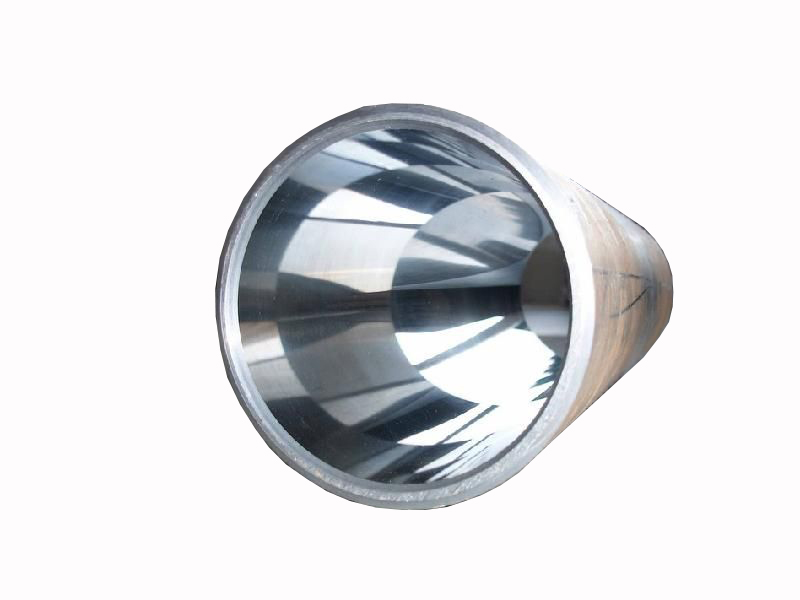
advanced honing technology, primarily designed to provide a smooth, precise inner surface for guiding and containing linear motion components in mechanical systems. Unlike ordinary seamless steel tubes that only meet basic dimensional requirements, honed tubes focus on ultra-high inner surface finish, precise inner diameter tolerance, and excellent roundness, serving as the core component in hydraulic cylinders, pneumatic cylinders, and other high-pressure linear motion systems. Characterized by superior inner surface quality, high dimensional accuracy, strong wear resistance, and good sealing performance, honed tubes are widely used in various industrial fields that require high-pressure, high-precision linear motion, such as construction machinery, automotive manufacturing, aerospace, and hydraulic/pneumatic equipment. As a key component determining the efficiency, reliability, and service life of hydraulic and pneumatic systems, the performance of honed tubes directly affects the operational stability and safety of the entire equipment. This article systematically elaborates on the definition, core properties, manufacturing process, main types, working mechanism, typical application scenarios, and maintenance guidelines of honed tubes, integrating practical technical parameters and industry experience to provide comprehensive guidance for engineers, procurement personnel, and maintenance technicians.
I. Overview and Core Definition of Honed Tube
In modern industrial manufacturing, hydraulic and pneumatic systems are essential for transmitting power and realizing linear motion in heavy-duty equipment, precision machinery, and automated production lines, and the honed tube is the core structural component of such systems. A honed tube is a hollow cylindrical component made of metal materials (mainly carbon steel, alloy steel, or stainless steel) through precision processing and honing treatment, whose primary function is to serve as the cylinder barrel of hydraulic or pneumatic cylinders, guiding the piston rod to move linearly and containing hydraulic oil or compressed air to transmit pressure. Unlike ordinary seamless tubes that only undergo simple rolling or drawing processes, honed tubes undergo a special honing process to optimize the inner surface quality and dimensional accuracy, ensuring tight fit with piston seals and stable power transmission.
The core essence of a honed tube lies in its high-precision inner surface and stable structural performance. It relies on strict material selection, advanced precision machining, and professional honing technology to achieve ultra-smooth inner surface, precise inner diameter tolerance, and excellent roundness and cylindricity, enabling it to adapt to high-pressure, high-frequency, and high-precision linear motion scenarios. Honed tubes are typically made of high-quality seamless steel tubes as blanks, and after honing and optional surface treatment, they possess excellent wear resistance, corrosion resistance, and pressure-bearing capacity. This unique combination of precision and performance makes honed tubes indispensable in modern hydraulic, pneumatic, and heavy-duty mechanical systems, known as the blood vessels of hydraulic systems.
II. Core Properties of Honed Tube
The performance of honed tubes is mainly reflected in five core properties, which are the key advantages over ordinary seamless steel tubes and the basis for their application in high-pressure, high-precision linear motion scenarios:
1. Ultra-High Inner Surface Finish
The inner surface finish is the most critical property of a honed tube, directly determining the sealing performance and wear resistance of the hydraulic/pneumatic system. The inner surface of industrial-grade honed tubes is subjected to precision honing, with surface roughness (Ra) usually controlled within 0.02~0.2 μm, and for high-end precision honed tubes, it can be as low as 0.01 μm. The honing process forms a uniform crosshatched surface texture on the inner wall, which can effectively retain lubricating oil, reduce friction between the piston seal and the inner wall, and avoid seal wear and fluid leakage. This ultra-smooth inner surface ensures the smooth operation of the piston rod and extends the service life of the seal components.
2. Precise Dimensional Accuracy
Honed tubes have extremely high dimensional accuracy, especially in inner diameter tolerance, roundness, and cylindricity. The inner diameter tolerance of industrial-grade honed tubes usually reaches H7~H9 grade, with diameter deviation controlled within a few micrometers, ensuring a tight and uniform fit with piston seals. For example, the inner diameter tolerance of a standard honed tube with an inner diameter of 50 mm is usually ±0.015 mm, and the roundness and cylindricity error are within 0.005~0.01 mm/m. This precise dimensional accuracy avoids gaps between the tube and the seal, preventing hydraulic oil or compressed air leakage and ensuring stable pressure transmission.
3. Excellent Wear Resistance
Honed tubes are often subjected to high-pressure fluid erosion, piston seal friction, and occasional impact loads, so wear resistance is a key performance indicator. Through honing treatment, the inner surface of the tube undergoes cold work hardening, and the surface hardness can reach HRC50~60, significantly improving wear resistance. In addition, optional surface treatments such as hard chrome plating or nitriding can further enhance the wear resistance of the inner surface, making the service life of honed tubes 3~5 times longer than that of ordinary seamless tubes. This excellent wear resistance ensures long-term stable operation in high-frequency reciprocating motion scenarios.
4. Strong Pressure-Bearing Capacity
Honed tubes are mainly used in high-pressure hydraulic and pneumatic systems, requiring strong pressure-bearing capacity to withstand the impact of high-pressure fluid. The base material of honed tubes (carbon steel, alloy steel) has excellent mechanical strength, and the honing process eliminates internal defects such as microcracks and inclusions, improving the structural integrity of the tube. Industrial-grade honed tubes can withstand working pressures of 10~100 MPa, and high-pressure honed tubes for special applications can withstand pressures exceeding 150 MPa. This strong pressure-bearing capacity ensures that honed tubes do not deform or burst under high-pressure working conditions.
5. Good Sealing Performance
The ultra-smooth inner surface and precise dimensional accuracy of honed tubes ensure good sealing performance when matched with piston seals. The uniform crosshatched surface texture on the inner wall can retain lubricating oil, forming a thin oil film between the seal and the inner wall, which not only reduces friction but also enhances sealing performance, preventing fluid leakage. This good sealing performance is crucial for hydraulic and pneumatic systems, as it ensures efficient power transmission and reduces energy loss.
III. Manufacturing Process of Honed Tube
The manufacturing of honed tubes is a complex precision processing process that involves blank selection, pre-processing, honing (core process), surface treatment, and quality inspection. Each step has strict requirements to ensure the inner surface quality, dimensional accuracy, and structural performance of the tube. The key processes are as follows:
1. Blank Selection and Preparation
The choice of blank directly affects the performance and application scope of honed tubes. Common blanks are high-quality seamless steel tubes, and the selection of blank material is determined according to the application scenario:
- Carbon Steel Seamless Tubes: Such as 20# and 45# carbon steel seamless tubes, which are cost-effective, have good machinability and pressure-bearing capacity, and are suitable for general industrial applications with low corrosion resistance requirements (such as ordinary hydraulic cylinders, construction machinery hydraulic systems). They are the most widely used blanks for honed tubes.
- Alloy Steel Seamless Tubes: Such as 40Cr, 27SiMn, and 35CrMo alloy steel seamless tubes. Alloy steel has excellent strength, toughness, and wear resistance, making it suitable for high-pressure, high-load, and high-precision applications (such as high-pressure hydraulic cylinders, aerospace hydraulic systems). 40Cr alloy steel seamless tubes are particularly widely used due to their good hardenability and machining performance.
- Stainless Steel Seamless Tubes: Such as 304, 316, and 316L stainless steel seamless tubes. It has inherent corrosion resistance and hygiene, and after honing treatment, its inner surface finish and dimensional accuracy meet high-precision requirements, making it suitable for corrosive and hygienic environments such as food processing equipment, medical equipment, and marine hydraulic systems.
After selecting the blank, the seamless steel tube is subjected to pre-processing, including cutting, deburring, and annealing. Cutting is to cut the blank into the required length; deburring is to remove burrs at the ends of the tube to avoid scratching the honing tool; annealing is to eliminate internal stress of the blank, improve machinability, and lay the foundation for subsequent honing processing.
2. Pre-Machining
Pre-machining is an important link before honing, mainly including turning and boring, to ensure the initial dimensional accuracy and inner surface quality of the tube:
- Turning: The outer surface of the blank is turned on a precision lathe to ensure the outer diameter accuracy and straightness of the tube, laying the foundation for the stability of the honing process.
- Boring: The inner surface of the blank is bored using a precision boring machine to remove excess material, form the basic inner diameter size, and control the inner diameter tolerance within IT10~IT11 grade. Boring can also correct the roundness and cylindricity errors of the blank, ensuring that the honing process can achieve higher precision.
3. Honing (Core Process)
Honing is the core process of manufacturing honed tubes, which is a precision machining method that uses a honing head with oil stones to perform rotary and reciprocating motion on the inner surface of the tube, realizing micro-material removal and surface finishing. The honing process is divided into rough honing, semi-finish honing, and finish honing, with increasing precision requirements:
- Rough Honing: Using coarse-grained oil stones (80~120 mesh) to remove a large amount of excess material quickly, correct the shape error of the inner surface, and control the inner diameter tolerance within IT8~IT9 grade, laying the foundation for finish honing.
- Semi-Finish Honing: Using medium-grained oil stones (150~240 mesh) to further improve the inner surface finish and dimensional accuracy, control the inner diameter tolerance within IT7~IT8 grade, and reduce the surface roughness to Ra 0.2~0.4 μm.
- Finish Honing: Using fine-grained oil stones (300~600 mesh) to perform precision finishing on the inner surface, ensuring the inner diameter tolerance reaches H7~H9 grade, the surface roughness is Ra 0.01~0.2 μm, and forming a uniform crosshatched surface texture. The honing speed is usually 10~30 m/min, and the reciprocating speed is 5~15 m/min, which can effectively improve the surface quality and dimensional accuracy of the tube.
During the honing process, cutting fluid is used to cool the honing head and the tube, remove cutting chips, and improve the surface finish. The type of cutting fluid is selected according to the blank material: emulsified fluid is used for carbon steel and alloy steel, and cutting oil is used for stainless steel to avoid corrosion and improve machining quality. For thin-walled honed tubes, manufacturers optimize honing parameters (such as pressure, speed, coolant) and use high-rigidity special machines to avoid deformation and vibration during processing.
4. Surface Treatment (Optional)
To further enhance the wear resistance, corrosion resistance, and service life of honed tubes, surface treatment is usually performed after honing. Common surface treatment methods include:
- Hard Chrome Plating: A layer of hard chrome is plated on the inner surface of the honed tube through electroplating, which further improves wear resistance and corrosion resistance. The chrome coating thickness is usually 1~5 μm, and the surface hardness can reach 650~1000 HV, suitable for high-friction, high-pressure, and slightly corrosive environments.
- Nitriding Treatment: The honed tube is subjected to nitriding treatment at high temperature, forming a nitrided layer on the inner surface, which improves surface hardness (HRC60~70) and wear resistance, and enhances corrosion resistance without changing the dimensional accuracy of the tube.
- Electrolytic Polishing: For stainless steel honed tubes, electrolytic polishing is used to improve the inner surface finish and corrosion resistance, making the surface smooth and hygienic, meeting the requirements of food and medical industries.
- QPQ Treatment: An optional surface hardening treatment for stainless steel honed tubes, which enhances corrosion resistance (5% NaCl solution 2000h no rust) and surface hardness, expanding their application in harsh corrosive environments.
5. Quality Inspection
Quality inspection is an essential link to ensure the performance of honed tubes. The inspection items mainly include:
- Inner Surface Quality Detection: Using a surface roughness tester to detect the inner surface roughness; using an endoscope or visual inspection to check for surface defects such as scratches, pits, and cracks. The inner surface should be smooth, uniform, and free of obvious defects, with a uniform crosshatched texture.
- Dimensional Accuracy Detection: Using a micrometer, inner diameter dial gauge, or coordinate measuring machine (CMM) to detect the inner diameter, outer diameter, length, roundness, and cylindricity, ensuring the inner diameter tolerance meets H7~H9 grade, and the roundness and cylindricity error are within 0.005~0.01 mm/m.
- Hardness Detection: Using a Vickers hardness tester or Rockwell hardness tester to detect the surface and internal hardness of the honed tube, ensuring the surface hardness meets the design requirements (HRC50~60 for base material, HRC60~70 for nitrided tubes).
- Pressure-Bearing Test: Conducting a hydraulic pressure test on the honed tube to check its pressure-bearing capacity and sealing performance. The test pressure is usually 1.5~2 times the working pressure, and there should be no leakage, deformation, or burst during the test.
- Corrosion Resistance Detection: For stainless steel honed tubes or chrome-plated honed tubes, conducting salt spray tests or immersion tests to evaluate corrosion resistance, ensuring they can adapt to the working environment.
IV. Main Types of Honed Tube
Honed tubes are classified into various types based on base material, surface treatment, structural characteristics, and application function, each tailored to specific industrial needs. The main classification methods and types are as follows:
1. Classification by Base Material
- Carbon Steel Honed Tubes: Cost-effective, with good machinability and pressure-bearing capacity, suitable for general industrial applications such as ordinary hydraulic cylinders, construction machinery hydraulic systems, and low-pressure pneumatic systems. They are the most widely used type of honed tubes.
- Alloy Steel Honed Tubes: High strength, toughness, and wear resistance, suitable for high-pressure, high-load, and high-precision applications such as high-pressure hydraulic cylinders, aerospace hydraulic systems, and heavy-duty construction machinery.
- Stainless Steel Honed Tubes: Corrosion-resistant and hygienic, suitable for corrosive and hygienic environments such as food processing equipment, medical equipment, chemical processing equipment, and marine hydraulic systems. Common materials include 304, 316, and 316L stainless steel.
2. Classification by Surface Treatment
- Untreated Honed Tubes: Only subjected to honing treatment, with a smooth inner surface and precise dimensional accuracy, suitable for general applications where corrosion resistance requirements are not high.
- Hard Chrome Plated Honed Tubes: Plated with a hard chrome layer on the inner surface, with excellent wear resistance and corrosion resistance, suitable for high-friction, high-pressure, and slightly corrosive environments such as hydraulic cylinders for construction machinery and mining equipment.
- Nitrided Honed Tubes: Subjected to nitriding treatment, with high surface hardness and wear resistance, suitable for high-speed, high-frequency reciprocating motion scenarios such as precision hydraulic cylinders and aerospace hydraulic components.
3. Classification by Structural Characteristics
- Thick-Walled Honed Tubes: The wall thickness is usually 5~50 mm, with strong pressure-bearing capacity and structural stability, suitable for high-pressure hydraulic systems and heavy-duty equipment such as construction machinery, mining equipment, and high-pressure hydraulic cylinders.
- Thin-Walled Honed Tubes: The wall thickness is usually 1~5 mm, light in weight, and high in precision, suitable for lightweight hydraulic and pneumatic systems such as automotive hydraulic systems, precision instruments, and small pneumatic cylinders. The manufacturing of thin-walled honed tubes requires strict control of processing parameters to avoid deformation.
- Seamless Honed Tubes: Made of seamless steel tubes as blanks, with no welding seams, good structural integrity, and strong pressure-bearing capacity, suitable for high-pressure, high-precision applications. They are the most common type of honed tubes.
4. Classification by Application Function
- Hydraulic Cylinder Honed Tubes: The most common type, used as the cylinder barrel of hydraulic cylinders, guiding the piston rod to move linearly and containing hydraulic oil to transmit pressure. Suitable for construction machinery, automotive, aerospace, and other fields.
- Pneumatic Cylinder Honed Tubes: Used as the cylinder barrel of pneumatic cylinders, requiring good sealing performance and low friction, suitable for automated equipment, precision machinery, and light-load linear motion systems.
- Precision Honed Tubes: High inner surface finish (Ra ≤ 0.05 μm) and dimensional accuracy (inner diameter tolerance H7 grade), suitable for high-precision applications such as aerospace hydraulic components, precision measuring instruments, and medical equipment.
- Repair Honed Tubes: Used to repair damaged cylindrical components (such as drilling rig accessories, tool joints), restoring their dimensional accuracy and surface quality through honing treatment, which can save maintenance costs and improve the reuse rate of components.
V. Working Mechanism of Honed Tube
The working mechanism of honed tubes is based on their high-precision inner surface and stable structural performance, mainly realizing two core functions in hydraulic and pneumatic systems: precise linear guiding and high-pressure fluid containment. These two functions are closely coordinated to ensure the stable and efficient operation of the entire system:
1. Precise Linear Guiding Mechanism
The ultra-high inner surface finish, precise inner diameter tolerance, and excellent roundness of honed tubes ensure that the piston rod moves linearly along the inner wall of the tube without deviation. The uniform crosshatched surface texture on the inner wall retains lubricating oil, forming a thin oil film between the piston seal and the inner wall, which reduces friction and wear, enabling smooth and low-noise linear motion. The tight fit between the honed tube and the piston seal avoids gaps, preventing motion jitter and ensuring high positioning accuracy (usually within ±0.001~±0.01 mm). In high-precision hydraulic systems, the guiding mechanism of the honed tube directly determines the motion accuracy and stability of the equipment.
2. High-Pressure Fluid Containment Mechanism
Honed tubes serve as the container for hydraulic oil or compressed air in hydraulic and pneumatic systems, relying on their strong pressure-bearing capacity and good sealing performance to contain high-pressure fluid and transmit power. The excellent structural integrity of the honed tube (no internal defects such as microcracks) and precise dimensional accuracy ensure that it does not deform or burst under high-pressure working conditions. The ultra-smooth inner surface and tight fit with the seal prevent fluid leakage, ensuring efficient power transmission and reducing energy loss. For high-pressure applications, the wall thickness and material of the honed tube are selected according to the working pressure, ensuring stable fluid containment and power transmission.
VI. Typical Application Scenarios of Honed Tube
Due to their excellent inner surface quality, precise dimensional accuracy, strong wear resistance, and pressure-bearing capacity, honed tubes are widely used in various industrial fields that require high-pressure, high-precision linear motion. Their application scenarios are closely related to their working mechanism and core properties:
1. Construction Machinery Industry
This is the largest application field of honed tubes. They are used as cylinder barrels for hydraulic cylinders in excavators, loaders, cranes, bulldozers, and other construction machinery, bearing high pressure and frequent reciprocating motion. For example, the boom cylinder, bucket cylinder, and steering cylinder of excavators all use alloy steel honed tubes, which can withstand high pressure (30~80 MPa) and high friction, ensuring the stable operation of the machinery.
2. Hydraulic and Pneumatic Industry
In hydraulic and pneumatic systems, honed tubes are the core components of hydraulic cylinders and pneumatic cylinders. They are used in hydraulic stations, hydraulic presses, pneumatic actuators, and other equipment, requiring high pressure-bearing capacity and sealing performance. For example, the cylinder barrels of high-pressure hydraulic presses use thick-walled alloy steel honed tubes, which can withstand pressures exceeding 100 MPa, ensuring efficient power transmission.
3. Automotive Industry
In the automotive industry, honed tubes are used in automotive hydraulic systems (such as brake systems, steering systems) and pneumatic systems. For example, the cylinder barrels of automotive hydraulic brake cylinders and power steering cylinders use precision honed tubes, which ensure the sensitivity and reliability of the brake and steering systems, improving driving safety.
4. Aerospace Industry
Aerospace equipment (such as aircraft hydraulic systems, missile hydraulic components) requires extremely high precision, pressure-bearing capacity, and reliability. High-precision alloy steel honed tubes are used here, with inner surface roughness Ra ≤ 0.02 μm and inner diameter tolerance H7 grade, ensuring stable operation in high-pressure, high-temperature, and harsh environments.
5. Medical Equipment Industry
Medical equipment (such as medical hydraulic pumps, surgical robots) requires high precision, hygiene, and corrosion resistance. Stainless steel honed tubes with electrolytic polishing are used here, ensuring precise linear motion of medical components and avoiding pollution to the medical environment.
6. Other Fields
- Mining Equipment: Alloy steel honed tubes are used in mining hydraulic supports, ore crushers, and other equipment, withstanding high pressure and abrasive environments, ensuring the stable operation of the equipment.
- Food Processing Equipment: Stainless steel honed tubes are used in food processing hydraulic systems (such as filling machines, packaging machines), which are easy to clean, corrosion-resistant, and meet food safety standards.
- Oil Drilling Industry: Honed tubes are used to repair damaged drilling rig accessories (such as drill pipes, tool joints), restoring their dimensional accuracy and surface quality, saving maintenance costs and improving work efficiency.
VII. Key Selection and Maintenance Guidelines
1. Selection Considerations
To select the optimal honed tube for a specific application, consider the following key factors:
- Working Pressure: Determine the wall thickness and material of the honed tube based on the working pressure of the system. High-pressure applications (>30 MPa) require thick-walled alloy steel honed tubes; low-pressure applications (<10 MPa) can use thin-walled carbon steel honed tubes.
- Working Environment: For corrosive environments (such as marine, chemical, food processing), select stainless steel honed tubes; for high-friction, high-pressure environments, select hard chrome plated or nitrided honed tubes; for hygienic environments (such as medical, food), select stainless steel honed tubes with electrolytic polishing.
- Precision Requirements: Determine the inner surface roughness and dimensional tolerance based on the application’s precision requirements. For high-precision applications (such as aerospace, precision instruments), select honed tubes with inner surface roughness Ra ≤ 0.05 μm and inner diameter tolerance H7 grade; for general applications, Ra ≤ 0.2 μm and H9 grade are sufficient.
- Mating Components: Ensure the inner diameter, roundness, and surface finish of the honed tube are compatible with mating components (such as piston seals, piston rods). The inner surface should be smooth and uniform to avoid wear on the seal and ensure good sealing performance.
- Application Purpose: For repair scenarios, select repair honed tubes with appropriate dimensions to match the damaged components, ensuring the repaired parts can be reused.
2. Maintenance Guidelines
Proper maintenance is essential to extend the service life of honed tubes and ensure the stability of hydraulic and pneumatic systems. Follow these guidelines:
- Regular Cleaning: Clean the inner and outer surfaces of the honed tube regularly to remove dust, debris, and hydraulic oil residues. Use a soft cloth or brush to avoid scratching the inner surface; for high-precision honed tubes, use ultrasonic cleaning to remove tiny contaminants. Ensure the inner cavity of the tube is clean to avoid wear on the piston seal and damage to the tube.
- Lubrication Maintenance: Maintain proper lubrication of the inner surface of the honed tube to reduce friction between the seal and the inner wall. Use lubricants compatible with the working environment and hydraulic oil, and replenish or replace lubricants regularly. The crosshatched surface texture of the honed tube can retain lubricating oil, so proper lubrication can further improve wear resistance and extend service life.
- Regular Inspection: Regularly inspect the honed tube for surface defects (scratches, pits, cracks), dimensional changes, and corrosion. Use precision measuring tools to detect inner diameter, roundness, and surface roughness; if defects are found, repair or replace the tube in time to avoid fluid leakage and system failure. For repair honed tubes, regularly check the degree of wear during use and replace them in time if abnormalities are found.
- Proper Storage: Store unused honed tubes in a dry, clean, and well-ventilated environment, with a temperature of around 20℃ and humidity less than 65%. Avoid direct sunlight, moisture, and corrosive substances; place the tube horizontally to avoid bending deformation. For long-term storage, apply a thin layer of anti-rust oil to the inner and outer surfaces to prevent rusting.
- Correct Installation: Ensure the honed tube is installed correctly, with accurate alignment and appropriate fit (neither too tight nor too loose). Improper installation will cause uneven stress, bending deformation, and premature wear of the tube. Use professional installation tools and follow the installation specifications to ensure the coaxiality of the tube and the piston rod. For repair honed tubes, ensure accurate installation to avoid damage to the repaired components.
VIII. Limitations and Future Development Trends
1. Limitations
Despite their excellent performance, honed tubes have some limitations. First, the honing process is complex and time-consuming, resulting in relatively high production costs, especially for high-precision and thin-walled honed tubes. Second, ordinary carbon steel honed tubes have poor corrosion resistance and are prone to rust in humid or corrosive environments, requiring surface treatment. Third, the inner surface of honed tubes is prone to wear and scratches if not properly maintained, which will affect the sealing performance and service life of the system. Fourth, the manufacturing of thin-walled honed tubes is difficult, and it is easy to produce deformation during processing, which increases the production difficulty and cost.
2. Future Development Trends
With the continuous development of precision machining technology, material science, and industrial automation, honed tubes are developing in the direction of higher precision, better performance, more environmental protection, and lighter weight. First, the application of intelligent honing equipment (such as CNC honing machines, automatic honing lines) will further improve the processing efficiency and precision of honed tubes, enabling inner surface roughness ≤ 0.005 μm and inner diameter tolerance H6 grade. Second, new materials (such as carbon fiber composites, ceramic materials) will be widely used, making honed tubes lighter, more wear-resistant, and more corrosion-resistant, adapting to the lightweight development trend of industrial equipment. Third, environmentally friendly surface treatment technologies (such as trivalent chrome plating, electroless plating) will replace traditional harmful processes, reducing environmental pollution. Fourth, the integration of honed tubes with intelligent monitoring systems will realize real-time monitoring of inner surface wear, corrosion, and other parameters, enabling predictive maintenance and improving the reliability of the system. Fifth, the development of adaptive honing technology will further solve the deformation problem of thin-walled honed tubes, expanding their application scope.
IX. Conclusion
The honed tube is a core component in modern hydraulic and pneumatic systems, whose ultra-high inner surface finish, precise dimensional accuracy, strong wear resistance, and pressure-bearing capacity provide a solid foundation for the high-efficiency, stable operation of various industrial equipment. Unlike ordinary seamless steel tubes, honed tubes rely on strict material selection, advanced honing technology, and strict quality control to achieve superior performance, enabling them to adapt to high-pressure, high-frequency, and high-precision linear motion scenarios, and serving as the blood vessels of hydraulic systems.
From the manufacturing process to the working mechanism, from application adaptation to maintenance management, every link of the honed tube is closely related to its performance and service life. By understanding the core properties, manufacturing process, and working mechanism of honed tubes, engineers can select the appropriate honed tube for specific applications, optimize system design, and improve equipment performance; proper maintenance can extend the service life of honed tubes, reduce operational costs, and ensure the stable operation of the system. For repair scenarios, honed tubes can save maintenance costs and improve the reuse rate of components, bringing significant economic benefits.











 +86 13771119215