A hard chrome plated rod, also known as a hard chrome shaft or chrome-plated linear rod, is a precision-engineered cylindrical component that combines the mechanical strength of a base metal with the superior surface performance of a hard chrome coating. It is produced by depositing a thick layer of hard chrome onto the surface of a base metal rod (typically high-strength steel or alloy steel) through an electrochemical plating process. This specialized surface treatment significantly enhances the rod’s wear resistance, corrosion resistance, and surface hardness, making it an indispensable component in industrial machinery, hydraulic systems, automation equipment, and precision motion control applications. Unlike decorative chrome plating, which focuses on aesthetics with a thin coating, hard chrome plating is designed for functional performance, with a thicker coating and higher hardness to withstand harsh operating conditions. This article comprehensively explores the manufacturing process, core properties, types, typical applications, and maintenance guidelines of hard chrome plated rods, providing practical insights for engineers, procurement professionals, and maintenance technicians.
I. What is a Hard Chrome Plated Rod? Core Definition and Distinction
At its core, a hard chrome plated rod is a cylindrical rod with a base metal core and a dense, hard chrome coating on its surface. The base metal provides structural strength and load-bearing capacity, while the hard chrome coating acts as a protective layer to enhance surface performance. The key distinction between hard chrome plated rods and other chrome-plated components lies in the coating’s thickness, hardness, and purpose:
- Coating Thickness: Hard chrome plating typically has a thickness ranging from 12 to 254 micrometers, significantly thicker than decorative chrome plating (0.5 to 2 micrometers). This thickness ensures sufficient wear resistance and durability for heavy-duty applications.
- Hardness: The hard chrome coating has an extremely high hardness, ranging from HV 800 to 1200 (equivalent to 68-69 HRC), far exceeding the hardness of the base metal and decorative chrome coatings. This high hardness enables the rod to resist wear, scratches, and indentation even under heavy loads.
- Purpose: Hard chrome plated rods are designed for functional use, focusing on wear resistance, corrosion resistance, and low friction, rather than aesthetics. Decorative chrome plating, by contrast, prioritizes a mirror-like finish for appearance purposes.
The base metal of hard chrome plated rods is usually selected based on the application’s load and environmental requirements, with common options including 45# carbon steel, SUJ2 bearing steel, 40Cr alloy steel, and 27SiMn high-strength steel, each offering different levels of strength and toughness. The combination of a strong base metal and a high-performance chrome coating makes hard chrome plated rods ideal for applications requiring both structural stability and surface durability.
II. Manufacturing Process of Hard Chrome Plated Rods
The manufacturing of hard chrome plated rods involves a series of precision steps, from base metal preparation to post-plating finishing, with strict quality control at each stage to ensure the coating’s adhesion, uniformity, and performance. The key steps are as follows:
1. Base Metal Preparation
This is the foundation of high-quality hard chrome plating, as the base metal’s surface condition directly affects the coating’s adhesion. The steps include:
- Material Selection: Choose the appropriate base metal based on the application’s load, temperature, and environmental requirements. Common options include 45# steel for general industrial use, SUJ2 for precision applications, and 27SiMn for high-strength, fatigue-resistant needs.
- Precision Machining: The base metal rod is precision-turned and ground to achieve the required diameter, straightness, and surface roughness (typically Ra 0.2 to 0.8 μm) before plating. This ensures the chrome coating will be uniform and the rod will meet dimensional tolerance requirements.
- Surface Cleaning: A critical step to remove oil, rust, oxide layers, and impurities from the base metal surface, which could prevent the chrome coating from adhering properly. The cleaning process includes alkaline degreasing (50~60℃), acid pickling (10%~20% hydrochloric or sulfuric acid) to remove oxides, and ultrasonic cleaning (40kHz) to eliminate tiny pores and contaminants.
2. Electrochemical Plating Process
The core step of hard chrome plating is the electrochemical deposition of chromium onto the base metal surface. This process is conducted in a plating bath under strict control of temperature, current density, and plating time:
- Plating Bath Preparation: The plating bath is primarily composed of chromic acid (CrO₃) with a concentration of 250g/L and a small amount of sulfuric acid (H₂SO₄) as a catalyst, with a typical CrO₃:H₂SO₄ ratio of 100:1. Additional additives may be used to improve coating uniformity and reduce internal stress.
- Electroplating Parameters: The plating temperature is controlled between 50~60℃, and the cathode current density is maintained at 25~75A/dm²—significantly higher than other plating processes. The plating time varies based on the desired coating thickness, with longer times for thicker coatings.
- Anode Selection: Insoluble anodes (typically lead, lead-antimony alloy, or lead-tin alloy) are used to prevent the anode from dissolving into the plating bath, ensuring consistent bath composition and coating quality.
- Plating Execution: The cleaned base metal rod is immersed in the plating bath as the cathode, and an electric current is applied. Chromium ions in the bath are reduced and deposited onto the rod’s surface, forming a dense, hard chrome layer. For complex-shaped rods, anodes or auxiliary cathodes may be used to ensure uniform coating thickness.
3. Post-Plating Finishing
After electroplating, the rod undergoes post-processing to enhance performance and meet precision requirements:
- Post-Cleaning: The rod is thoroughly cleaned with pure water to remove residual plating bath chemicals, preventing surface corrosion.
- Heat Treatment (Optional): For high-strength base metals, a post-plating heat treatment (such as stress relief annealing) is performed to eliminate hydrogen embrittlement, a common issue in electroplating where hydrogen atoms penetrate the base metal, reducing its toughness. This step is critical for applications requiring high tensile strength, such as aerospace components.
- Precision Grinding and Polishing: The plated rod is precision-ground to achieve the final diameter, straightness, and surface finish (Ra 0.1 to 0.4 μm for high-precision applications). Mirror polishing may be performed for applications requiring extremely low friction.
- Quality Inspection: The finished rod is inspected for coating thickness, hardness, adhesion, surface defects (such as cracks, pits, or peeling), and dimensional accuracy. Common inspection methods include microhardness testing, coating thickness measurement, and visual inspection.
III. Core Properties of Hard Chrome Plated Rods
The combination of the base metal’s strength and the hard chrome coating’s performance gives hard chrome plated rods a unique set of properties that make them suitable for harsh industrial environments. Key properties include:
- Exceptional Wear Resistance: The high hardness of the chrome coating (HV 800~1200) enables the rod to resist abrasive wear, adhesive wear, and fatigue wear, significantly extending its service life in high-friction applications such as hydraulic cylinders and linear motion systems. The coating’s low friction coefficient (0.1~0.2) further reduces wear when paired with linear bearings or seals.
- Superior Corrosion Resistance: The dense chrome coating acts as a barrier, preventing the base metal from coming into contact with corrosive media such as water, chemicals, and saltwater. While chrome is susceptible to hydrochloric acid and hot sulfuric acid, it exhibits excellent resistance to most alkalis, sulfides, and organic acids. This makes hard chrome plated rods suitable for use in humid, chemical, or marine environments.
- High Surface Hardness and Rigidity: The chrome coating’s high hardness, combined with the base metal’s structural strength, ensures the rod can withstand heavy radial and axial loads without deformation or damage. This is critical for applications such as hydraulic piston rods and precision linear shafts.
- Low Friction and Smooth Surface: The precision-ground chrome surface has a smooth finish, reducing friction between the rod and mating components (e.g., bearings, seals). This minimizes energy consumption, reduces noise, and prevents premature wear of both the rod and its mating parts.
- Good Adhesion and Ductility: Proper surface preparation and plating process control ensure the chrome coating adheres firmly to the base metal, with minimal risk of peeling or chipping. The coating also has sufficient ductility to withstand minor bending or vibration without cracking.
- Heat Resistance: The chrome coating maintains its hardness and performance at temperatures up to 500℃; above 500℃, it begins to oxidize, and above 700℃, its hardness decreases significantly. This makes it suitable for high-temperature applications such as engine components and industrial furnaces.
IV. Main Types of Hard Chrome Plated Rods
Hard chrome plated rods are classified into various types based on base metal, structural design, and application requirements. Each type has unique characteristics and is tailored to specific industrial needs:
1. Based on Base Metal
- Carbon Steel Hard Chrome Plated Rods: The most common type, using 45# carbon steel as the base metal. They offer good strength, toughness, and cost-effectiveness, making them suitable for general industrial applications such as hydraulic cylinders, linear guides, and machinery shafts.
- Bearing Steel Hard Chrome Plated Rods: Made of SUJ2 or 52100 bearing steel, these rods have high hardness and wear resistance even without plating, making them ideal for high-precision applications such as CNC machine tool shafts, precision linear motion systems, and bearing components.
- Alloy Steel Hard Chrome Plated Rods: Using 40Cr, 27SiMn, or 12Cr1MoVG alloy steel as the base metal, these rods offer enhanced strength, fatigue resistance, and heat resistance. They are suitable for heavy-load, high-temperature, or high-vibration applications such as aerospace components, heavy machinery, and high-pressure hydraulic systems.
2. Based on Structural Design
- Solid Hard Chrome Plated Rods: The most common design, featuring a solid cylindrical structure with high rigidity and load-bearing capacity. Suitable for most industrial applications where strength and stability are priorities, such as hydraulic piston rods and linear guide shafts.
- Hollow Hard Chrome Plated Rods: Have a hollow center, reducing weight and inertia while maintaining surface performance. The hollow cavity can be used for routing cables, fluids, or gases, making them ideal for robotic arms, automation equipment, and lightweight machinery. They have slightly lower load-bearing capacity than solid rods but offer greater flexibility in design.
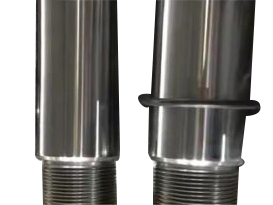
- Threaded Hard Chrome Plated Rods: Equipped with external threads (one end or both ends) or tapped holes for easy mounting and attachment to machinery or fixtures. They simplify installation and provide secure positioning, suitable for custom mechanical systems, hydraulic components, and precision fixtures.
- Stepped Hard Chrome Plated Rods: Feature different diameters at different sections, designed for applications where the rod needs to fit into different-sized components (e.g., hydraulic piston rods with a larger diameter at the piston end and a smaller diameter at the rod end).
3. Based on Surface Finish
- Precision Ground Hard Chrome Plated Rods: The most common type, with a surface roughness of Ra 0.2~0.8 μm, suitable for most linear motion and hydraulic applications.
- Mirror Polished Hard Chrome Plated Rods: With a surface roughness of Ra 0.1 μm or lower, these rods have a mirror-like finish, minimizing friction and ensuring smooth operation in high-precision applications such as semiconductor equipment and medical devices.
- Micro-Cracked Hard Chrome Plated Rods: The chrome coating is intentionally designed with tiny cracks to improve lubrication retention. These cracks act as reservoirs for lubricating oil, reducing friction and wear in high-load, low-lubrication applications such as hydraulic cylinders and sliding bearings.
V. Typical Application Scenarios of Hard Chrome Plated Rods
Thanks to their exceptional wear resistance, corrosion resistance, and high hardness, hard chrome plated rods are widely used in various industrial fields, particularly in applications requiring reliable performance under harsh conditions. Typical application scenarios include:
1. Hydraulic and Pneumatic Systems
This is the largest application field for hard chrome plated rods. They are used as piston rods, cylinder rods, and valve stems in hydraulic and pneumatic cylinders, where they must withstand high pressure, frequent reciprocating motion, and exposure to hydraulic fluids. The hard chrome coating prevents wear from seals and resists corrosion from hydraulic oils, ensuring long service life and reliable operation. Common applications include construction machinery (excavators, cranes), industrial hydraulic presses, and automotive hydraulic systems.
2. Industrial Automation and Linear Motion Systems
Hard chrome plated rods are core components in linear guides, sliders, and robotic arms, where they provide precise linear guidance and low-friction motion. Their high precision and wear resistance make them suitable for CNC machines, automated assembly lines, pick-and-place systems, and robotic workstations. Hollow hard chrome plated rods are particularly useful in robotic arms for routing cables, while threaded rods simplify installation in custom automation systems.
3. Machine Tools and Precision Machining
In CNC lathes, milling machines, and machining centers, hard chrome plated rods are used as tool shafts, guide shafts, and spindle components. Their high hardness and precision ensure stable operation during high-speed machining, while their wear resistance prevents premature failure from repetitive motion and contact with cutting tools. Bearing steel hard chrome plated rods are commonly used in high-precision machine tools to maintain dimensional accuracy.
4. Automotive and Aerospace Industries
In the automotive industry, hard chrome plated rods are used in engine components, transmission shafts, and suspension systems, where they withstand high temperatures, vibration, and wear. In the aerospace industry, they are used in aircraft landing gear, hydraulic systems, and engine parts, where lightweight, high strength, and corrosion resistance are critical. Alloy steel hard chrome plated rods are preferred in these applications due to their enhanced performance under extreme conditions.
5. Marine and Chemical Engineering
Stainless steel or alloy steel hard chrome plated rods are used in marine equipment (e.g., ship hydraulic systems, propeller shafts) and chemical plants (e.g., valve stems, pump shafts), where they resist corrosion from saltwater, chemicals, and humid environments. The chrome coating acts as a barrier, preventing the base metal from corroding and ensuring reliable operation in harsh industrial settings.
6. Other Industrial Fields
- Medical and Pharmaceutical Equipment: Mirror-polished hard chrome plated rods are used in medical devices such as surgical robots and drug delivery systems, where high precision, smooth surface, and corrosion resistance are required to meet strict hygiene standards.
- Printing and Packaging Machinery: Used as guide shafts and roller shafts, hard chrome plated rods ensure smooth, precise motion of paper, film, and packaging materials, reducing wear and improving production efficiency.
- Metal Processing and Mold Industry: Used as mold guide pins, ejector pins, and stamping dies, hard chrome plated rods resist wear and corrosion, extending the service life of molds and ensuring consistent product quality.
VI. Key Selection and Maintenance Guidelines
1. Selection Considerations
To select the optimal hard chrome plated rod for a specific application, consider the following key factors:
- Load and Force Requirements: Determine the radial and axial loads the rod will bear, and select a base metal and rod diameter that provide sufficient rigidity and load-bearing capacity. Solid rods are suitable for heavy loads, while hollow rods are ideal for lightweight applications.
- Environmental Conditions: For corrosive environments (e.g., marine, chemical), select alloy steel or stainless steel base metals with a thick chrome coating. For high-temperature applications, choose heat-resistant alloy steel base metals.
- Precision Requirements: Choose the appropriate surface finish (precision ground or mirror polished) and dimensional tolerance based on the application’s precision needs. High-precision applications (e.g., CNC machines) require rods with strict straightness and surface smoothness.
- Coating Thickness: Select the coating thickness based on the application’s wear requirements. Heavy-duty applications (e.g., hydraulic piston rods) require thicker coatings (20~50 μm), while light-load applications (e.g., precision guides) may use thinner coatings (12~20 μm).
- Mating Components: Ensure the rod is compatible with mating components such as bearings, seals, and fixtures. The surface finish and diameter should be matched to the mating component’s requirements to minimize friction and wear.
2. Maintenance Guidelines
Proper maintenance is essential to extend the service life of hard chrome plated rods and ensure stable performance. Follow these guidelines:
- Regular Cleaning: Remove dust, debris, and oil stains from the rod surface using a soft cloth or brush. Avoid using abrasive cleaners or tools, as they can scratch the chrome coating and expose the base metal to corrosion.
- Lubrication: Apply lubricating oil or grease regularly to reduce friction between the rod and mating components. Choose a lubricant compatible with the application’s temperature and load conditions. For micro-cracked rods, the lubricant will be retained in the cracks, further reducing wear.
- Inspection: Regularly check the rod for coating damage (scratches, peeling, or chipping), corrosion, and bending. If the coating is damaged, the base metal may corrode, leading to premature failure. Check the rod’s straightness and dimensional accuracy periodically to ensure it meets application requirements.
- Storage: Store unused hard chrome plated rods in a dry, well-ventilated area, away from moisture, corrosive substances, and direct sunlight. Cover the rod to prevent dust and damage to the chrome coating. For long-term storage, apply a thin layer of anti-rust oil to further protect the surface.
- Avoid Misuse: Do not use the rod beyond its rated load or temperature range. Avoid impact or collision, as this can damage the chrome coating and base metal. When installing, ensure proper alignment to prevent uneven wear.
VII. Environmental Considerations and Future Developments
Traditional hard chrome plating uses hexavalent chromium (Cr⁶⁺), a toxic substance that poses environmental and health risks. Hexavalent chromium wastewater and can pollute soil, water, and air, and long-term exposure can cause health issues such as cancer. In response to environmental regulations, the industry is developing more eco-friendly alternatives:
- Trivalent Chromium Plating: A safer alternative to hexavalent chromium plating, using trivalent chromium (Cr³⁺) which is less toxic and more environmentally friendly. While trivalent chromium coatings have slightly lower hardness than hexavalent chromium coatings, advances in technology are closing this gap, making them suitable for many applications.
- Low-Chromium Plating Processes: These processes use lower concentrations of chromic acid (30~60g/L) compared to traditional processes (150~250g/L), reducing environmental impact while maintaining coating performance.
- Alternative Surface Treatments: Technologies such as thermal spraying, electroless nickel plating, and ceramic coatings are being used as alternatives to hard chrome plating in some applications, offering similar wear and corrosion resistance without the use of chromium.
Future developments in hard chrome plated rods will focus on improving coating performance, reducing environmental impact, and integrating with intelligent manufacturing systems. Innovations such as nanocomposite chrome coatings (incorporating nanoparticles to enhance hardness and wear resistance) and IoT-enabled condition monitoring (to track rod performance in real time) will further expand their application potential.
VIII. Conclusion
Hard chrome plated rods are critical components in modern industrial systems, combining the structural strength of base metals with the superior surface performance of hard chrome coatings. Their exceptional wear resistance, corrosion resistance, high hardness, and low friction make them indispensable in hydraulic systems, automation equipment, machine tools, and many other industrial fields. By understanding the manufacturing process, core properties, types, and application scenarios of hard chrome plated rods, engineers and procurement professionals can select the optimal product for their specific needs.
Proper selection and maintenance of hard chrome plated rods not only ensure the stability and efficiency of mechanical systems but also reduce operational costs and extend service life. As environmental regulations become more stringent, the industry is moving toward more eco-friendly plating processes, ensuring that hard chrome plated rods continue to play a vital role in industrial production while minimizing environmental impact.
For anyone working in mechanical engineering, automation, or precision manufacturing, mastering the knowledge of hard chrome plated rods is crucial to designing and maintaining high-performance mechanical systems. As technology advances, hard chrome plated rods will continue to evolve, offering enhanced performance and sustainability for the next generation of industrial equipment.









 Home
News
Industry News
Hard Chrome Plated Rod: A Comprehensive Guide To Manufacturing, Properties, Applications, And Maintenance
Home
News
Industry News
Hard Chrome Plated Rod: A Comprehensive Guide To Manufacturing, Properties, Applications, And Maintenance 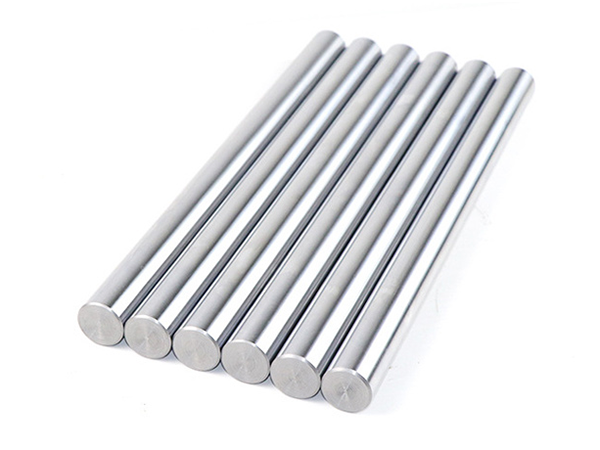

 +86 13771119215